
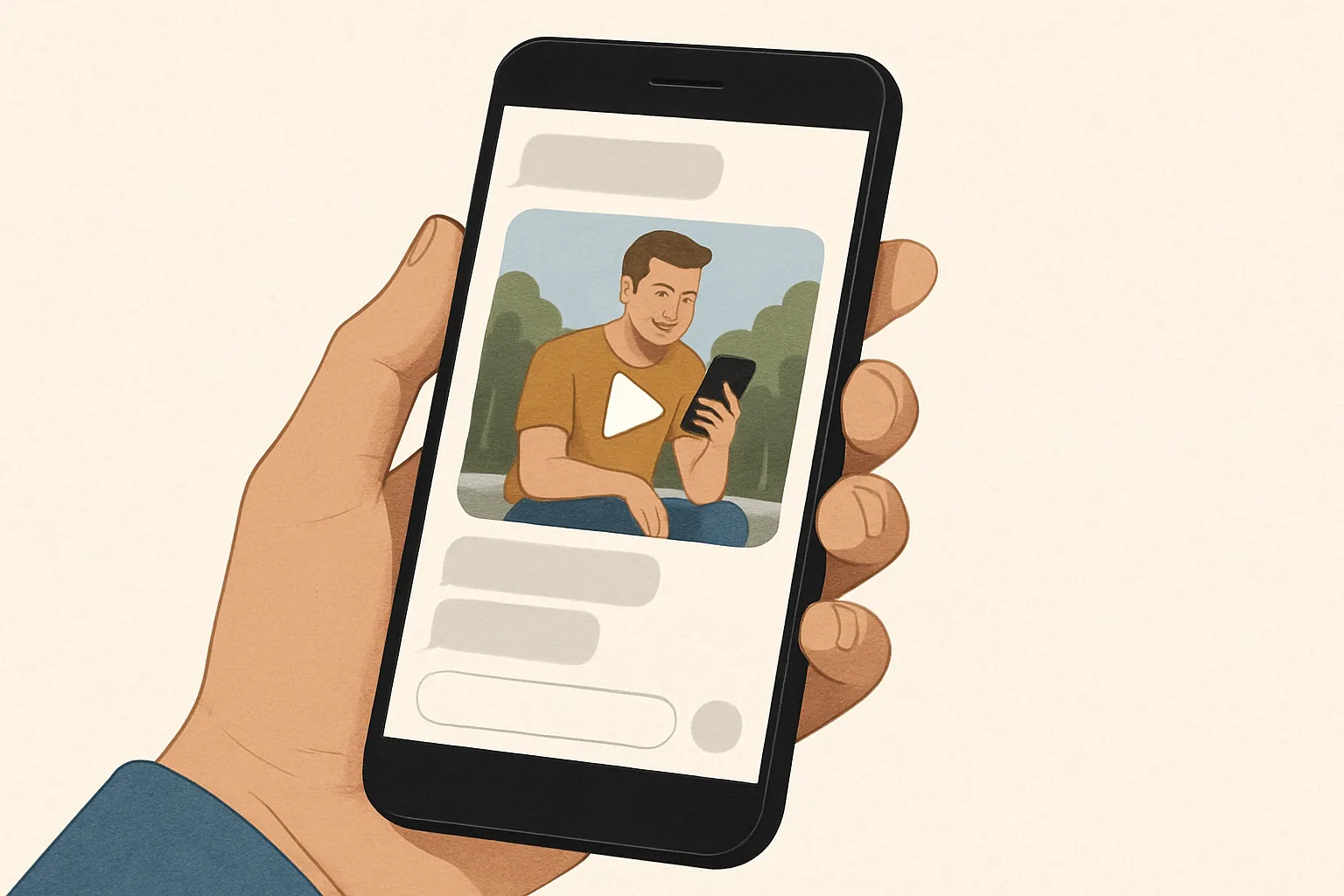
YouTube is expanding in-app video sharing and messaging to more users, including adults in the U.S., U.K., Brazil, and Singapore, giving people a way to send videos, chat, and react without leaving the YouTube app.
The rollout is notable because YouTube has been here before. The company introduced an in-app messaging feature in 2017, then removed it in 2019 and directed users back toward other apps for sharing. Since then, a typical YouTube share has meant copying a link or using a phone’s share sheet to send it through Messages, WhatsApp, Instagram, Discord, email, or another channel.
This new version brings part of that conversation back inside YouTube. According to YouTube’s announcement, eligible users can tap a new messaging icon in the app, send an invite, share videos, and react in real time. The feature applies to users 18 and older, and YouTube says its Community Guidelines apply to shared content and messages.
What YouTube Is Changing
The basic product idea is simple: instead of treating sharing as an exit point, YouTube is making it a native activity inside the app.
A user watching a music video, tutorial, or Short can use the new message icon to invite someone into a conversation around that video. The source material describes real-time text and reactions, which means the feature is not just a private “send” button. It is designed to keep the follow-up interaction close to the video itself.
The rollout began after testing in other countries, where YouTube says it saw a positive user response. The company is now expanding availability to the U.S. and additional markets, including the U.K., Brazil, Singapore, and several U.S. territories listed on its help page. YouTube also says it plans to expand further.
Why This Matters
For YouTube, sharing is not a side behavior. It is one of the ways videos move through culture. A funny clip, a product review, a recipe, a workout, a song, a how-to fix, or a creator’s Short often reaches the next viewer because someone sends it directly to them.
The old pattern gave that social layer to other platforms. YouTube hosted the video, but the conversation happened somewhere else. That meant friends discussed the clip in a group chat, reacted with emojis in another app, and maybe never returned to YouTube together. The link still drove traffic, but the social context lived outside YouTube’s walls.
In-app messaging changes that balance. If people adopt it, YouTube gets more of the conversation, more return visits, and more chances to keep users moving from one video to the next. It also gives the app a stronger role in private sharing, an area that is harder to see than public comments but often more meaningful for recommendation, discovery, and loyalty.
A Small Example Shows the Product Logic
Imagine someone watching a five-minute tutorial on fixing a loose cabinet hinge. Under the familiar sharing model, they might send the link to a partner through a separate messaging app with a note like, “This is the one we need.” The conversation then moves away from YouTube. If the partner watches later, the discussion stays in the external thread.
With YouTube’s in-app flow, that same user can share the tutorial from inside the app, invite the other person into a chat, and react while discussing whether the video solves their problem. The video is no longer just a link dropped into another conversation. It becomes the object around which the conversation is organized.
That may sound small, but for a platform at YouTube’s scale, small changes in sharing behavior matter. A dedicated in-app path can reduce friction, especially for lightweight interactions around Shorts, music videos, and quick recommendations that do not need a full external group chat.
Why Bring Messaging Back Now?
The return of YouTube messaging is also a reminder that product timing matters. The 2017 version arrived in a different social internet. By 2019, YouTube stepped away from the feature, and sharing through established messaging apps remained the default.
The new rollout appears narrower and more directly connected to video sharing. Based on the announcement, YouTube is not pitching a broad social inbox for everyone. It is emphasizing shared videos, real-time reactions, invite-based conversations, adult eligibility, and existing Community Guidelines.
That positioning matters. Messaging features can create moderation, spam, privacy, and safety risks, particularly when attached to a massive content platform. Limiting availability to users 18 and older and using invite-based chats gives YouTube a more controlled starting point than a fully open messaging layer.
It also reflects how platforms are trying to keep social interactions closer to content. TikTok, Instagram, and other video-heavy apps have trained users to share, respond, and react inside the same environment where they watch. YouTube has long been dominant in video, but its private sharing experience has often depended on apps it does not control.
What It Means for Creators and Brands
For creators, in-app sharing could make private recommendations more valuable, although the source material does not describe new creator analytics or tools tied to the feature. The immediate change is behavioral: viewers may have one more low-friction way to pass videos around.
For brands and operators, the lesson is not that YouTube has suddenly become a messaging platform. It is that distribution increasingly depends on reducing the distance between watching, reacting, and sharing. A video that sparks a quick private exchange may travel farther than one that relies only on public likes or comments.
Practical implications to watch include:
- Faster sharing loops: viewers may be able to recommend videos and discuss them without switching apps.
- More private engagement: some reactions that once happened in external chats may happen inside YouTube instead.
- New safety pressure: private messaging brings moderation expectations, even when tied to invite-based sharing.
- More incentive for useful videos: tutorials, explainers, reviews, music, and Shorts that naturally prompt “send this to someone” behavior could benefit most.
What To Watch Next
The first question is adoption. YouTube says the feature received a positive response in countries where it was already live, but wider markets will test whether users want another in-app messaging surface or prefer their existing chats.
The second question is how visible and persistent the feature becomes. Placement matters. A new message icon inside the app can change habits only if people notice it, understand when to use it, and trust that the recipient will see the invite.
The third question is safety. YouTube says Community Guidelines apply to shared content and messages, but messaging products often face different risks than public comment sections. If the feature expands, YouTube will have to show that it can manage unwanted contact, abusive messages, spam, and edge cases without making the product feel heavy.
For now, the update is best understood as a focused attempt to reclaim a part of YouTube behavior that has long leaked into other apps. People already send YouTube videos to friends. YouTube is now asking whether more of that exchange can happen where the video is being watched.