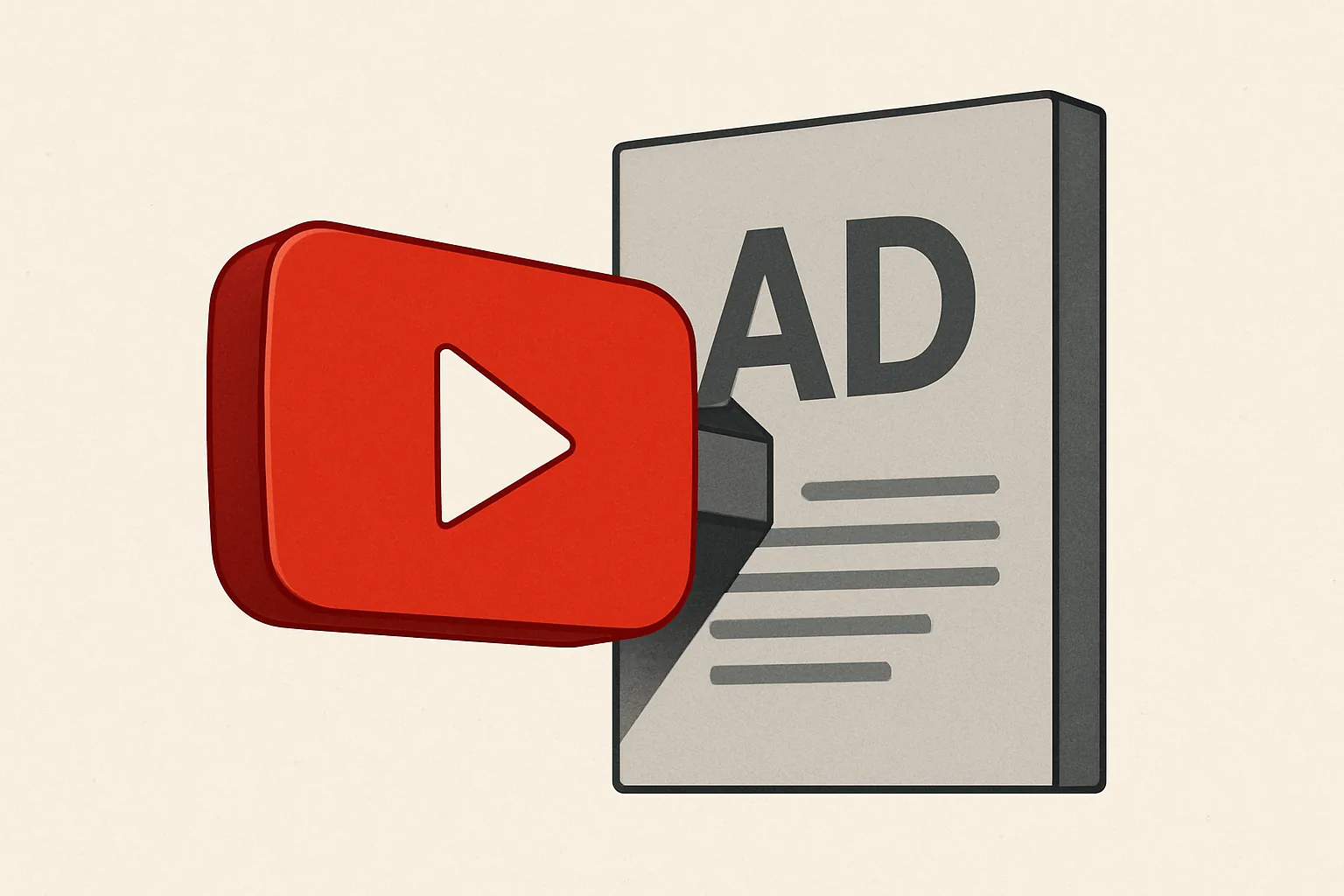
During IAB NewFronts week, YouTube announced Creator Partnerships, the new name for BrandConnect, and the rename matters less than where the product now sits. Instead of treating creator campaigns as a side program, YouTube is moving them into the places creators and advertisers already use: YouTube Studio on the creator side, and Google Ads plus Display & Video 360 on the buying side.
That changes the shape of the pitch. YouTube is no longer selling creator marketing as a separate, specialized activity. It is trying to make it look like part of normal media buying, with creator selection, paid amplification, and measurement tied more closely to the rest of Google’s ad stack.
What YouTube actually announced
The core update has three parts. First, YouTube says Creator Partnerships will use Gemini to help advertisers find relevant creators. Second, it is expanding measurement so brands can evaluate creator work with more confidence. Third, it is renaming and reorganizing activation tools, including Creator Partnerships Boost, which replaces the old Partnership Ads label.
YouTube also says the system reaches across a large creator base. The company points to more than 3 million creators in the YouTube Partner Program as the discovery pool for advertisers. Creators can choose to share more channel information with brands, and YouTube says creators who shared channel insights were surfaced 60% more in search results on average.
For advertisers, YouTube’s framing is straightforward: find creators inside Google’s tools, scale campaigns across screens, and measure results without breaking the workflow between creator content and broader ad buying. The company is also extending these capabilities through its Creator Partnerships API for selected partners.
Why this matters
The interesting part is not that YouTube added AI matching. Every major ad platform now wants an AI layer on top of discovery and optimization. The more important shift is structural. Creator campaigns have often lived in a messy middle ground between brand sponsorship, agency relationship management, and paid media execution. YouTube is trying to collapse that complexity.
If this works, creator marketing on YouTube becomes easier to budget alongside video, demand generation, and connected TV planning rather than being handled as a separate line item that needs its own tooling and reporting logic.
That could matter a lot for larger advertisers. A channel that lives inside Google Ads and DV360 is easier to test, easier to justify internally, and easier to compare against other spend. It also gives YouTube a cleaner answer to marketers who like creators but dislike fragmented execution.
There is another consequence here for creators. Integration inside YouTube Studio suggests YouTube wants creators to behave less like passive recipients of inbound brand emails and more like active participants in a marketplace with clearer signals, standardized packaging, and measurable outcomes.
From influencer marketing to buyable media
YouTube’s announcement hints at a bigger repositioning. For years, influencer marketing often depended on manual search, spreadsheets, agencies, and soft metrics. Brand teams might know a creator was a good fit, but stitching together discovery, contracting, whitelisting, paid support, and post-campaign reporting could still feel improvised.
Creator Partnerships does not erase that complexity, but it tries to hide more of it inside the platform. That is why the rename from BrandConnect matters. The new name emphasizes the relationship itself, but the product design points in a more operational direction: creator content as an addressable part of a campaign, not just a custom add-on.
YouTube’s language around Boost reinforces that. Once creator posts can be amplified through familiar ad systems, the value of the partnership is no longer limited to the organic reach of the creator’s audience. The campaign can travel further through Google’s distribution and measurement machinery.
A concrete example
Take a consumer brand launching a new kitchen appliance. Before this kind of setup, the team might have used an agency or manual research to identify a few cooking creators, negotiated sponsorships one by one, and then reported results separately from its broader paid video activity.
Under YouTube’s new model, the brand could use Gemini-assisted matching to identify creators inside the YouTube ecosystem, run the partnership, and then use Creator Partnerships Boost to extend the content through Google’s ad buying tools. In practice, that means the creator video is not just a sponsorship asset. It becomes a media asset that can be pushed across YouTube surfaces and evaluated inside a reporting framework marketers already use.
That does not guarantee better creative or better economics. It does make the channel easier to operationalize, which is usually the hurdle that keeps creator programs small.
Why YouTube has an opening here
YouTube backs the announcement with a trust argument. It cites its own research claiming viewers turn to YouTube to research and evaluate brands, and that creators on the platform are highly trusted for product recommendations. Whether a marketer fully buys every platform statistic or not, the commercial logic is familiar: YouTube is strongest when it can argue that creator endorsement and purchase intent live unusually close together.
That fits especially well with connected TV and cross-screen planning. YouTube has spent years pushing its role in living-room viewing while also defending its performance credentials. Creator Partnerships helps bridge those two stories. A creator campaign can now be framed not only as brand storytelling, but as something that plugs into measurable media delivery across devices.
What to watch next
The next question is not whether YouTube can rename a product. It is whether advertisers actually change behavior.
- Will media buyers treat creator inventory as part of standard campaign planning instead of a special project?
- Will creators share more channel data if it meaningfully improves deal flow?
- Will the new measurement convince brands that creator campaigns deserve larger, repeatable budgets?
- Will agencies and creator-tech intermediaries gain leverage from the expanded API, or lose some of it as Google absorbs more workflow directly?
If those answers trend in YouTube’s favor, Creator Partnerships could end up being a meaningful product shift, not a naming exercise. The real bet is that creator marketing becomes easier to buy, easier to scale, and easier to defend in a budget meeting when it looks less like influencer outreach and more like media infrastructure.
Source: YouTube Blog. Additional context: Google Ads Help on Demand Gen campaigns.