
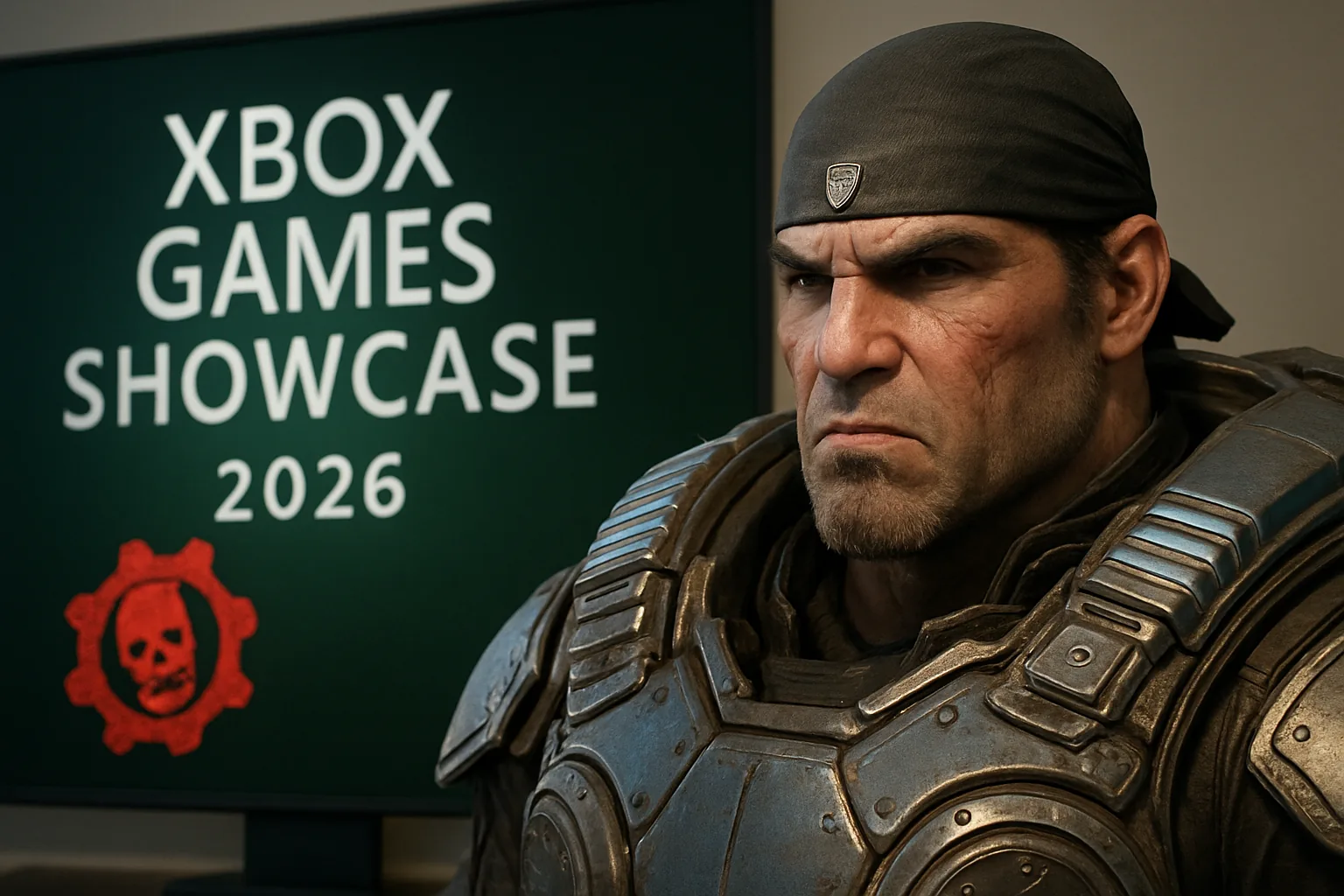
Microsoft has set the date for its next big summer presentation: the Xbox Games Showcase 2026 airs on Sunday, June 7 at 10 a.m. PT / 1 p.m. ET, and it will roll straight into a dedicated Gears of War: E-Day Direct. That second half is the real signal. Xbox is not just promising another reel of trailers. It is giving one franchise its own post-show spotlight, with first gameplay and what it describes as deeper details on a game coming later this year.
That makes this less about scheduling and more about priority. Xbox is using its annual showcase to do two jobs at once: show the breadth of its upcoming lineup, then slow down and make a focused case for why Gears of War: E-Day deserves special attention.
What Microsoft actually announced
According to Xbox Wire, the June 7 presentation will begin with the company’s annual showcase, covering upcoming games from Xbox first-party studios as well as third-party partners. Microsoft says viewers should expect first gameplay looks and major news across projects ranging from large franchises to smaller independent titles.
Immediately after that, Microsoft will hand the stage to The Coalition for a full Gears of War: E-Day Direct. The company says the segment will take players into the start of Emergence Day and offer new details, gameplay, and developer insight around what it calls the origin story of the Gears saga.
Xbox also attached two supporting pieces to the event. First, it is bringing back Xbox FanFest as an in-person experience tied to the showcase, framing it partly as a 25th-anniversary celebration. Second, it says the June 7 double feature will open a full week of follow-up coverage across Xbox Wire, the Official Xbox Podcast, and the Xbox YouTube channel.
Why the Gears pairing matters
Showcases are crowded by design. Even a strong game can disappear when it gets squeezed between a hardware update, a service announcement, and half a dozen trailers. By separating E-Day from the main reel, Microsoft is avoiding that problem. It can use the showcase for momentum, then use the Direct for clarity.
That matters even more for Gears than it would for a newer property. Gears of War is one of Xbox’s defining franchises, and E-Day carries extra weight because it is framed as an origin story. A reveal trailer can reintroduce mood and premise, but first gameplay is where a revival or prequel starts getting judged for real. Players will want to see combat feel, visual direction, pacing, and whether the game looks like a confident return or just a nostalgia play.
Microsoft’s wording suggests it understands that. “Deeper details” and “insights” are standard event language, but paired with a promise of first gameplay, they indicate this is meant to answer real questions, not just extend the teaser cycle.
Xbox is selling two different things on the same day
The June 7 structure gives Xbox a way to present two versions of its business at once.
- The Showcase is about scale: first-party output, third-party partnerships, and the sense that Xbox has a full slate rather than one headline game.
- The E-Day Direct is about focus: a reminder that major platform brands still matter, especially when they carry history with the audience.
Those goals can clash if they are forced into the same runtime. A broad showcase favors speed and variety. A one-game presentation favors explanation. Splitting the event lets Xbox keep both.
There is also a simple audience benefit here. Viewers who just want the rapid-fire annual update can watch the first presentation. Viewers who care specifically about Gears can stay for the part that is likely to have the most substance.
A concrete example of why this format works
Imagine two viewers on June 7.
One is a general Xbox fan who wants the headline view: which first-party games are closest, which third-party projects are showing up, and whether there are any surprises worth tracking. For that person, the showcase does the job quickly.
The other is a lapsed Gears player who has not paid close attention in years but is curious about E-Day. That viewer does not just need another cinematic beat. They need to see how the game moves, what the tone is, and whether this prequel feels essential or optional. A dedicated Direct gives Microsoft a chance to convert that curiosity into interest in a way a two-minute trailer probably cannot.
That is the practical value of the split. It is not only cleaner programming. It is a better sales pitch for two different levels of commitment.
The 25th-anniversary angle is doing quiet work
Microsoft is also tying the event to Xbox’s 25th anniversary, including the return of FanFest and language about looking back at the last 25 years while looking ahead to what comes next. That anniversary framing is not the main news, but it helps explain why Gears is such a natural centerpiece.
Anniversary messaging can easily drift into self-congratulation. Here, it is more useful as a positioning tool. Xbox is connecting a legacy franchise to a forward-looking showcase, which lets it celebrate its history without making the event feel purely retrospective.
FanFest fits that same logic. Microsoft is not treating the showcase as a stream-only media beat. It wants the event to feel communal and ceremonial, which makes sense for an anniversary year and especially for a franchise with long-term recognition among Xbox players.
What to watch on June 7
The most important thing is not whether Microsoft has a packed showcase. Its annual summer event is supposed to have range. The sharper question is whether the company can turn the E-Day Direct into a convincing gameplay-led reintroduction.
Three things will matter most:
- Whether the gameplay shown is substantial enough to answer basic questions about how E-Day actually plays.
- How much release-window confidence Microsoft signals, since the company says the game is coming later this year.
- Whether the follow-up week of coverage adds genuine detail or just repeats what the presentation already established.
That last point is easy to overlook. Microsoft has already said June 7 starts a full week of additional coverage across its official channels. If used well, that can keep the showcase from being a one-day burst of headlines followed by silence. It gives Xbox room to unpack demos, interviews, and feature details that would clutter the main presentation.
For viewers, the result should be a more useful event than the usual all-in-one summer stream. For Microsoft, it is a chance to prove that one of Xbox’s signature series can still command attention on its own rather than surviving as just another familiar logo in a montage.
That is the real stake in this announcement. June 7 is not only about what Xbox has next. It is also a test of how strongly one of its oldest pillars still lands when the company gives it the full stage.