
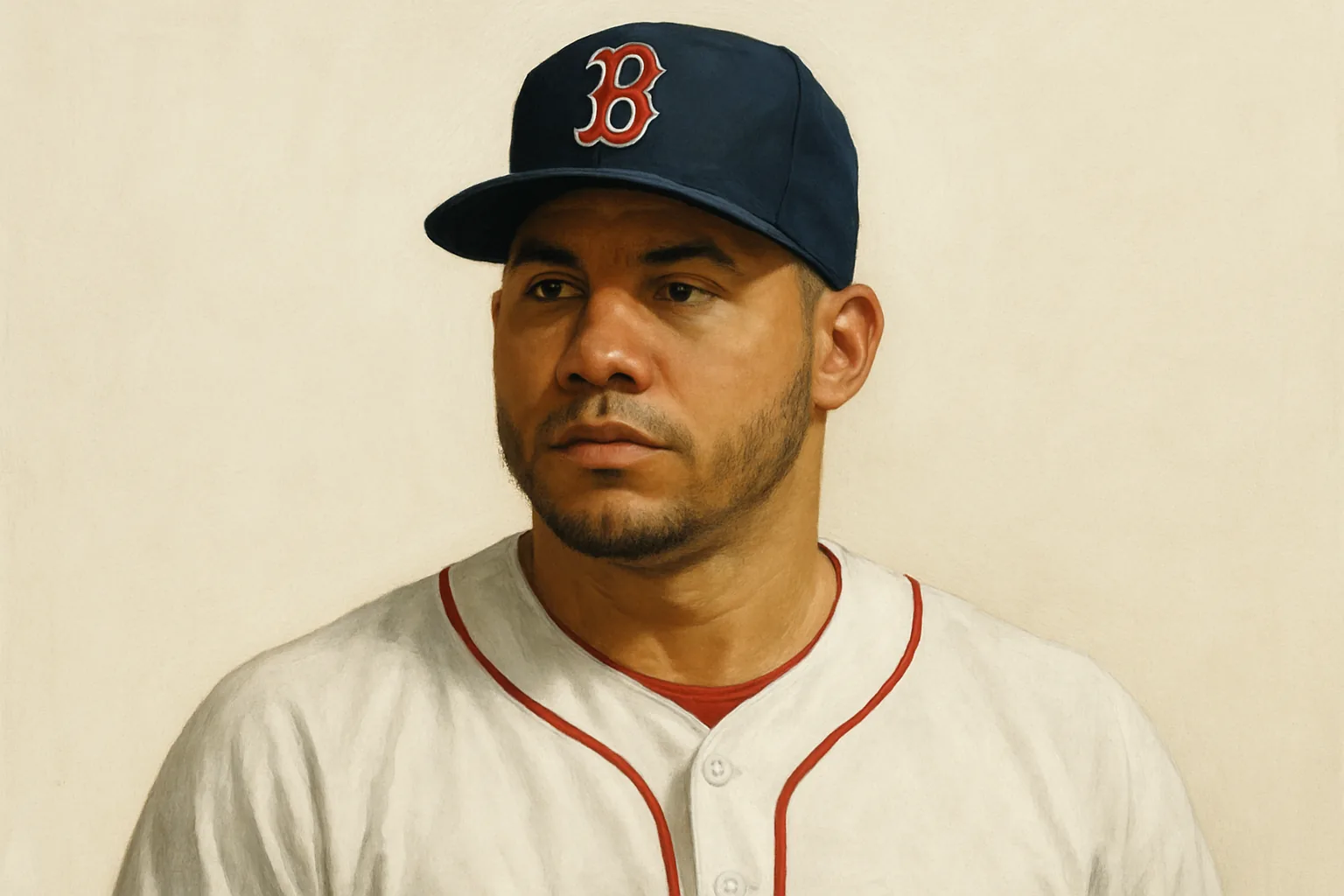
Major League Baseball reduced Red Sox first baseman Willson Contreras’s suspension from seven games to five on July 9, and the calendar matters almost as much as the reduction itself.
Contreras began serving the penalty immediately. He remains eligible for Tuesday’s All-Star Game, but he cannot rejoin Boston until the second game of its July 17 doubleheader against Tampa Bay at Fenway Park. For a player leading the club in home runs, RBIs and OPS, that creates a short but meaningful interruption in Boston’s lineup through the break.
A shorter ban, with a precise return date
The suspension stems from the June 30 bench-clearing incident against Washington. MLB also cited Contreras for throwing his helmet during the fracas and for breaking league protocol by posting on social media while the game was still being played.
The league’s decision cuts two games from the original discipline, but it does not turn the episode into a non-event. Contreras will still miss club games, and Boston still has to cover first base and replace a major source of offense. The difference is that the five-game length preserves a prominent individual date on the schedule: the All-Star Game.
That split is unusual enough to shape how fans should read the news. Contreras can appear in the midsummer showcase, yet Boston will not have him for its own games until the later half of a July 17 twin bill. The All-Star appearance is recognition; the suspension remains a team-level cost.
Why the timing helps Boston
Contreras was already out of the lineup for Boston’s 2-1 win over the White Sox on July 9 because a foul ball had badly bruised his left foot the previous night. In that narrow sense, the suspension and the injury recovery overlap rather than stack entirely on top of each other.
That does not make the absence painless. Contreras is hitting .285 with a team-leading 20 home runs, 61 RBIs and a .921 OPS. But it does mean the enforced downtime could allow the foot to heal without costing an additional stretch of games beyond the suspension window.
Consider the practical version of this roster problem: if a first baseman producing the club’s best power numbers is unavailable with a bruised foot, the team would already be preparing a temporary replacement plan. With the suspension beginning while that player is out, Boston can make one short-term adjustment instead of trying to absorb a disciplinary absence and a separate injury absence in sequence. That is the real benefit of the timing.
The immediate replacement is a test of depth
Boston recalled corner infielder Brett Harris from Triple-A Worcester before the White Sox game, and he started at first base. Harris went 0 for 2 and was hit by a pitch.
The 25-year-old was acquired from the Athletics on July 1. He has appeared in 73 major league games since 2024 and has hit .194 in that span. This season, he was 0 for 4 in five games with Oakland and 3 for 18 in five games with Worcester.
Those numbers underline the gap Boston is being asked to bridge. Harris is not stepping into Contreras’s production on paper; he is a depth option asked to help the club manage a defined absence. The reduced suspension limits the period in which Boston must lean on that contingency.
What to watch before July 17
The first question is Contreras’s foot. The reduced ban gives him time away from Red Sox games, but his availability for the All-Star Game does not by itself answer how fully recovered he will be when Boston gets him back.
The second is lineup coverage. Boston knows the return point rather than having to plan around the original seven-game penalty, and Harris’s early opportunity offers a clear look at how the club handles first base in the interim.
For Contreras, the result is a mixed outcome: a shorter punishment and All-Star eligibility, followed by a delayed return to his team. For Boston, it is a temporary loss of its most productive hitter that arrives at a moment when rest may be useful anyway.