
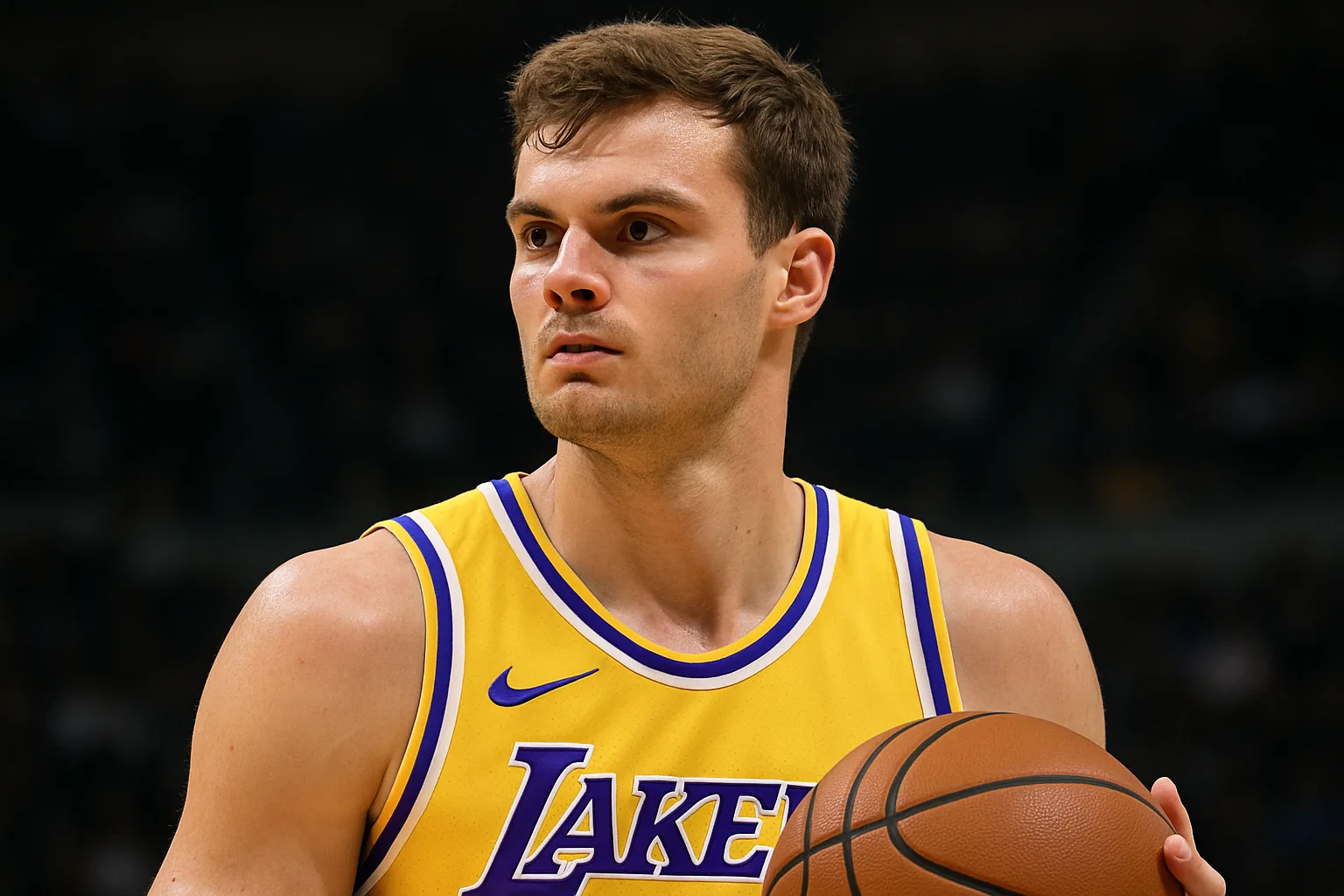
The Los Angeles Lakers have made Walker Kessler’s arrival official, completing a sign-and-trade with the Utah Jazz that gives Los Angeles the defensive center it had been chasing entering the offseason.
According to the source material, the Lakers are sending out two future first-round picks, two first-round pick swaps, and signing Kessler to a four-year, roughly $130 million contract. The fourth year is a player option. Initial reports on July 2 had the draft compensation as unprotected first-round picks in 2031 and 2033, plus swaps in 2028 and 2030.
That is not a small adjustment around the edges. It is a bet that Kessler, 24, can become the back-line anchor for a new Lakers core built around Luka Doncic, Austin Reaves, and a front office willing to spend future draft flexibility on immediate roster balance.
What the Lakers are buying
Kessler is listed at 7-foot-2 and 245 pounds, and the appeal is straightforward: size, rim protection, and vertical spacing. The Lakers did not just need another big body. They needed a center whose best skills directly address two of the most important jobs in a Doncic-led offense and a modern NBA defense.
Rob Pelinka framed the move around that fit, calling Kessler a “rim-protecting, lob-catching big” to pair with Doncic and Reaves as pick-and-roll guards. That matters because Kessler’s value is not only in blocking shots. It is in changing the decisions opponents make before the shot even happens.
A true rim protector lets perimeter defenders play with a little more pressure. He gives ball handlers a target above the rim. He can turn a solid possession into a high-percentage finish without needing designed post touches or a large share of the offense.
For a team with Doncic, that last part is important. The Lakers do not need Kessler to become a high-usage scorer. They need him to punish defensive rotations, finish lobs, clean the glass, and cover mistakes behind the first line of defense.
Why this is a bigger swing than a normal center upgrade
The price tells the story. Two future first-rounders and two swaps is the kind of package teams usually attach to players they believe will shape a roster’s identity, not simply fill a depth-chart need.
That makes the deal more interesting than the headline “Lakers add defensive center.” Los Angeles is spending assets from the late 2020s and early 2030s to solve a problem it has felt for years: a lack of a true defensive center outside of specific windows, most notably the 2019-20 season when JaVale McGee and Dwight Howard helped support Anthony Davis.
The Lakers have had elite big-man talent before, including Davis, Pau Gasol, Shaquille O’Neal, Kareem Abdul-Jabbar, Wilt Chamberlain, and George Mikan. Kessler is not being placed in that historical tier. The point is more practical. The Lakers’ best teams have often had real size near the basket, and this roster needed someone whose defensive responsibilities were clear.
In the current NBA, that role is harder than it looks. Centers have to defend pick-and-rolls, protect the rim without fouling, rebound in traffic, and stay useful when opponents try to pull them away from the basket. The Lakers are betting Kessler can do enough of that to justify both the contract and the draft cost.
A concrete example of the fit
Imagine a late-game possession with Doncic handling the ball and Reaves spaced as a secondary creator. Kessler sets the screen. If the defense switches, Doncic can attack a slower big or feed Kessler against a smaller defender. If the defense drops, Doncic gets room for a shot or a pass. If the weak-side defender tags Kessler on the roll, Reaves can receive the kickout and attack a rotating defense.
That is the offensive version of the bet. Kessler does not have to create the advantage himself. His size and lob threat can force the defense to account for the roll, which opens cleaner reads for the guards.
On the other end, the Lakers want the inverse effect. If Doncic or Reaves is beaten at the point of attack, Kessler’s presence near the rim can turn a direct drive into a floater, a kickout, or a reset. That kind of deterrence rarely shows up in a simple transaction note, but it changes how a team can survive possession after possession.
The risk is in the timeline
The Lakers are not only paying Kessler. They are compressing their flexibility. The 2028 and 2030 swaps, along with the 2031 and 2033 first-round picks described in the initial reports, reach far beyond the immediate version of the roster.
That is the cost of deciding that the next era has already started. Once Doncic is the organizing force, the roster has to make sense around him quickly. Waiting for a cheaper answer at center may have preserved assets, but it also would have left the Lakers with a familiar roster imbalance.
The deal therefore puts pressure on Kessler to be more than a useful starter. At this price, he needs to be dependable in playoff matchups, healthy enough to anchor the regular season, and compatible with the Lakers’ best offensive lineups. If he becomes a matchup liability or cannot stay on the floor late in games, the draft cost will look heavy.
If he hits, the Lakers have solved one of the most expensive roster problems in basketball: finding a young, defensive-minded center who does not need the ball and still bends the game.
What changes next
The immediate question is how the Lakers build the rest of the rotation around Kessler. A rim-protecting center helps, but he does not erase the need for point-of-attack defense, shooting, and bench lineups that can survive without Doncic controlling every possession.
The move also clarifies the front office’s priorities. Los Angeles is not treating this as a slow rebuild around a new star. It has chosen a more aggressive path, using future assets to put a more coherent structure around Doncic and Reaves now.
For Kessler, the job description is unusually clean: protect the rim, finish plays, rebound, and give the Lakers a defensive identity that has been missing from the center spot. For the Lakers, the harder part begins after the press release. They have their big man. Now they have to prove the rest of the roster can make that investment look like a foundation rather than an overpay.