
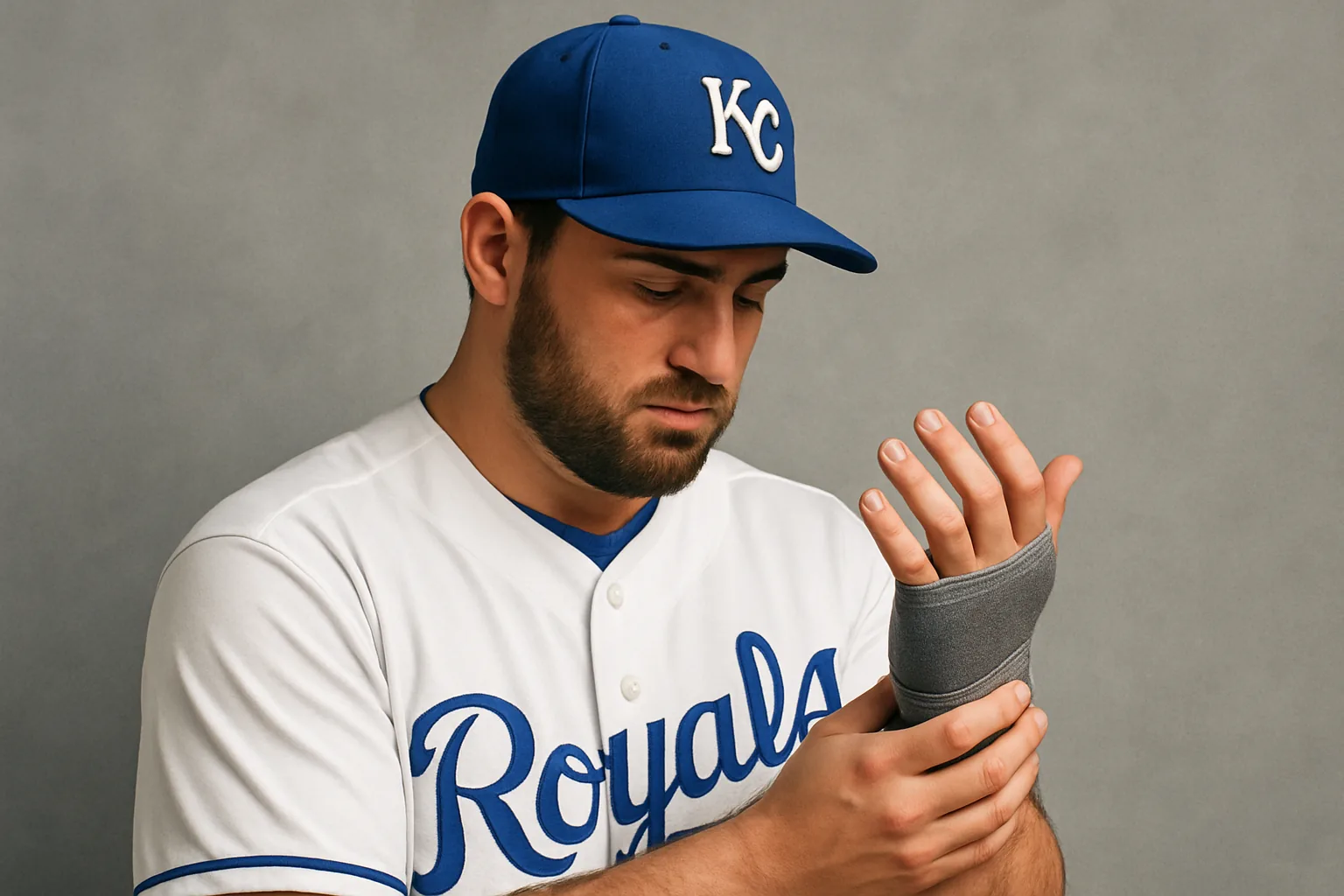
Vinnie Pasquantino is expected to miss roughly four to six weeks after undergoing surgery Sunday to remove a fractured hamate bone in his right hand, a significant midseason blow to a Royals lineup that had just started getting more from one of its central hitters.
Kansas City placed Pasquantino on the 10-day injured list after he was hurt during Saturday’s 8-7 loss to the Astros at Kauffman Stadium. The injury happened when he made contact in the fifth inning and left the game in visible discomfort. Outfielder John Rave was recalled from Triple-A Omaha in the corresponding roster move.
Manager Matt Quatraro said the procedure went as expected, while cautioning that the club will understand more once Pasquantino begins rehab. The early timeline puts a return somewhere in mid-to-late July if recovery moves cleanly, though hand injuries can be tricky for hitters because the issue is not just getting back on the field. It is getting back to driving the ball with authority.
Why the Timing Hurts Kansas City
The Royals are not just losing a name from the lineup. They are losing him at a moment when his season had started to turn.
Before leaving Saturday’s game, Pasquantino had already extended his on-base streak to 10 games with an RBI single in the third inning. Since May 22, he had hit safely in 17 of 21 games and produced a .291/.378/.405 slash line over that stretch. That run raised his season batting average from .194 to .224, a meaningful climb for a player Kansas City counts on to lengthen the middle of the order.
His full-season line still reflected the damage of the slow start: six home runs and 32 RBIs. But the recent trend mattered more than the surface numbers. A hitter who was beginning to reach base consistently and make regular contact gave the Royals a different offensive shape than the version who was fighting through April.
Pasquantino had also been available nearly every day. He played in 68 of Kansas City’s first 71 games, missing only limited time with low back tightness near the end of April. For a club managing the normal churn of a baseball season, that kind of presence has value beyond the box score. It stabilizes defensive assignments, lineup construction, pinch-hit planning, and late-game matchup decisions.
The First-Base Plan Starts With Jac Caglianone
With Pasquantino out, Jac Caglianone is expected to handle most of the work at first base. He started there Sunday, giving the Royals a direct replacement at the position rather than forcing an immediate multi-player reshuffle every day.
That does not mean the replacement is simple. Pasquantino’s role was built around everyday reliability and middle-order offensive expectations. Caglianone can absorb the innings, but Kansas City still has to replace the plate appearances: the left-handed bat, the RBI chances, and the steady presence in a part of the lineup where small drop-offs become visible quickly.
Salvador Perez and Nick Loftin are also options at first depending on the situation, according to Quatraro. That gives Kansas City flexibility, but it also hints at the larger issue. The Royals may not have one clean substitute for Pasquantino’s full role, so they may need to divide the job by matchup, rest schedule, and game state.
A practical example: if Kansas City wants Caglianone’s bat in the lineup most nights, first base is the obvious spot. But on a day when the club wants a different look against a particular starter, Perez could slide into the position to keep his bat involved while changing the catching setup. Loftin offers another way to cover innings or create a different bench alignment. None of those moves is dramatic by itself. Over four to six weeks, though, those little lineup choices become the replacement plan.
Hamate Injuries Are Especially Awkward for Hitters
The hamate bone sits in the hand, and injuries there are familiar enough in baseball to carry an immediate concern: hitters need their hands to absorb impact, control the barrel, and finish swings without hesitation. The Royals’ initial timeline is relatively clear, but the baseball question is how Pasquantino’s swing responds after the medical recovery.
That matters because his recent production was not built on one loud weekend. It was a three-week stretch of steadier at-bats. A hamate injury interrupts rhythm at exactly the point when the hitter had begun stacking results. Even if Pasquantino returns inside the projected window, Kansas City will still be watching whether his timing, contact quality, and confidence through the hitting zone return with him.
Quatraro’s comment that the club will know more during rehab is important. The surgery is only the first checkpoint. Swing progression, grip comfort, live batting practice, and how the hand responds after repeated contact will determine when Pasquantino is truly ready to help again.
What This Means for the Royals’ Offense
Kansas City’s challenge is not simply surviving a 10-day injured list stint. The initial estimate suggests the Royals may be without Pasquantino for a meaningful block of the schedule. That forces the team to answer two questions at once: who plays first base, and who replaces the quality of his recent at-bats?
The second question is harder. Pasquantino had been giving the lineup a version of what clubs want from a corner infielder: run production, on-base ability, and enough consistency to keep rallies from dying in the middle innings. His 10-game on-base streak and 17 hits in 21 games since May 22 were signs that he was becoming a more difficult out.
For the Royals, the immediate implications are straightforward:
- Caglianone gets a larger test as the likely primary first baseman during Pasquantino’s absence.
- Perez and Loftin become situational options if Kansas City wants to manage matchups or rest patterns.
- The lineup loses a recovering bat just as Pasquantino had started to reverse his early-season numbers.
- The return timeline is only part of the story because hand strength and swing feel will matter after surgery.
Rave’s recall gives the Royals another outfield option, but it does not directly replace Pasquantino’s role. It helps fill the roster spot while Kansas City adjusts the broader position mix.
What to Watch Next
The first thing to watch is how heavily the Royals commit to Caglianone at first base. If he receives the bulk of the starts, Kansas City can keep the rest of its defensive structure relatively stable. If the club starts mixing Perez and Loftin in more often, that may signal either matchup preferences or a search for the most productive offensive combination.
The second issue is Pasquantino’s rehab progression. A four-to-six-week timeline is useful, but baseball returns are rarely judged by the calendar alone. The key updates will come when he begins swinging, then when he faces velocity, then when the Royals can evaluate whether he is driving the ball rather than merely tolerating contact.
The final thing to watch is whether Kansas City’s offense can keep enough pressure on opponents without one of its regular run producers. Pasquantino was not having a finished breakout season on paper, but he was trending in the direction the Royals needed. Losing him now forces the club to find production from a less settled first-base arrangement while hoping the injury does not dull the progress he had finally started to show.