
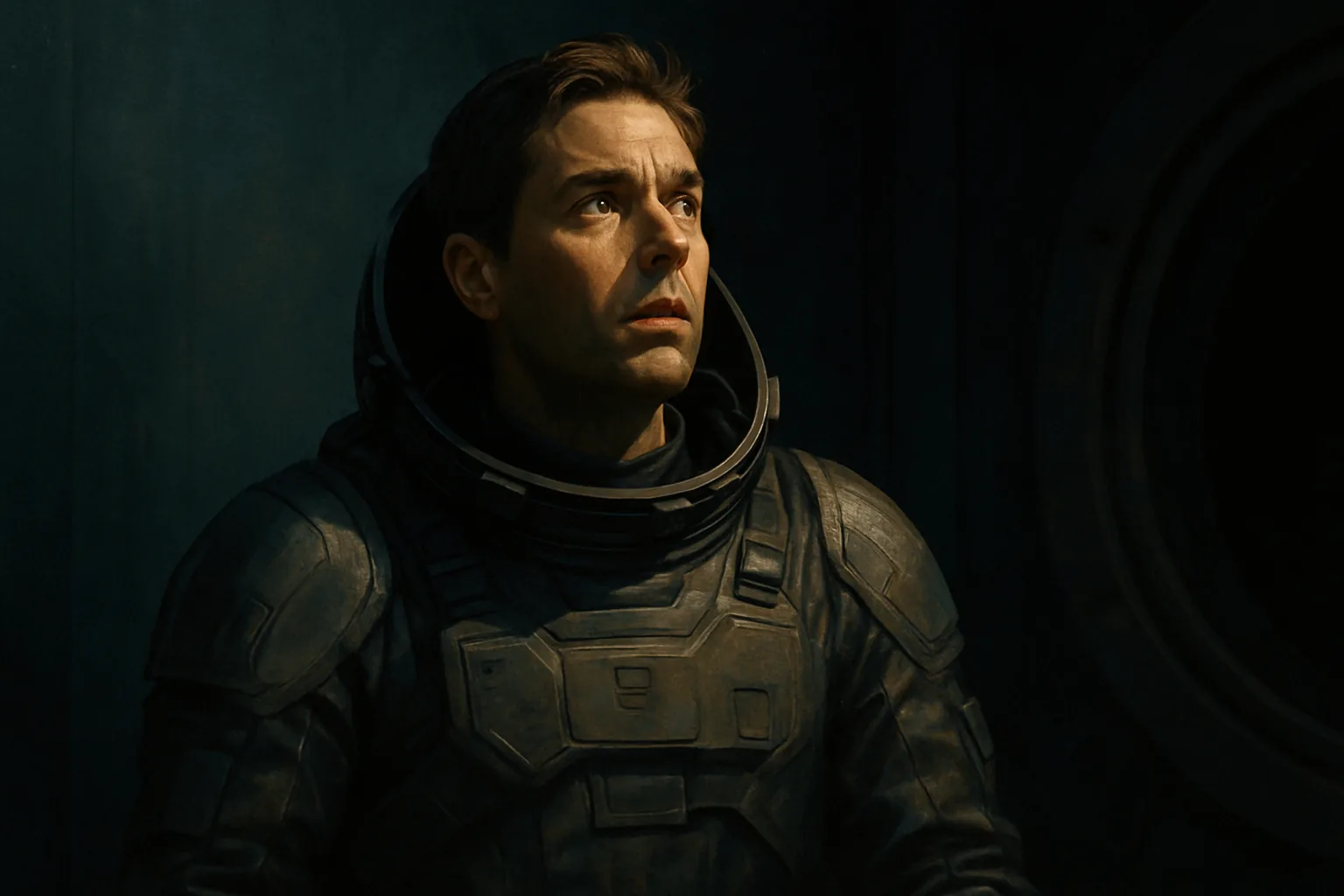
Project Hail Mary stays compelling because its mysteries are never decorative. The unanswered questions are tied directly to survival, trust, and the practical challenge of understanding an alien problem quickly enough to act on it. That is why readers keep circling back to the book's unresolved or semi-resolved puzzles. In this story, explanation is not separate from the tension. It is one of the engines driving it.
Andy Weir has always relied on that structure well. Scientific curiosity becomes narrative momentum when the characters cannot simply admire a mystery from afar. They need answers because their lives, and in this case the fate of Earth, depend on getting the logic right. Project Hail Mary turns problem-solving into drama by making knowledge itself feel urgent.
Why the book's questions linger
The novel leaves readers with so many memorable questions because each one opens onto something larger than a plot mechanic. A puzzle about alien biology, astrophysical danger, or mission design usually carries philosophical weight as well. It asks what humans do when confronted with the unfamiliar, how cooperation can form across radical difference, and what sacrifice means when the scale of the threat is planetary.
That layering is why the mysteries feel sticky. Readers are not only asking “how does this work?” They are also asking what the answer says about the characters, the world, and the moral logic of the mission itself.
Why Rocky changes the story so much
One reason Project Hail Mary lands so strongly is that Rocky transforms the novel from a clever hard-science survival story into something warmer, stranger, and more emotionally expansive. Once that relationship forms, the mysteries stop being purely technical. They become shared problems between beings who do not begin with language, culture, or biology in common and still learn to cooperate.
That is a huge reason readers keep interrogating the novel's details. The scientific puzzles matter, but so does the question of how two radically different intelligences build trust under impossible conditions. The story becomes as much about connection as explanation.
A useful way to think about it is this: the book's mysteries endure because they are never just “what happened?” questions. They are “what does understanding make possible?” questions.
Why adaptation interest increases the scrutiny
Renewed attention around a screen adaptation inevitably drives fresh interest in the novel's unresolved or most debated ideas. Readers start asking which mysteries can survive translation, which explanations will need simplification, and whether the emotional architecture of discovery can remain intact once the story becomes more visual and compressed.
That is part of why Project Hail Mary invites so much discussion right now. Adaptation makes mystery feel newly active. People return to the source material not only to remember what happened, but to test which questions are central enough that they must survive any retelling.
What makes the mystery design effective
The book works because Weir understands that readers enjoy being taught when the teaching arrives under pressure. Each revelation feels earned by experimentation, observation, and risk rather than handed down as exposition. That structure gives the science dignity while keeping the pacing alive.
It also helps that the mysteries escalate rather than repeat. Solving one problem usually exposes another layer, which preserves momentum and keeps the reader feeling slightly off balance in a productive way. The story never lets curiosity become static.
That is why Project Hail Mary remains such a fertile subject for questions and explanations. Its mysteries are not fandom leftovers or continuity scraps. They are the core of what makes the book move. Readers keep returning because the act of figuring things out is inseparable from why the story feels alive in the first place.