
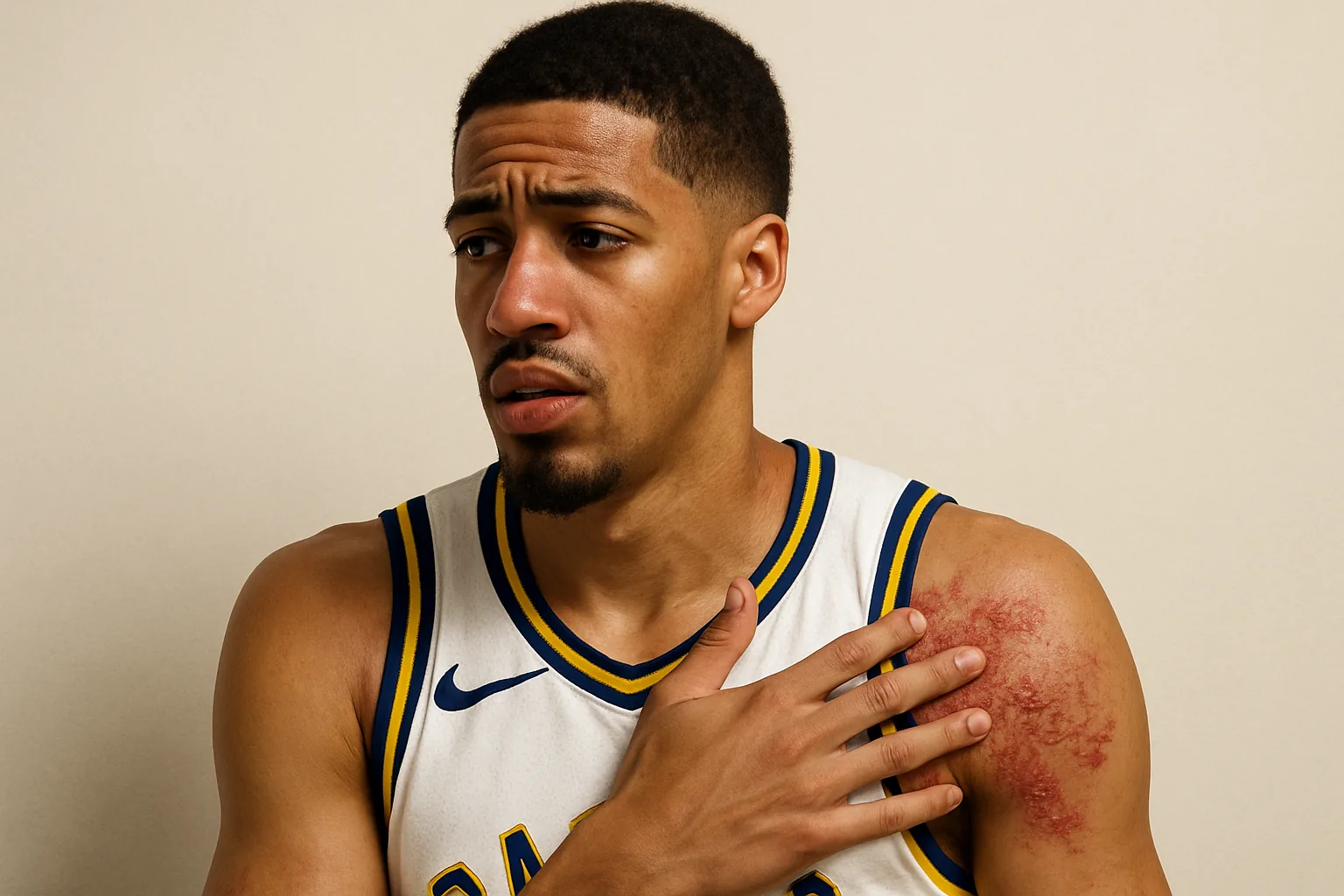
Tyrese Haliburton expected his offseason to be defined by the most obvious obstacle: the torn right Achilles tendon that kept him out for the entire season. Instead, he said the bigger problem now is shingles.
That matters because it changes the way to interpret his recovery. The Achilles injury is still the headline injury on paper. But Haliburton told reporters after Indiana’s season ended that he has returned to on-court activity and is aiming to be back next season, while the illness has been the more disruptive force lately. In practical terms, the question is no longer just whether his tendon is healing. It is whether the rest of his body can settle down enough for him to resume full NBA work.
For a Pacers team that finished with 19 wins and never got its two-time All-Star on the floor, that distinction is important. A clean Achilles rehab has a familiar logic: rebuild strength, regain explosiveness, restore rhythm. Shingles introduces a different kind of uncertainty. Haliburton described nerve pain, medication, weight gain, swelling around one eye, and even the loss of part of his right eyebrow. That is not the usual language of a basketball recovery update.
What actually changed
According to Haliburton’s comments, the Achilles itself is no longer the only or even the main hurdle shaping this summer. He said he was diagnosed with shingles in late February and that the condition has lingered for months. The symptoms have not just been uncomfortable; they have interfered with how he can train and go about daily life.
That is the key development. Fans tend to hear "full return next season" and file the story away as a standard comeback. The details suggest something messier. Haliburton is trying to finish the final stretch of a major tendon rehab while also dealing with a virus-related nerve condition that can be unpredictable and painful. Those are not parallel issues that stay neatly separated. They compound each other.
The most revealing part of his update was not a dramatic timeline promise. It was the description of how ordinary recovery work has been complicated by problems that have little to do with basketball skill and a lot to do with pain management, inflammation, comfort, and conditioning.
Why this matters beyond the injury report
When star players miss a year, people usually reduce the conversation to one question: will they look like themselves again? In Haliburton’s case, the source material points to a more immediate concern. Before anyone can judge his burst, his lift, or his rhythm, he has to get through an offseason that has become physically awkward and medically annoying in ways a standard rehab calendar does not capture.
That matters for Indiana because Haliburton is not a replaceable high-usage scorer who can survive on shot-making alone while he rounds into form. His game depends on pace, balance, passing vision, timing, and the ability to play with quick decisions. Even small physical disruptions can show up in that kind of role.
If the tendon is structurally sound but the rest of the recovery environment is unstable, the ramp-up can still be slower than fans expect. A player can be medically cleared and still not be fully ready for the demands of a lead-guard season.
A concrete way to think about it
Consider a simple training-camp scenario. Haliburton could arrive cleared for normal basketball activity, with the Achilles no longer the central concern. But if shingles-related nerve pain is still flaring, if medication has affected his conditioning, or if discomfort around the eye is still a factor, the first month of work may still look uneven.
That does not mean the Achilles rehab failed. It means the comeback is being shaped by a second problem that can blunt how quickly he regains timing and workload tolerance. For a guard whose value comes from orchestrating everything, being a step behind physically can affect the entire offense, even before anyone talks about scoring averages.
The Pacers angle is hard to ignore
Indiana’s season context sharpens the significance of all this. The Pacers went from a surprise NBA Finals run with Haliburton at the center of it to a 19-win season without him ever suiting up. That kind of drop is not explained by one variable alone, but his absence was the organizing fact of the year.
So his exit-interview comments do more than update fans on one player’s health. They frame the franchise’s next season. If Haliburton returns close to his previous level, Indiana gets its offensive organizer back and the team’s identity starts to make sense again. If the recovery remains bumpy, the Pacers may enter next season with their most important player available in theory but still working through the aftereffects of an unusually complicated year.
There is also a perception issue here. Achilles rehabs are familiar enough that fans and even teams often think in milestones. Shingles does not fit that pattern. Because it sounds unrelated to basketball, it risks being treated as a side note when in reality it may be the thing that most affects how his summer feels and how quickly he looks normal once games matter again.
What Haliburton’s comments clarify
His remarks clarified two things at once.
- First: the return remains the target. He has resumed on-court activity and is still aiming for next season.
- Second: being "on track" does not mean the process has been smooth. The illness has clearly made it rougher, stranger, and harder to measure.
That combination is why the story is worth paying attention to. It is not a dramatic setback announcement, and it is not a clean all-clear either. It sits in the less tidy middle, where many real recoveries actually happen.
What to watch next
The next useful signals will be less about slogans and more about function. Is Haliburton able to stack weeks of uninterrupted on-court work? Does the conversation shift back toward basketball-specific conditioning rather than symptom management? Do the Pacers speak about him as fully integrated into preseason planning, or as someone still building back in stages?
Those details will say more than broad optimism. The source material already provides the main lesson: the offseason cannot be read as a simple Achilles countdown anymore.
For Haliburton, the surprising part of this comeback is that the original injury may no longer be the most stubborn part of the story. For Indiana, that means patience still matters, even if the official return target has not changed.