
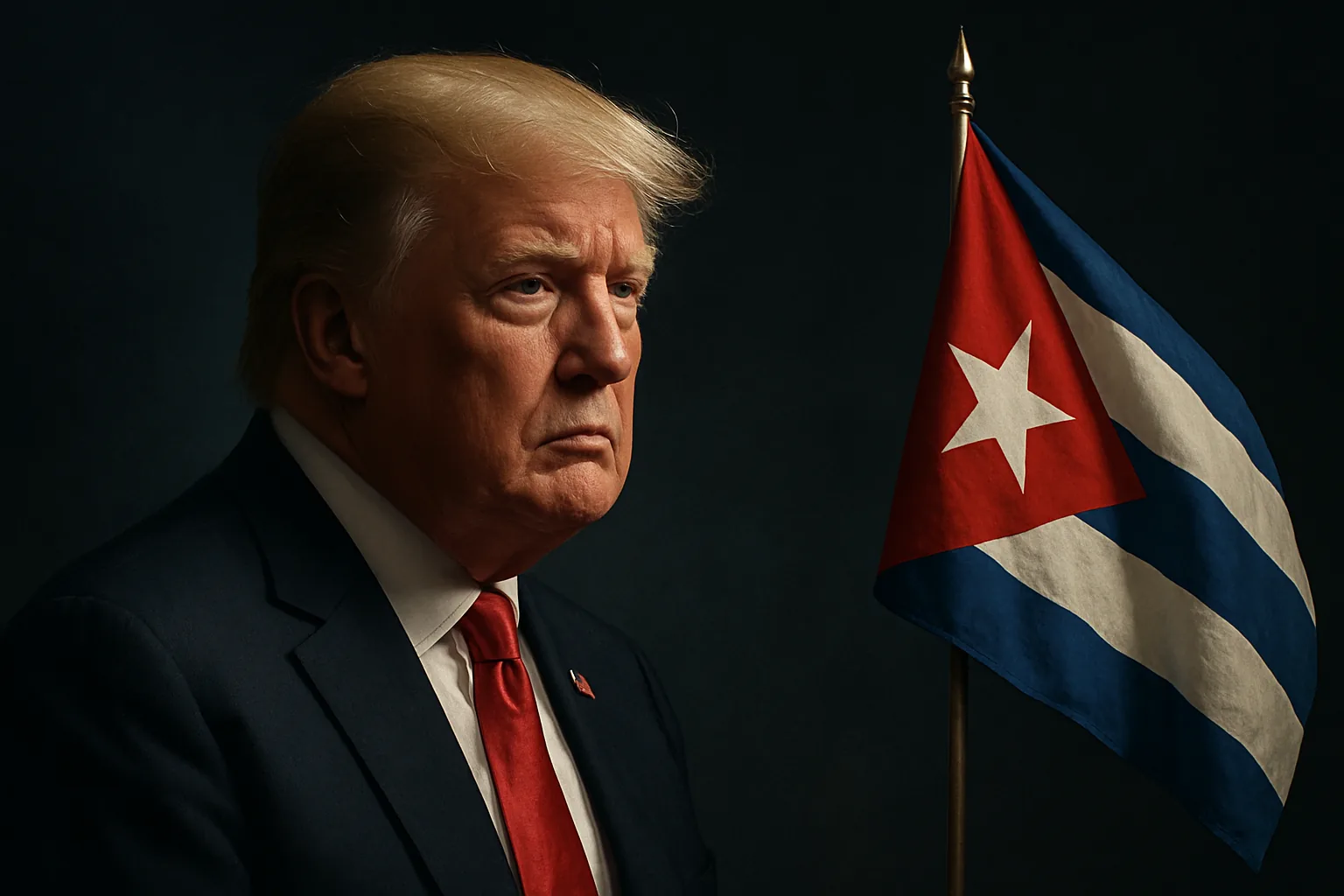
A harder U.S. policy toward Cuba matters because Cuba is one of those issues where substance and symbolism are tightly fused. Changes in approach are never only about bilateral relations. They also communicate how Washington thinks about sanctions, migration, energy, regional alliances, and domestic political constituencies. That is why a tougher line can feel like more than a routine policy adjustment. It becomes a statement about how the United States wants to project power and principle in its own hemisphere.
The contrast with earlier eras matters because Cuba policy has long functioned as a marker of broader strategic philosophy. Engagement suggests one view of influence. Pressure and isolation suggest another. A visible shift therefore tells observers something about the administration's assumptions, not just its tactics.
Why Cuba policy carries outsized symbolic value
Few foreign-policy issues combine history, ideology, diaspora politics, and geographic proximity in the same way. Cuba remains a place onto which the United States projects arguments about democracy, authoritarianism, sovereignty, and regional order. Because of that, policy changes are interpreted through multiple lenses at once.
This is why the story matters even when the immediate material stakes appear limited. The island has long served as a political symbol whose treatment reflects wider attitudes about what pressure is supposed to accomplish.
A useful way to think about it is this: Cuba policy is rarely only about Cuba. It is about the model of American leverage being put on display.
Why reversals matter for credibility and predictability
Repeated policy swings create uncertainty for allies, migrants, businesses, and regional governments trying to understand the United States' long-term posture. A dramatic reversal can energize supporters who prefer a tougher approach, but it can also reinforce the idea that U.S. policy is highly contingent on domestic political cycles rather than stable strategic goals.
That tension is one reason the story matters. Foreign policy is not only judged by its toughness or flexibility, but by whether other actors believe the line will hold long enough to shape behavior.
Why domestic politics remain inseparable
Any discussion of Cuba in American politics quickly intersects with electoral incentives, especially in Florida and among communities for whom the issue is deeply personal and historically charged. That means policy is never crafted in a purely geopolitical vacuum. Messaging to domestic audiences can be nearly as important as signaling to Havana.
This makes the shift significant beyond the bilateral relationship itself. It shows how regional policy can be used to reinforce a broader political identity at home.
In that sense, the Cuba issue matters because it sits at the overlap of strategy, memory, and electoral theater.
What matters next
The key questions are whether the tougher posture produces any meaningful behavioral leverage, how regional partners respond, and whether the administration can sustain a coherent rationale beyond symbolic contrast with the past. Without those elements, the shift may be remembered more as message than strategy.
That is why a harder U.S. Cuba posture matters. It reveals how administrations use a historically loaded relationship to signal wider beliefs about power, pressure, and political identity.
When Washington changes course on Cuba, it is often telling the world something about itself as much as about the island.