
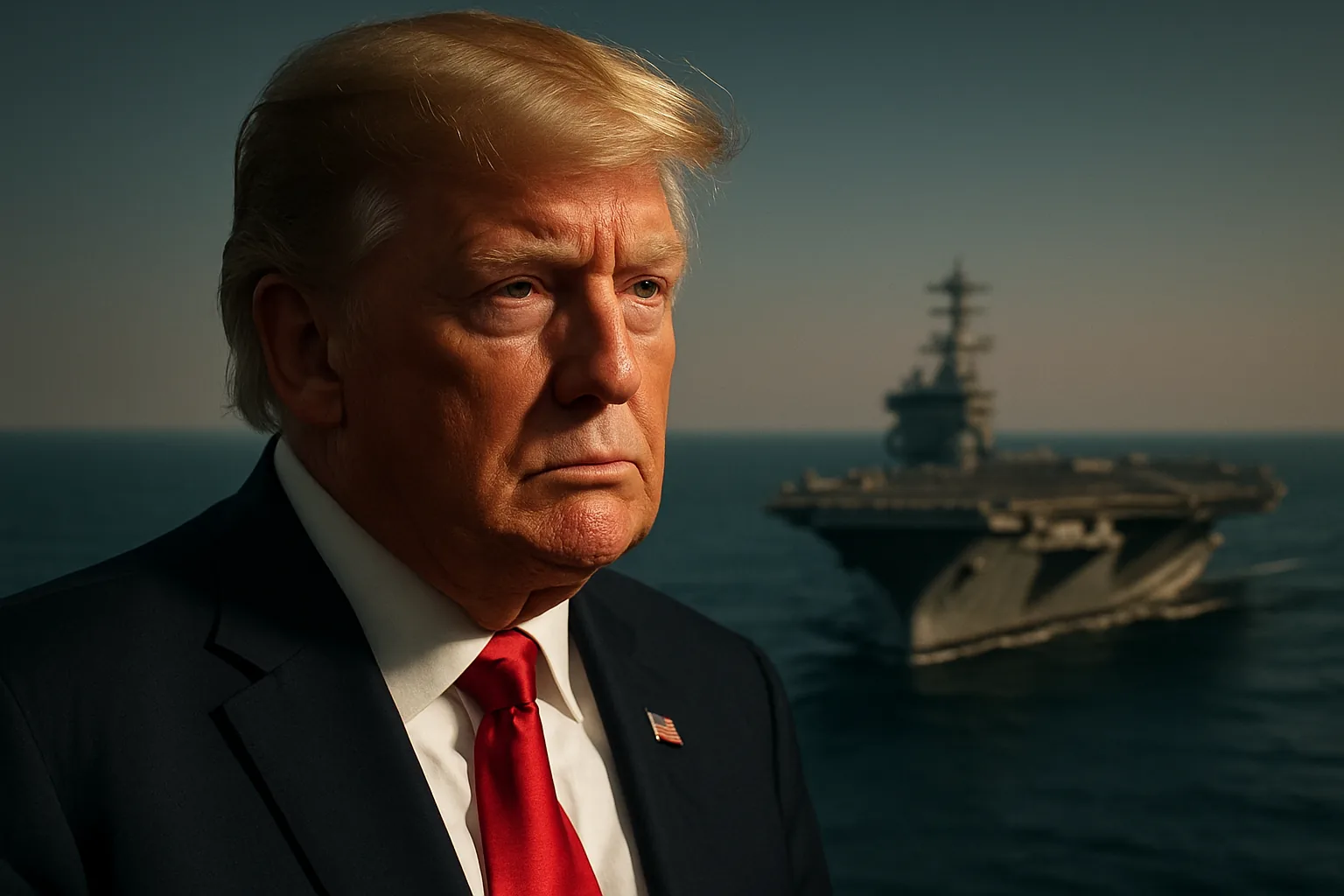
Donald Trump's stance on Iran matters because it tries to occupy two positions at once: reject the symbolic softness of a ceasefire while still suggesting that U.S. military involvement could be reduced over time. That combination is politically useful because it preserves the image of toughness without fully committing to open-ended escalation as the only acceptable path.
This is a familiar tension in conflict politics. Leaders often want the rhetorical advantage of sounding unyielding while retaining enough flexibility to adjust once the strategic or political costs become harder to absorb. The resulting message can sound contradictory, but it often reflects the actual logic of how power is communicated in a volatile crisis.
Why rejecting a ceasefire has symbolic value
Ceasefire language is politically loaded because it can be framed as a concession even when it is tactically prudent. For leaders who want to project dominance, rejecting that language can serve a signaling function independent of what they may eventually do in practice. The point is often to establish posture first and preserve maneuvering room later.
That helps explain why someone might oppose a ceasefire publicly while still entertaining forms of de-escalation under a different label. The policy flexibility remains, but the political branding changes.
Why gradual military scaling-back is still important
Hints about reducing operations matter because they acknowledge a second reality: prolonged military commitments create pressure quickly. Costs rise, uncertainty spreads, markets react, and public patience can become less predictable. A leader who leaves room for drawdown or narrowing of objectives is often preparing for those pressures even while speaking forcefully.
That does not make the position coherent in a neat doctrinal sense. It makes it strategically recognizable. The message is designed to avoid looking weak now without removing off-ramps later.
A useful way to frame it is this: the politics of escalation often depend on sounding absolute while governing conditionally.
Why this posture creates confusion
The downside of that approach is that it can blur the actual strategic goal. If the public hears both “no ceasefire” and “possible scaling back,” the question becomes what success is supposed to look like. Is the aim coercive pressure, limited deterrence, open confrontation, or a search for leverage before negotiation? Mixed signaling can preserve flexibility, but it can also make the broader strategy harder to read.
That matters because in international crises, ambiguity can be both a tool and a risk. It can unsettle opponents, but it can also unsettle allies, markets, and domestic audiences trying to understand where the policy is headed.
What to watch next
The key question is whether the rhetoric hardens into a clearer doctrine or remains deliberately elastic. If the position evolves toward narrower military aims while still rejecting ceasefire language, that will confirm that the message was more about political framing than about absolute strategic refusal.
What matters most is not whether the wording sounds contradictory on one day. It is whether the administration keeps using rhetorical toughness to preserve room for later recalibration. That pattern would fit a broader style of conflict politics built on dominance in tone and flexibility in execution.
That is why this position matters. It is less a settled doctrine than a window into how escalation can be sold politically without foreclosing the practical need to slow it down later.