
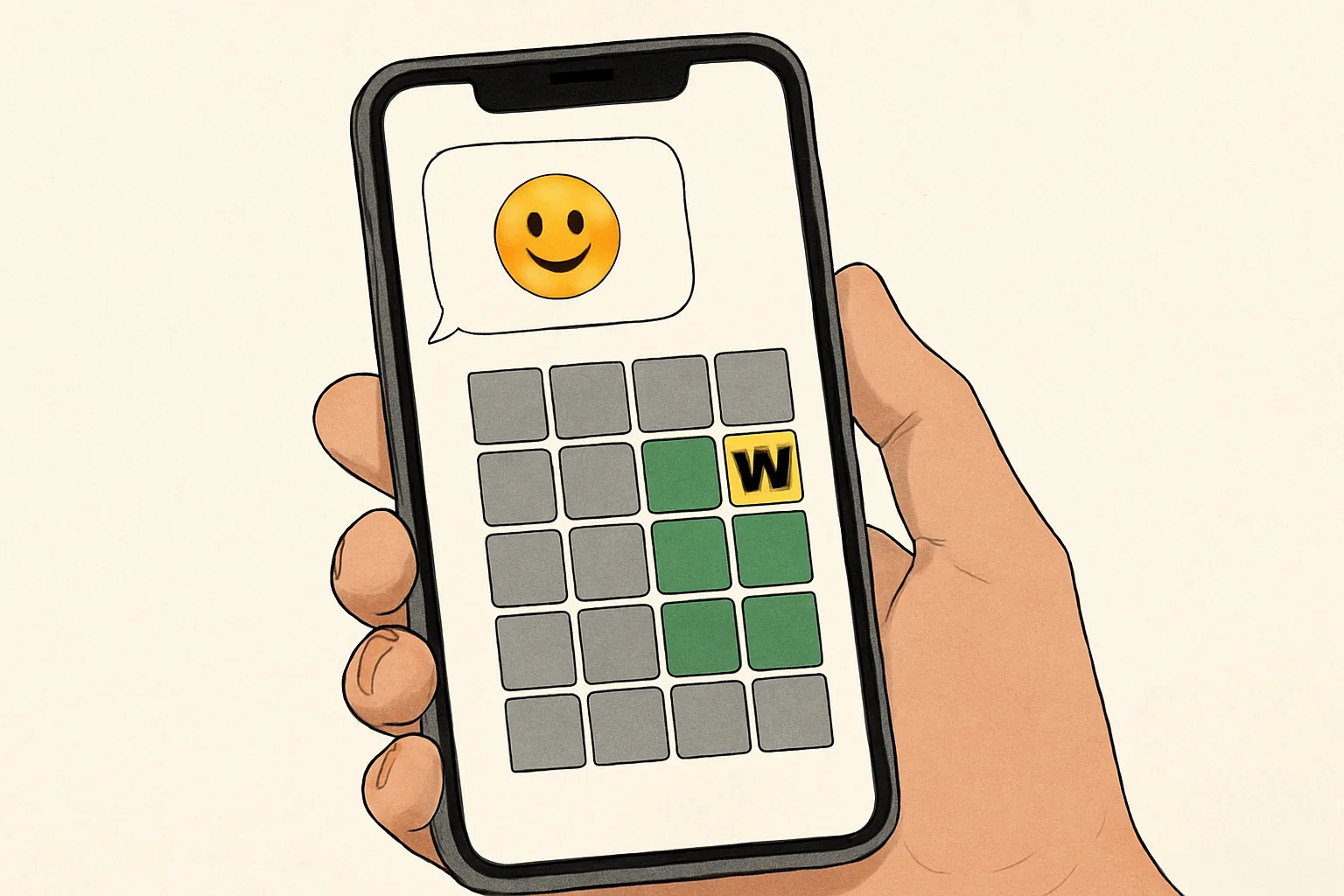
TikTok has quietly started rolling out a hidden mini-game inside direct messages, triggered by sending a single emoji and tapping it in chat. On the surface, it is a small novelty: players bounce upward across alligators, avoid skeleton alligators, grab speed boosts, and try to beat a friend’s score. But the feature matters less as a game than as a clue about where TikTok still wants to grow.
The mechanic is intentionally simple. Send one emoji by itself in a one-to-one or group chat, tap it, and a retro-style score chaser opens inside the app. The same emoji then appears as a floating boost during gameplay. TikTok told TechCrunch the game is available globally in DMs, though coverage around the rollout suggested availability was still uneven in practice, with the feature appearing first on iOS for some users between March 31 and April 3, 2026.
The game itself is easy to understand because it is built for immediate replay. You jump from alligator to alligator, lose if you miss or land on a skeleton, and try to climb higher than the other person’s best score. TikTok also shows your score alongside your opponent’s high score, which turns a disposable novelty into a small contest.
Why TikTok Put This in DMs
TikTok says the Easter egg is meant to make messaging more fun and add a playful competitive element to chats. That is a real explanation, but not the whole one. Hidden features like this are useful because they create a reason to open a conversation thread for something other than sending a message. Once that behavior exists, the app gets a little more social and a little less dependent on passive feed consumption alone.
That distinction matters. TikTok is already strong at giving users something to watch. Private messaging is a different problem. Messaging features become valuable when they produce repeat habits between specific people or within small groups. A lightweight game can do that without asking users to install anything, learn anything, or even leave the chat.
It is also a cheap design win. TikTok does not need to build a full gaming layer or a standalone social product to test whether people want more playful interaction in DMs. A hidden emoji trigger is enough to measure curiosity, replay behavior, chat activity, and whether friendly competition keeps people inside the thread.
Not Original, but Still Smart
TikTok is not inventing this category. TechCrunch notes that Instagram introduced its own hidden emoji DM game two years earlier. Instagram’s version used a paddle mechanic to keep an emoji in the air, and TikTok’s version clearly follows the same basic logic: hide a game in messaging, keep the barrier to entry low, and make the interaction feel discoverable rather than formally launched.
That does not make TikTok’s move trivial. Copying a proven interaction pattern is often more revealing than launching something completely new. It suggests TikTok sees enough value in DM-native games to make room for one inside its own product, and that it believes messaging needs extra texture, not just better inbox utilities.
There is also a branding fit here. TikTok’s public product is driven by short bursts, fast reactions, and reward loops. A score-chasing mini-game built around a single emoji feels native to that environment. It does not ask users to adopt a new identity or mode of behavior. It asks them to do what they already do on TikTok: tap, react, compete, repeat.
A Concrete Example of How This Could Work
Imagine a three-person group chat that mostly exists to swap videos. One person drops a crying emoji, another taps it, posts a score, and suddenly the thread has a second use. Instead of the conversation ending after a link share, the chat gets a mini-competition layered on top of it. No one had to schedule anything. No one had to explain the rules for long. The thread became a place to hang around, not just a place to forward content.
That is the practical business value of a feature like this. It does not need to become a major gaming destination. It only needs to slightly increase the odds that a user opens TikTok to check a chat, answer a challenge, or beat a friend’s score. Those small increments add up when they happen across a large messaging base.
What to Watch Next
The immediate question is whether this remains a one-off Easter egg or becomes a template. If users respond well, TikTok has a few obvious ways to extend the idea without changing the core premise: more game variants, more visible leaderboards, more seasonal or limited-time triggers, or chat features built around collaborative play instead of pure score competition.
It is also worth watching whether TikTok keeps the feature semi-hidden. Discovery can make a product feel playful, but it also limits reach. A secret feature works best when the platform wants organic sharing and a sense of insider knowledge. If TikTok later surfaces the game more directly, that would suggest the experiment moved from novelty to retention tool.
Availability is another thing to track. While TikTok told TechCrunch the game is global, reports around the launch indicated a rolling release, and some users appeared to get access before others. That usually means the company is still observing behavior and smoothing out distribution rather than treating the launch as a fully settled product surface.
What This Actually Says About TikTok
The most useful way to read this feature is not as a gaming story but as a messaging story. TikTok is trying to make DMs feel more alive without turning them into a heavy, utility-first inbox. A hidden emoji game is a lightweight way to add ritual, competition, and repeat visits to a part of the app that can otherwise feel secondary to the feed.
For creators, brands, and operators, that is the real signal. TikTok is still looking for ways to deepen private, friend-to-friend engagement inside its own walls. If that works, it changes how attention is held on the platform. Not by one giant new product launch, but by tiny interactions that give people another reason to stay in the conversation.
This game may disappear into the long list of platform curiosities. It may also become the kind of small feature that product teams love: inexpensive, sticky, social, and easy to spread. Either way, it is more than a cute extra in DMs. It is a compact test of whether play can make private sharing harder to put down.