
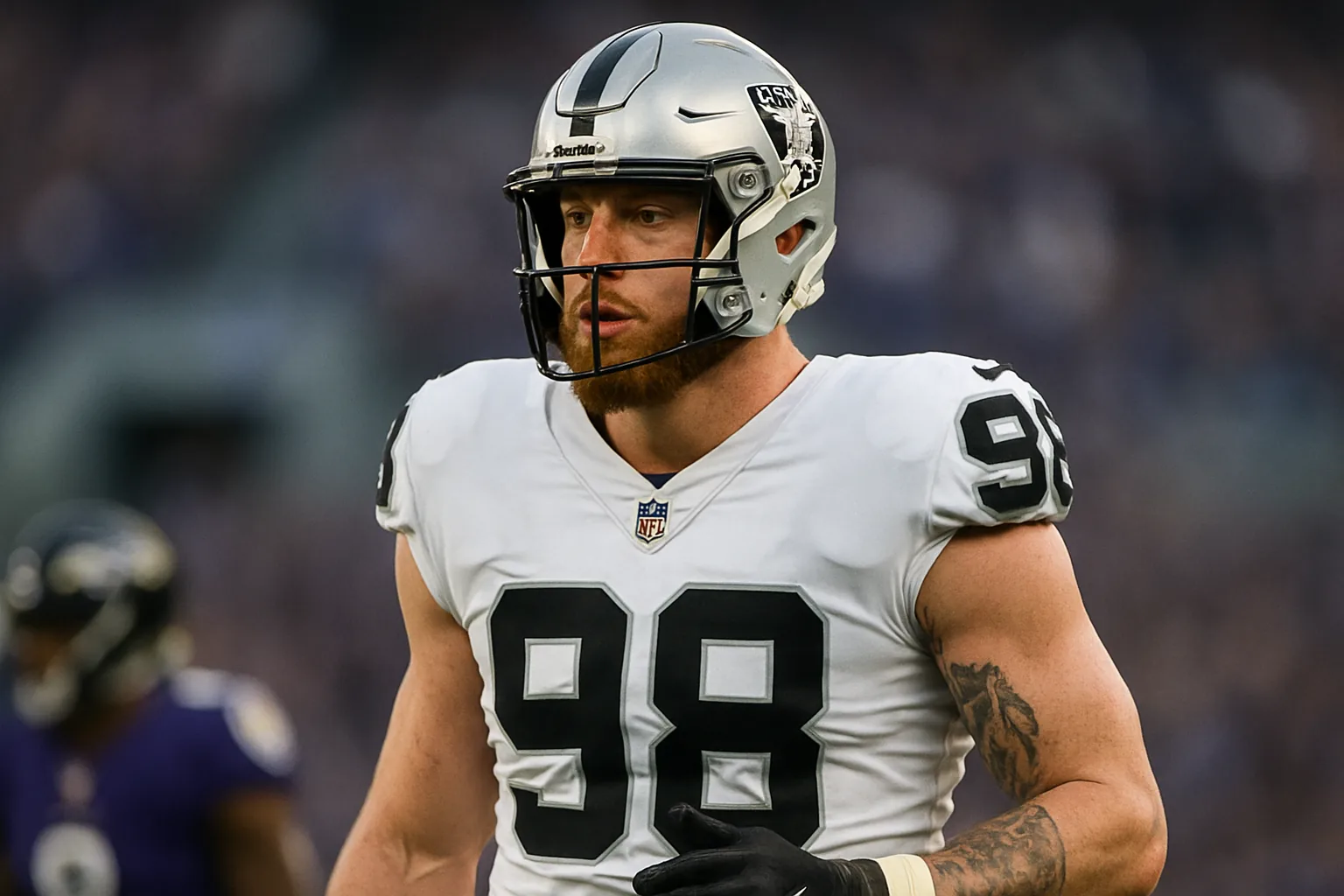
Trade stories that never become actual trades still matter because they reveal what teams were seriously willing to consider behind the scenes. A completed deal changes a roster. A failed one exposes the competing valuations, fears, and ambitions that front offices were trying to balance before deciding the cost was too high or the fit too uncertain. That is why a near-move involving Maxx Crosby carries weight even without a transaction to finalize the story.
Crosby is not a marginal player whose name happened to surface in rumor traffic. He is the kind of defensive star who shapes an organization's identity. Any credible trade interest around him therefore raises larger questions about what the Raiders believe they are building, what the Ravens thought they were missing, and how much elite edge pressure is worth in a league that increasingly treats pass-rush disruption as premium infrastructure.
Why failed trade talks can be more revealing than successful ones
When a trade happens, the public usually sees only the final terms and the official reasoning. When it falls apart, what stands out is the gap between what each side believed the player represented. That gap is often the story. It can show that one team viewed the player as foundational while the other saw a rare chance to turn star value into a broader strategic gain.
In this sense, a collapsed negotiation is not evidence of nothing happening. It is evidence that both clubs tested the limits of their own priorities and stopped at different points.
Why Crosby is such a meaningful case
Edge defenders like Crosby are difficult to replace because they provide both production and emotional definition. A player of that sort does not just generate pressure. He embodies competitiveness, sets standards, and gives a defense a recognizable center of gravity. That makes him expensive in every sense: financially, tactically, and symbolically.
The Ravens' interest makes intuitive sense because contenders are always drawn to impact defenders who can tilt postseason games. The Raiders' reluctance also makes sense, because moving such a player risks sending a message that the franchise is resetting more deeply than it wants to admit.
A useful way to frame it is this: failed star trades often reveal that both teams were being rational, just according to different definitions of what was too costly to lose.
Why fan fascination is part of the equation
Supporters react strongly to stories like this because they compress hope and anxiety into one rumor cycle. Fans imagine immediate upside while also confronting the possibility that their team's core identity is more fluid than it seemed. In Crosby's case, the idea of movement triggers questions about loyalty, direction, and how stable the franchise's self-image really is.
That reaction matters because front offices do not operate in a vacuum. Public interpretation becomes part of the cost of any star-level decision.
What to watch next
The key issue now is whether the failed talks were a one-off exploration or a sign that the player's place in longer-term planning is less settled than it appears. Watch how both teams talk about defensive priorities, cap management, and competitive timelines. Those clues often outlast the rumor itself.
That is why this story matters. A trade that did not happen can still reveal what each side truly values when pressure, ambition, and roster identity all collide.
Sometimes the most informative move in the market is the one that stops just before it becomes real.