
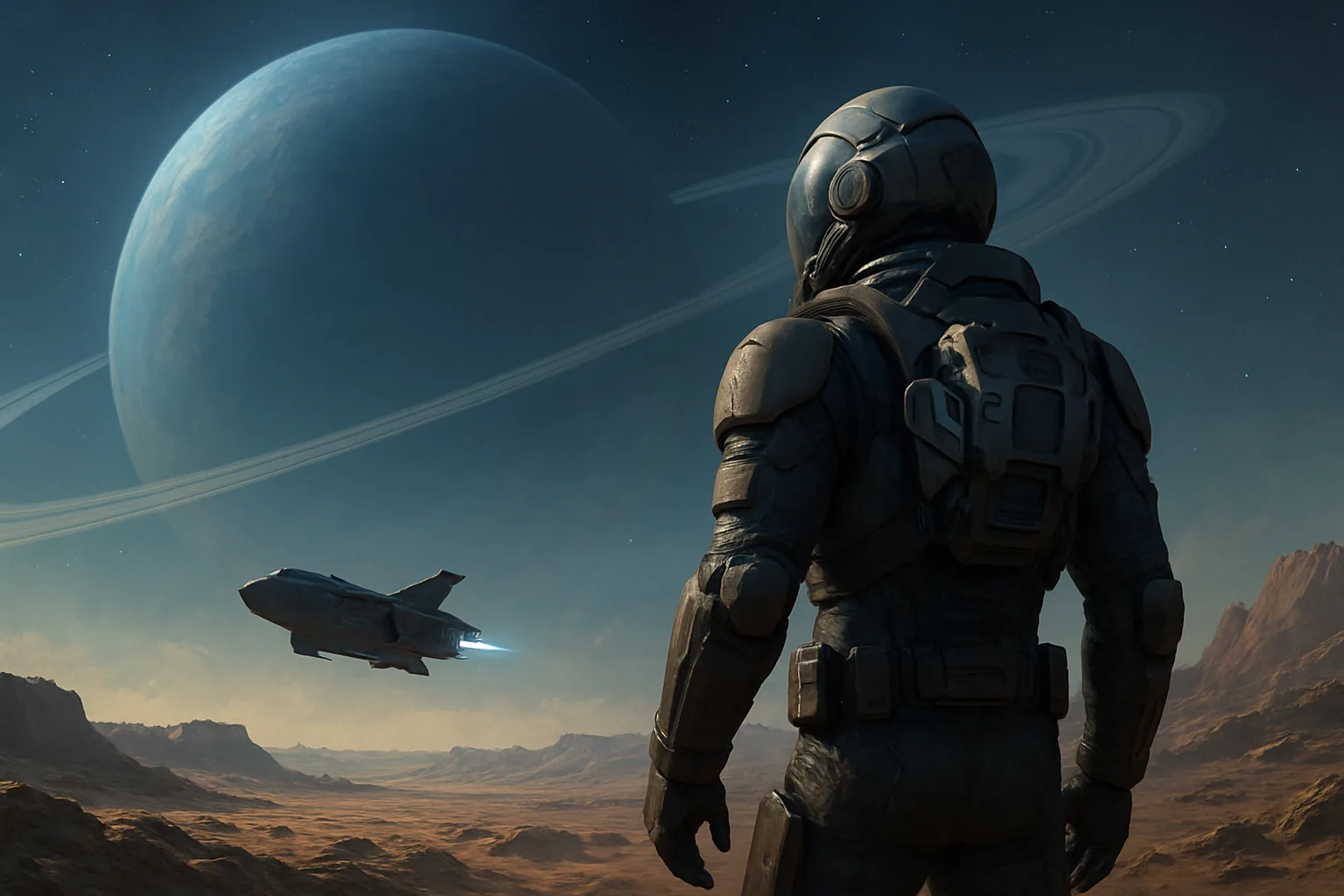
Owlcat Games used the March 26 Xbox Partner Preview to do something more useful than drop another cinematic tease for The Expanse: Osiris Reborn. It attached the game to a release window, a playable beta, and a clearer gameplay identity.
The headline facts are straightforward. Osiris Reborn is planned for spring 2027. It is coming to PC, Xbox Series X|S, and PS5, with day-one availability on Xbox Game Pass Ultimate. On Xbox Series X|S, a closed beta begins April 22, 2026 for players who buy the Miller’s Pack or Collector’s Edition through the official site.
But the more interesting part of the reveal is what Owlcat chose to emphasize. This was not framed as a prestige adaptation riding on recognition from the books and TV series. The trailer and the accompanying details leaned hard into systems: squad support, consequential mission choices, cover-based third-person combat, gadgets for zero-gravity encounters, and an Exploit mechanic that lets companions create large combat openings even when they are not in your active field team.
Why this reveal matters
Licensed games usually face the same immediate question: is the studio building a real game with its own shape, or borrowing a familiar universe to smooth over uncertainty? Owlcat clearly knows that problem. The Partner Preview update answers it by narrowing the pitch. Osiris Reborn is being sold as a story-driven action RPG first, and a The Expanse adaptation second.
That distinction matters because The Expanse is not a naturally easy fit for broad, spectacle-first game design. Its appeal has always come from political tension, fragile alliances, class conflict, and the feeling that every decision leaves residue. If Owlcat simply chased space-opera bombast, it would miss the texture that made the setting worth adapting in the first place.
The source material from Xbox suggests the studio is trying to avoid that trap. The beta mission begins after the protagonist and their twin escape Eros by force and return to Pinkwater 4 station. From there, the preview stresses crew assistance, tactical combat, and decisions with long-lasting consequences. That is a much more convincing use of the license than generic space shooting would have been.
The beta is doing two jobs at once
The April 22 closed beta is not just early access for committed fans. It is also a statement about confidence and workflow. Owlcat says the beta will run all the way up to release, which gives this less of a short marketing beat and more of a long proving ground.
That matters for a game like this. Ambitious RPGs are often sold on promise long before players can judge how the systems actually feel in motion. Here, the studio is putting a full mission in players’ hands and using that slice to demonstrate the core loop: return from Eros, reconnect with allies, fight through pressure, make a consequential decision, and rely on crew support that extends beyond your two-person active squad.
A concrete example makes the pitch easier to read. Imagine a player entering that beta mission expecting a familiar third-person shooter with dialogue choices attached. Instead, they are asked to manage cover that can be destroyed, swap between weapon types, use gadgets like tactical scanners or drone swarms, and watch for an Exploit opportunity where a companion can wipe out a clustered enemy group. Then the mission asks for a decision that may affect someone close to them or someone they barely know. That is not just atmosphere. It is Owlcat trying to show how The Expanse values can survive inside combat and mission structure.
Game Pass changes the commercial equation
The day-one Xbox Game Pass launch matters for an obvious reason: it lowers the barrier for players who are interested in the setting but not yet sold on the game. That is especially useful for a project that sits in a tricky middle ground. Osiris Reborn has a known IP, but it is not a mainstream annual franchise. It comes from a studio with RPG credibility, but it is also asking players to trust a different combat style and a denser role-playing structure than a pure action game would offer.
Game Pass helps bridge that gap. It gives Xbox players a low-friction way to sample a title that may otherwise have needed a much harder sell. In practical terms, that can broaden the audience beyond die-hard Expanse fans and Owlcat loyalists.
There is a split strategy here. The paid founder-style editions monetize the most committed audience early through beta access. Game Pass then widens the funnel at launch. For a systems-heavy RPG in a recognizable but not mass-market universe, that is a sensible combination.
What the new details say about the game itself
The reveal also sharpened what kind of party structure Owlcat is building. According to the Xbox post, two companions accompany you in the field while others can still support from a distance. Zafar appears early as a guide and mechanic, while Regina, Teo, Michael, and the protagonist’s twin are positioned as key parts of the crew later on. The Exploit system appears to formalize that support into combat utility rather than leaving non-active companions as narrative decoration.
That is important because party-based RPGs often struggle with a simple problem: players only bring a subset of characters into battle, so everyone else risks becoming dead weight between dialogue scenes. Owlcat seems to be trying to solve that by making the whole crew feel mechanically present.
If it works, that would fit The Expanse unusually well. This is a setting built on interdependence, hierarchy, and trust under pressure. A crew that matters even when not standing next to you in a firefight is more faithful to that tone than a standard hero squad would be.
What to watch next
The biggest question is not whether the premise is strong. It is whether Owlcat can keep the adaptation grounded without making it feel slow or over-designed. The beta should provide the first credible answer. Players will be looking for three things quickly: whether third-person combat feels sharp enough to carry repeated encounters, whether choices feel meaningfully embedded in missions rather than bolted onto cutscenes, and whether the crew support systems create real tactical variety instead of occasional scripted moments.
The spring 2027 window also gives the studio room, which can be good or dangerous depending on execution. A long runway allows iteration. It also raises the bar for clarity. From here, each update needs to show that the game is becoming more concrete, not just larger in description.
Right now, The Expanse: Osiris Reborn looks most interesting not because it has a famous name attached, but because Owlcat is trying to translate the setting’s pressure, loyalty, and moral uncertainty into actual play. The trailer helped. The beta is where that argument starts to become testable.