
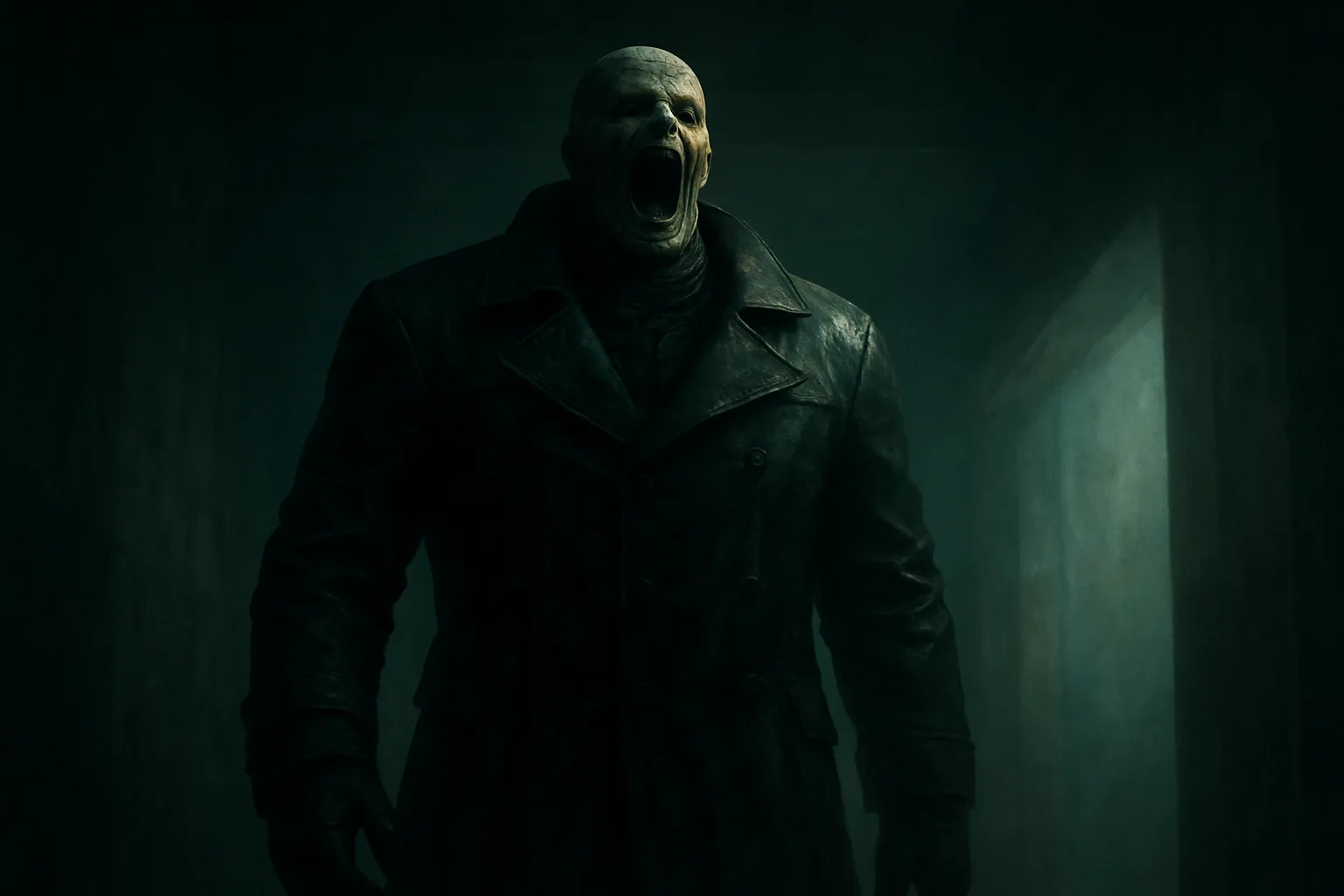
The most effective Resident Evil monsters are not just scary in an abstract cinematic sense. They feel materially wrong. Their movements, breathing, textures, and sounds suggest bodies that are close enough to touch and unpleasant enough that players would never want to. That is why the story behind Resident Evil Requiem's stalker audio is so revealing. The more physically disgusting and believable the sound design becomes, the more the horror pushes past spectacle and into bodily discomfort.
That distinction matters because horror players adapt quickly to familiar tricks. Loud noises, sudden appearances, and dark corridors can still work, but they lose power when they feel too recognizably constructed. Sound design that feels disturbingly organic can cut through that adaptation because it makes the threat seem less like a scripted effect and more like something wet, breathing, and present in the same space as the player.
Why bodily sound is so powerful in horror
Sound reaches players in a different way from visuals. A grotesque creature can be partially managed if the player learns its silhouette or attack pattern. But a choking, sticky, saliva-heavy sound can provoke disgust before the player has even rationalized what it belongs to. That reaction is immediate and harder to intellectualize away.
This is one reason the stalker archetype remains so effective in survival horror. The threat is not only that the creature can kill you. It is that you have to keep hearing it exist. Persistent audio turns pursuit into atmosphere, and atmosphere is often what makes players remember a horror sequence long after the jump scares fade.
Why Capcom keeps leaning into sensory specificity
Resident Evil has spent years refining a version of horror that depends on texture as much as scale. Players are not just afraid of monsters being dangerous. They are afraid of them being vividly, offensively alive. Specific sounds, especially unpleasant ones, help sell that illusion far more effectively than generic monster noise ever could.
That is why unusual recording methods or actor anecdotes around bodily sound effects attract so much interest. They reveal that the discomfort is not accidental. It is engineered with precision. Capcom understands that the franchise's best fear often comes from sensory detail, not just from plot stakes.
A useful way to frame it is this: the more a monster seems to have mass, fluids, and breath, the less it feels like a game mechanic and the more it feels like a contamination event moving toward the player.
Why this matters for the player experience
When horror becomes that tactile, the player's relationship to space changes. Hallways stop being routes and start being exposure zones. Audio cues become warnings not only of danger, but of proximity to something revolting. This deepens tension because players are no longer reacting only to combat risk. They are reacting to the possibility of sensory violation.
That is especially important in Resident Evil, where tension often depends on rationing courage. Players need just enough confidence to keep moving, but not so much that the environment loses its power. Repulsive sound design helps preserve that imbalance.
What this says about modern survival horror
The broader lesson is that modern survival horror still benefits from craft that feels messy rather than clean. High production values do not have to make horror sleek. In fact, they often work best when they make horror more intimate, more textured, and more difficult to hold at arm's length.
That is why the story behind Requiem's stalker sounds resonates. It confirms something players already sense when the effect lands: fear becomes stronger when it feels embarrassingly physical. The monster does not just look dangerous. It sounds like it has a body you can almost hear leaking through the darkness.
Resident Evil has always understood that terror is strongest when it gets under the skin. Sound design like this is one of the clearest ways the series keeps doing exactly that.