
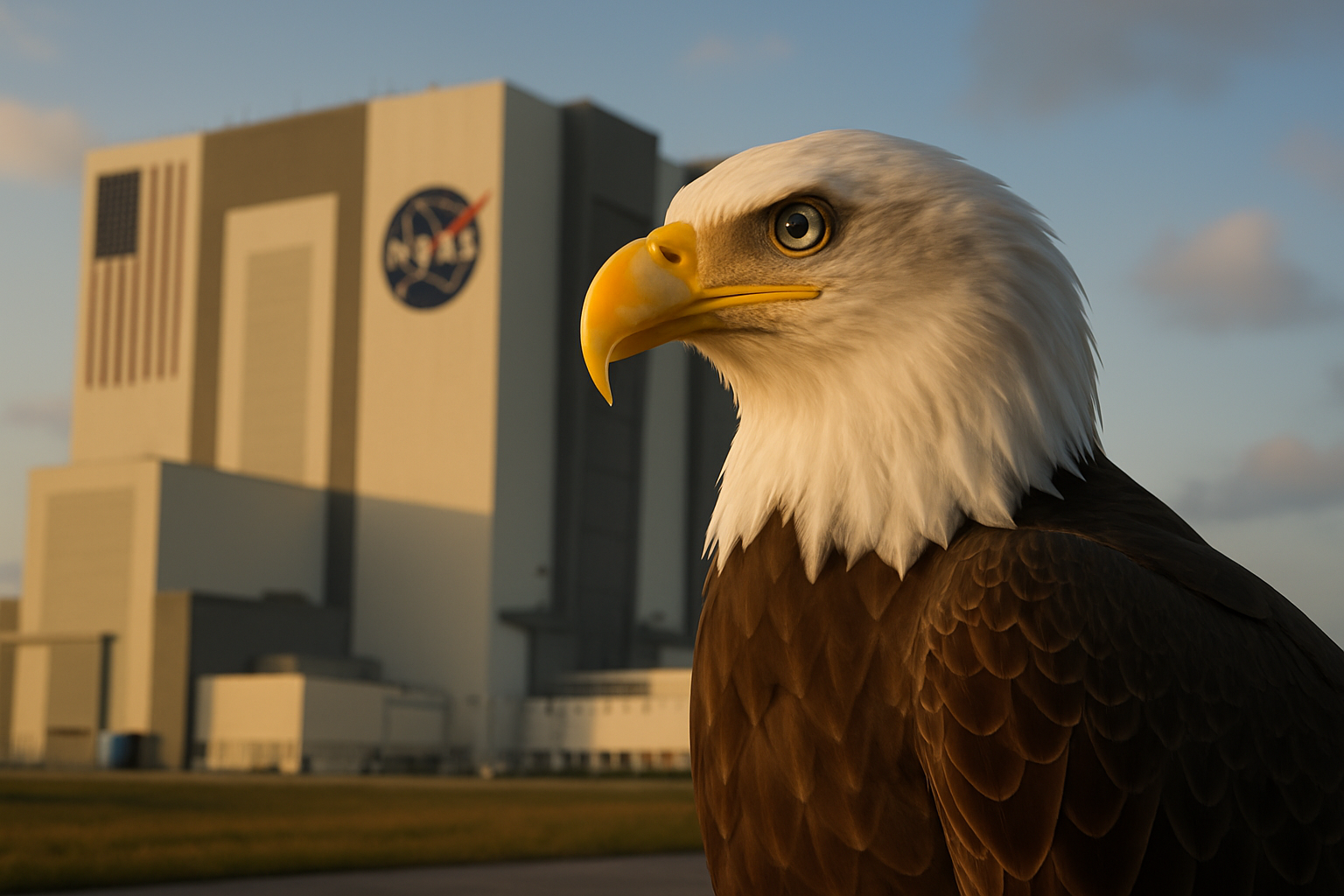
A bald eagle at Kennedy Space Center matters because the image brings together two kinds of American symbolism that are not often seen as one story. On one side is the national emblem, a species long associated with resilience and conservation success. On the other is one of the country's most visible centers of technological ambition. When those worlds appear in the same frame, the result says something larger about how exploration, national identity, and protected landscapes intersect.
That is why the scene matters beyond photography. It reminds viewers that space infrastructure does not sit outside nature. It operates within a coastal habitat that remains active, fragile, and ecologically significant.
Why Kennedy is an unusual environment
Kennedy Space Center is known for rockets, astronauts, and launch pads, yet it is also embedded in a broader refuge system that supports birds, reptiles, and coastal species. This dual identity makes the area unusual. It is simultaneously a place of cutting-edge engineering and a functioning wildlife landscape. The presence of a bald eagle underscores that the site cannot be understood only as industrial infrastructure.
This is why the image matters. It reveals the coexistence of national scientific ambition with long-term environmental stewardship.
A useful way to frame it is this: Kennedy is not just where machines leave Earth. It is also a place where the natural world remains visible enough to shape how the site is experienced.
Why the bald eagle remains symbolically powerful
The bald eagle carries a weight that goes beyond wildlife appreciation. Because the species was once imperiled and later recovered through conservation policy, its visibility often signals a story of national restoration. At Kennedy, that symbolism deepens. The bird becomes a reminder that technological progress and environmental care do not have to be mutually exclusive, even if balancing them is difficult.
This is one reason the image resonates. It turns a wildlife sighting into a broader meditation on what kind of national progress the United States wants to represent.
Why NASA imagery shapes public imagination
NASA images often help the public connect emotionally to science and exploration. A wildlife image from Kennedy broadens that narrative by showing that space programs are not only about hardware, launches, and distant destinations. They are also rooted in specific places on Earth with their own ecological character. That humanizes the institution and gives the public a more textured understanding of the environment surrounding spaceflight.
That is why the image matters beyond symbolism. It expands the story of exploration to include the local ecosystems that coexist with national launch capability.
Sometimes the most revealing space image is not a spacecraft in orbit, but a living creature reminding us where the launchpad begins.
What matters next
The important question is whether institutions can continue preserving the habitat around major infrastructure while public interest in launches grows. Images like this make that balance easier to appreciate because they render the stakes visible. Protecting the setting becomes part of protecting the meaning of the place itself.
That is why the bald eagle at Kennedy Space Center matters. It represents a meeting point between conservation, identity, and exploration that is richer than any single headline can capture.
In one image, the site looks less like a machine-only landscape and more like a national frontier where technology still answers to the living world around it.