
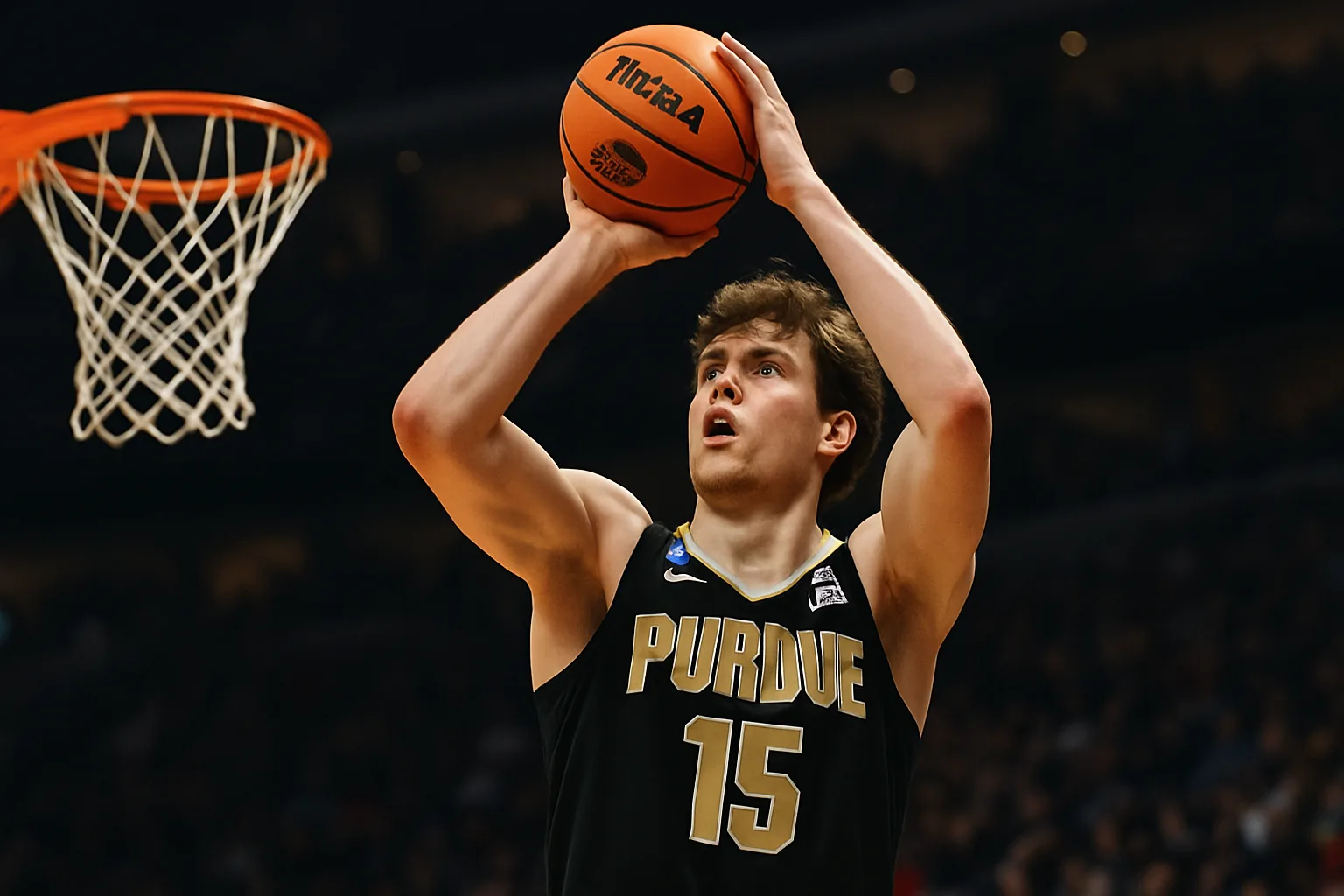
The Sweet 16 rarely disappoints because it compresses a season's worth of pressure into a few possessions at a time, and this round delivered exactly that kind of volatility. Iowa extended its run with a comeback that looked unlikely for stretches, Purdue survived a late-game knife fight, and both Illinois and Arizona did enough to move on without making the path feel comfortable. The common thread was not just drama. It was survival under conditions where one cold stretch or one mistake can erase months of work.
That is what makes the regional semifinals more revealing than earlier tournament rounds. By the time teams reach the Sweet 16, outright talent advantages are harder to rely on. Opponents are more disciplined, scouting is sharper, and every rotation choice matters. Games begin to hinge less on general quality and more on execution after momentum breaks in the wrong direction.
Iowa's comeback was about poise, not luck
Iowa's rally stood out because comebacks in this stage of the tournament usually require more than one hot shooting burst. A team has to tighten its defensive possessions, limit empty trips, and convince itself that the score still belongs within reach. That is harder than it sounds. Tournament deficits often grow mentally before they grow numerically, especially when each possession feels heavier than the last.
What made Iowa's push meaningful was the composure behind it. A comeback team needs somebody to steady the offense, somebody to turn a broken possession into a decent look, and enough collective discipline to stop chasing miracle plays. That is why these swings matter in March. They reveal whether a team can keep its shape when the game starts slipping away.
For Iowa, the result also reinforced a broader truth about deep tournament runs: resilience is a skill, not a slogan. Teams that can recover from ugly stretches tend to survive longer than teams that only look dominant when the game script stays comfortable.
Purdue showed why late-game clarity matters
Purdue's last-second win captured the other side of tournament pressure. Not every survival story comes through a long comeback. Sometimes it comes through a single end-game possession where spacing, timing, and decision-making matter more than the previous thirty-nine minutes. Those moments often become the memory of a March game, but they are usually built on smaller choices made much earlier.
Late-game execution exposes whether a team actually knows what it wants under stress. Can it get the ball to the right player? Can it generate a clean look without wasting the clock? Can it defend without fouling on the other end? Purdue did enough in those margins to finish the job, and that tends to be the difference between a contender that advances and one that spends the offseason replaying a final possession.
Illinois and Arizona kept moving, even without comfort
Illinois and Arizona advanced as well, and that matters because tournament basketball is not graded on style points. Teams do not need every game to feel smooth. They need enough control to absorb runs, enough shot creation to avoid droughts becoming fatal, and enough defensive focus to close possessions. In that sense, a tense win can be more informative than an easy one.
There is also a strategic reason these results matter. Surviving a high-pressure Sweet 16 game can clarify a team's dependable lineups, crunch-time creators, and defensive weak spots before the Elite Eight. Coaches learn which units can hold together when the pace changes and the pressure rises. That knowledge can be worth almost as much as the result itself.
What the round said about March as a whole
The broader lesson from this Sweet 16 is that tournament advancement is rarely about one clean narrative. It is about adaptation. One team survives because it calms down after falling behind. Another survives because it executes one possession better than its opponent. Another survives because it avoids letting a shaky stretch spiral into a collapse. The teams still playing are usually the ones with multiple ways to stay alive.
That is why this round felt so satisfying to watch. The games delivered suspense, but they also showed the practical traits that keep seasons going: poise, late-clock shot making, and the willingness to keep defending when the offense gets messy. In March, those qualities matter more than bracket aesthetics or pre-tournament expectations.
The Sweet 16 did what it is supposed to do. It narrowed the field while making the remaining teams prove they can handle pressure that looks and feels different every night. Iowa, Purdue, Illinois, and Arizona advanced, but the path each team took underscored the same point: talent gets you here, composure keeps you going.