
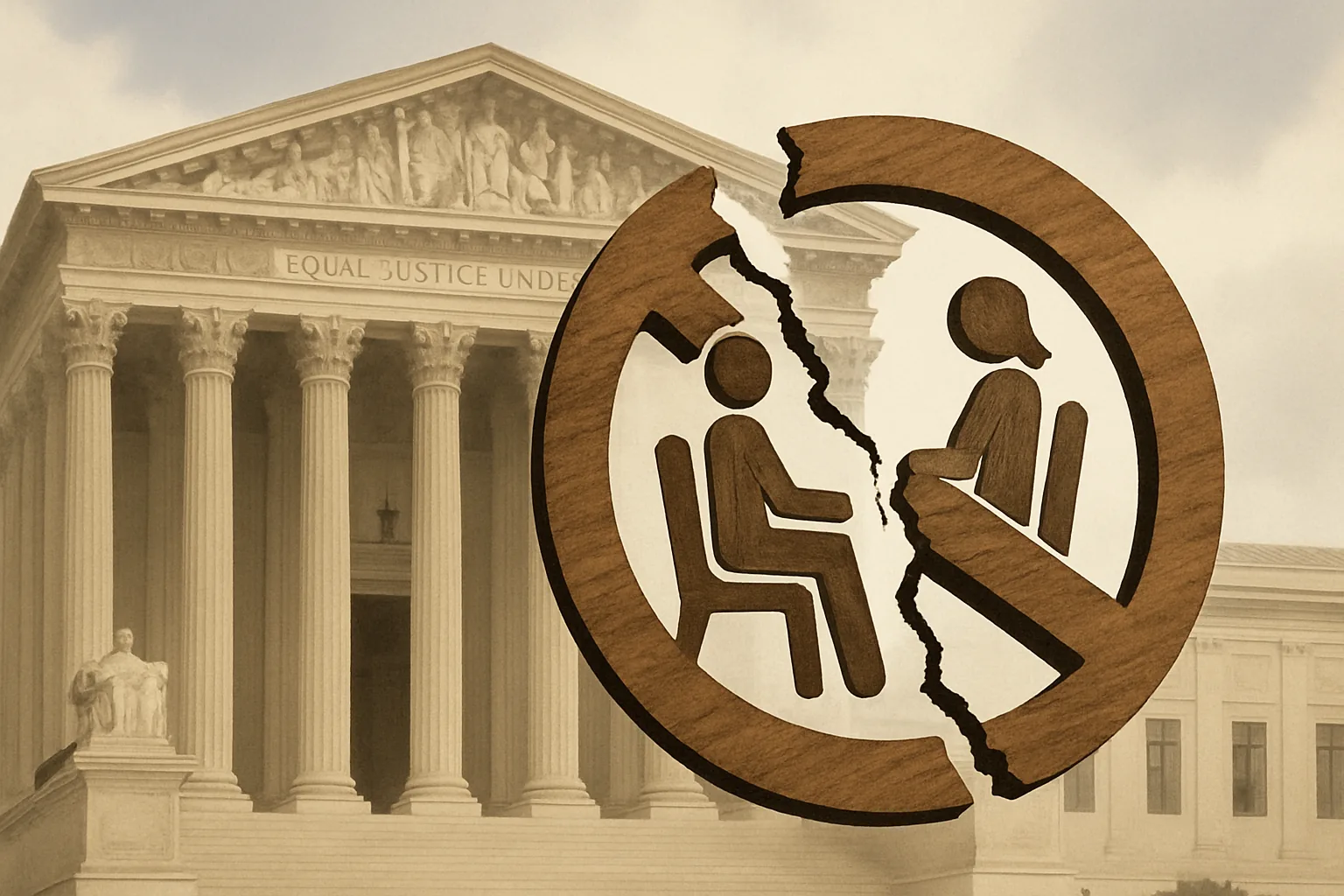
The Supreme Court’s decision in Chiles v. Salazar is a major First Amendment ruling wrapped inside one of the country’s most charged culture-war disputes. On March 31, 2026, the court ruled 8-1 that Colorado’s 2019 ban on conversion therapy for minors, as applied to a counselor’s talk therapy, likely violates the First Amendment because it regulates speech based on viewpoint.
That does not amount to a judicial blessing of conversion therapy. The court did not say the practice is sound, effective, or good policy. It said something else: when a state tells a licensed counselor that one conversational viewpoint is forbidden while another is permitted, courts cannot wave the law through under a relaxed standard. They have to apply strict scrutiny, the most demanding form of constitutional review.
That distinction matters. It is the difference between a case about medical regulation in general and a case about the state deciding which ideas a professional may express in the course of treatment.
What the court actually decided
Justice Neil Gorsuch wrote for the court, which reversed the lower courts and sent the case back for another look. The holding was narrow but potent: Colorado’s law, as applied to petitioner’s talk therapy, regulates speech based on viewpoint, and the lower courts failed to apply sufficiently rigorous First Amendment scrutiny.
The lineup is notable. Justice Elena Kagan wrote a concurrence joined by Justice Sonia Sotomayor, suggesting that even justices often more deferential to regulation saw a serious free-speech problem in the way this case was framed. Justice Ketanji Brown Jackson dissented.
AP’s reporting adds an important practical point. Colorado is one of about two dozen states that have banned conversion therapy for minors. The ruling therefore lands far beyond one counselor and one state statute. It invites challenges to similar laws elsewhere, at least where those laws are enforced against speech-based counseling rather than physical interventions.
Why this matters beyond Colorado
The legal issue here is not whether states can regulate licensed professions at all. They plainly can. States set standards for doctors, lawyers, therapists, and financial advisers every day. The harder question is what happens when the regulated conduct is itself conversation.
That has been a recurring constitutional fault line for years. Governments often argue that professional speech should be treated as ordinary professional regulation. Challengers argue that once the state starts sorting acceptable from unacceptable viewpoints in spoken advice, the First Amendment is directly implicated.
The court sided decisively with the second view here.
That will matter well beyond conversion-therapy litigation. Professional licensing rules often sit close to the line between regulating conduct and regulating expression. This ruling gives future challengers a stronger way to argue that states cannot escape serious First Amendment review simply by labeling speech restrictions as health-and-safety rules.
The practical distinction the court is drawing
The source material also points to what the decision did not do. It casts doubt on bans targeting talk therapy, but it does not address prohibitions on physical procedures. That is a crucial boundary.
If a state bans a physical treatment performed on minors, courts may analyze that as regulation of medical conduct. If a state bans particular conversations in a therapist’s office because of the viewpoint those conversations express, the constitutional problem looks different.
That distinction may frustrate both sides. Supporters of these laws will argue that counseling is treatment, not just speech. Opponents will argue that a conversation is still speech even when delivered by a licensed professional. The court has now signaled that it takes that second concern seriously.
A concrete example
Consider a counselor speaking with a minor who is distressed and uncertain about sexuality or gender identity. If the law allows the counselor to affirm one direction of self-understanding but forbids the counselor from exploring another direction in the same talk-therapy setting, the court is saying that kind of asymmetry can look like viewpoint discrimination.
That does not settle whether the state might still justify the restriction under strict scrutiny. But it changes the starting point. The state now bears a much heavier burden, and few laws survive that test.
What this means for LGBTQ+ protections
For advocates of LGBTQ+ protections, the ruling is a serious legal setback even though it does not erase every state safeguard in this area. Conversion therapy is widely described in the source material as a discredited practice, and many state laws were built on the premise that minors need protection from it. The court’s decision does not reject that concern as a policy matter. It says the Constitution limits the way states may pursue it when speech is the object of regulation.
That is an important, and uncomfortable, feature of constitutional law: a government can have a strong policy interest and still choose a legally vulnerable method.
The result is likely to push lawmakers toward narrower drafting, different evidentiary records, and perhaps more emphasis on conduct-based restrictions rather than viewpoint-specific speech bans. It also means LGBTQ+ protections in this space may become more uneven from state to state while litigation continues.
What to watch next
The case now returns to the lower courts, where Colorado will have to defend its law under strict scrutiny. That is a steep hill. The state will need to show not just that it has an important interest, but that the law is narrowly tailored under the toughest constitutional standard.
Several things are worth watching:
- Whether lower courts treat similar bans in other states as viewpoint-based speech regulations.
- Whether states rewrite statutes to focus more explicitly on conduct or professional malpractice rather than conversational content.
- Whether future cases test how far this reasoning extends to other licensed professions where advice and speech are the service itself.
The ruling leaves plenty unresolved. It does not finally decide every conversion-therapy law. It does not say states are powerless to protect minors. It does say courts must be far less casual when the government restricts what a licensed counselor may say.
That is the real significance of Chiles v. Salazar. The case is not only about one disputed therapy practice. It is about whether professional licensing can be used to sort permitted and forbidden viewpoints inside private counseling sessions. The Supreme Court’s answer, at least on these facts, is that the Constitution demands much harder scrutiny than lower courts had given.