
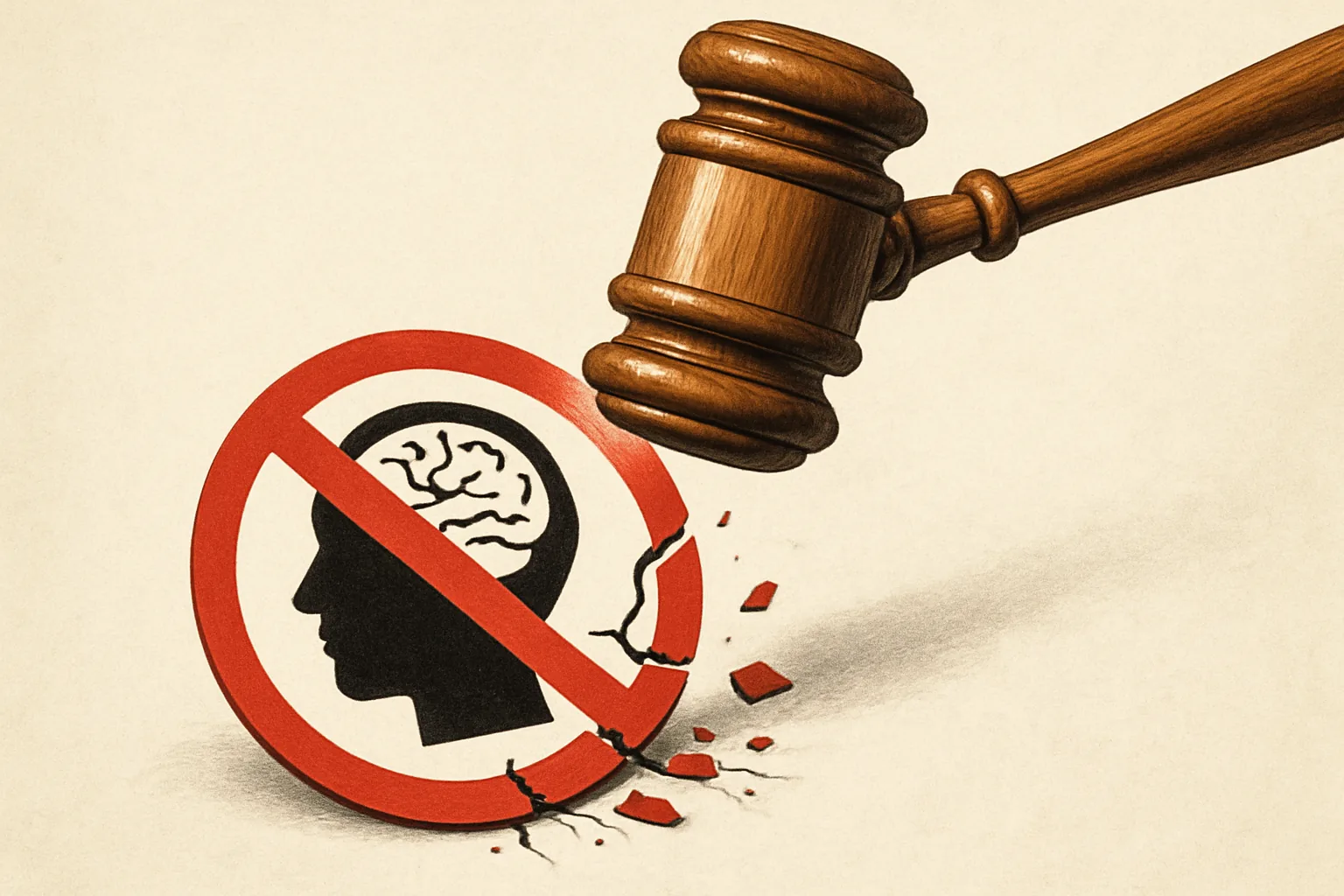
The Supreme Court has handed Colorado a major setback in its effort to ban talk-based conversion therapy for minors, ruling that the law likely collides with the First Amendment because it regulates speech by viewpoint.
That is the immediate legal result. The larger consequence is harder to miss: the court has made it much riskier for states to defend laws that treat licensed counseling as ordinary professional regulation when what is being regulated is, in practice, conversation.
In an 8-1 decision, the justices sided with a Christian counselor who challenged Colorado’s restriction on what critics describe as conversion therapy for LGBTQ+ minors. The court did not simply strike the law and move on. It said the lower courts used the wrong constitutional lens and sent the case back for review under strict scrutiny, the toughest standard in constitutional law and one that few laws survive.
That procedural move matters almost as much as the vote count. Once a law is treated as a content- or viewpoint-based speech restriction, the government’s burden becomes far heavier. Colorado will now have to justify the law under a test designed for measures that cut directly into protected expression.
Why the court treated this as a speech case
The state’s argument, in broad terms, was that it was regulating professional conduct within a licensed field. The court was not persuaded. Writing for the majority, Justice Neil Gorsuch said the law censors speech based on viewpoint. That framing changes the whole case.
If a state can characterize a conversation between counselor and client as mere professional conduct whenever it dislikes the substance of that conversation, First Amendment protections become much thinner for entire categories of licensed work. The court’s ruling pushes in the opposite direction. It suggests that when the government tells a counselor which viewpoints may or may not be voiced in therapy, it is not just policing a profession. It is policing speech.
The breadth of the coalition is also notable. Gorsuch’s opinion drew support not only from the court’s conservative bloc but from Justices Elena Kagan and Sonia Sotomayor. That does not mean the justices agree on every downstream implication. It does mean the speech analysis here was persuasive well beyond the court’s usual ideological lines.
What this means for other states
Colorado is not alone. The source material notes that more than 20 states have enacted similar bans. Those laws are not identical, and not all will rise or fall on the same wording. But the court has now supplied a constitutional roadmap for challenging them.
That shifts the terrain for lawmakers, state regulators and advocacy groups on both sides. Supporters of these bans have typically argued that states should be able to set standards for licensed mental-health professionals, especially when minors are involved. Opponents have argued that these laws punish disfavored viewpoints and force counselors to conform their speech to the state’s preferred message.
After this ruling, courts examining similar laws are likely to spend less time asking whether a state was simply regulating a profession and more time asking whether the state singled out speech because of what it expressed. That is a much less comfortable posture for states defending these bans.
The practical line the court is redrawing
The decision reaches beyond this single policy dispute because it revisits a recurring legal question: where is the line between regulating a profession and regulating speech?
States clearly have authority to license professions and set rules for conduct. They can discipline fraud, malpractice and unsafe practices. But this case turns on a narrower and more difficult problem. When the service itself is conversation, advice or counseling, speech is not incidental to the job. It is the job.
A concrete example makes the stakes easier to see. Imagine a licensed counselor meeting with a 16-year-old client and the client’s parents. If a state law allows one kind of discussion about identity but forbids another because officials view that second message as unacceptable, the state is no longer just setting credentials or safety rules around the profession. It is deciding which ideas may be expressed inside the counseling room. That is the distinction the Supreme Court treated as constitutionally serious.
This does not resolve the policy fight over conversion therapy itself. The source material describes the practice as discredited, and state supporters of these bans will continue to argue they are protecting minors from harm. But the court has made clear that a state cannot rely on that policy judgment alone if the law operates by suppressing particular speech.
Why strict scrutiny changes the odds
Strict scrutiny is where many speech restrictions fail. Under that test, the government generally must show a compelling interest and prove the law is narrowly tailored to achieve it. In plain terms, it is not enough for a state to say its objective is important. It must also show it used a tool precise enough to avoid unnecessary damage to protected expression.
That is an especially demanding assignment for laws written around conversations and therapeutic advice. If the line a statute draws depends on the viewpoint being expressed, the constitutional problem becomes harder to escape.
So even though the Supreme Court sent the case back rather than issuing the final word itself, Colorado’s path is now steep. And because other states are watching the same doctrine, the practical effect may spread well before every similar law reaches the justices.
What to watch next
The immediate next step is in the lower courts, where Colorado’s law will be tested under the stricter standard the Supreme Court required. But the real audience for this opinion is wider.
- States with comparable bans will need to reassess whether their laws can survive a speech-based challenge.
- Lawmakers may look for narrower approaches that rely less explicitly on policing what counselors say.
- Future cases will likely probe whether other professional rules, not just those involving counseling, are actually disguised speech restrictions.
That last point may prove the most durable. The ruling is about conversion therapy on its face. In legal effect, it is also about the Constitution’s limits on state authority over licensed professionals whose work consists largely of talking, advising and persuading.
For readers outside the legal world, the cleanest way to understand the case is this: the court did not just question one state policy. It strengthened the argument that the government faces a high constitutional bar when it tries to control the content of professional speech, even inside a heavily regulated field.
That is why this decision is likely to matter long after the Colorado case returns to the lower courts. It does not settle every dispute over how states protect minors or regulate therapists. It does, however, make one thing harder for states to claim: that speech stops being speech just because it happens in a licensed office.