
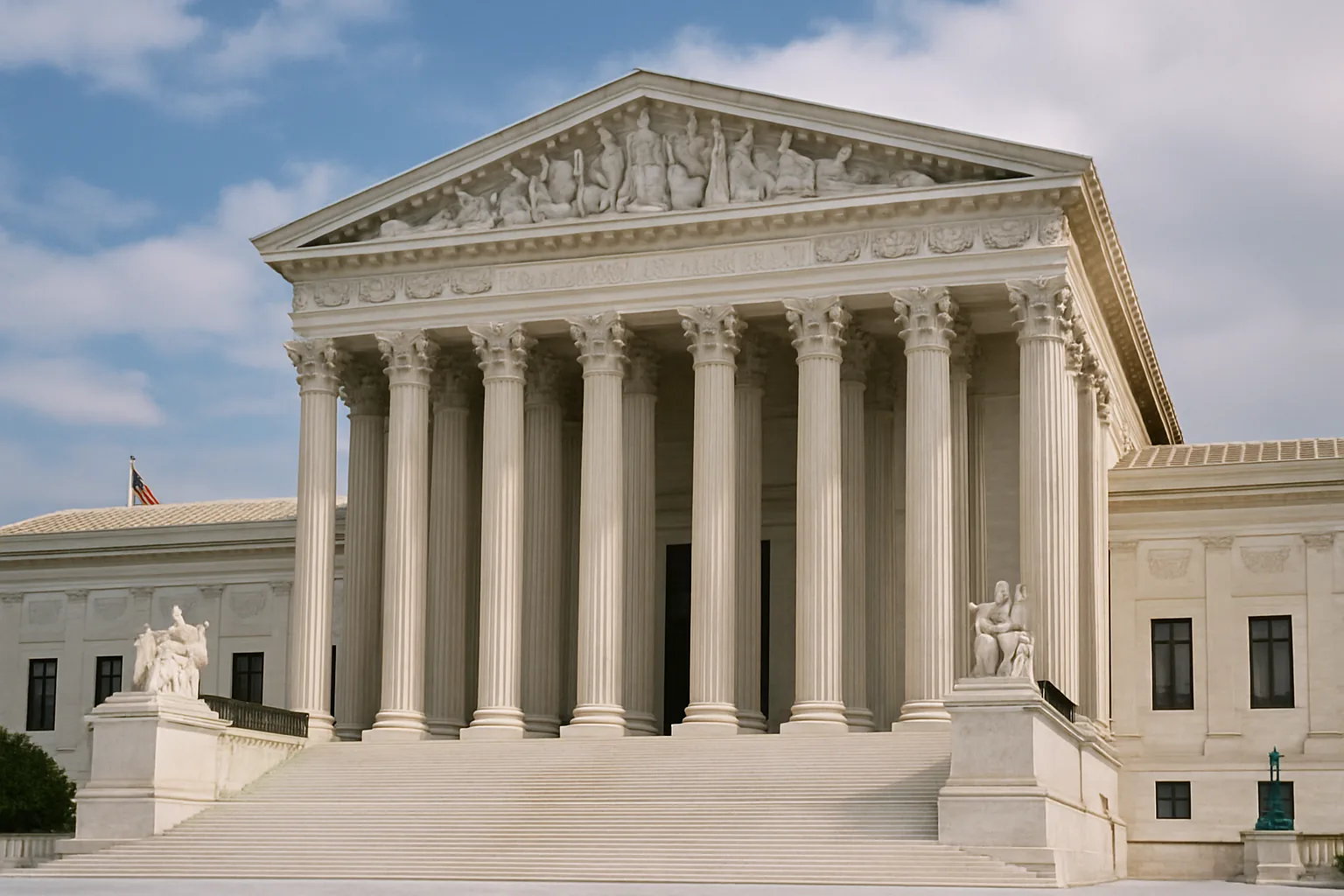
The U.S. Supreme Court has handed opponents of state conversion-therapy bans a major First Amendment victory, ruling 8-1 that Colorado’s 2019 prohibition on the practice for minors likely violates free-speech protections and must face a far tougher constitutional test in lower court.
The immediate dispute is narrow: whether Colorado can stop a licensed counselor from using talk therapy aimed at changing a minor’s sexual orientation or gender identity. The practical effect is much wider. By treating the law as viewpoint-based speech regulation rather than ordinary professional oversight, the Court has made similar laws in roughly two dozen states newly vulnerable.
What the Court actually did
The justices sided with a Christian counselor who challenged Colorado’s law on First Amendment grounds. Justice Neil Gorsuch, writing for the majority, said the statute “censors speech based on viewpoint.” That matters because viewpoint discrimination is among the hardest forms of regulation for the government to defend.
The Court did not definitively settle the law’s fate on the merits. Instead, it sent the case back to lower courts and indicated that Colorado’s ban must survive heightened scrutiny, a standard that few laws clear. That procedural point is easy to miss, but it is the center of the ruling. Once the Court says a law regulating counseling speech deserves that kind of skepticism, the burden on the state changes dramatically.
There was also a notable lineup on the bench. Gorsuch’s opinion drew support not only from the Court’s conservatives but also from Justices Elena Kagan and Sonia Sotomayor. For a politically charged culture-war issue, that breadth matters. It suggests this was not framed only as a social-policy fight, but as a speech case with implications that reach beyond LGBTQ+ policy.
Why this matters beyond Colorado
States that adopted conversion-therapy bans have generally argued that they were regulating professional conduct, not suppressing ideas. That distinction has been crucial. Legislatures have more room to police medical and mental-health practice than to dictate what viewpoints a speaker may express.
The Court’s ruling cuts into that defense. If counseling conversations are treated primarily as protected speech, then a state cannot simply say, “This topic is off limits,” while permitting the opposite message. That is the logic that threatens comparable laws elsewhere.
This does not mean every ban automatically falls tomorrow. Different statutes are written differently, and lower courts will still have to apply the Supreme Court’s framework. But the direction is unmistakable: states can no longer assume that licensing power gives them broad authority to bar a therapist from pursuing one set of ideas in conversation while allowing another.
The hard constitutional question underneath
The case turns on a recurring problem in modern First Amendment law: when does professional regulation become speech control?
Doctors, lawyers, therapists and financial advisers all speak for a living. States license them because bad advice can cause real harm. But once courts become suspicious that a state is targeting a viewpoint rather than setting neutral standards of care, professional licensing stops looking like ordinary oversight and starts looking like censorship.
That is why this ruling will be watched far outside the conversion-therapy debate. If a state can ban one therapeutic objective because it disapproves of the message behind it, what else can it ban under the label of professional regulation? The Court is signaling that it wants a cleaner, narrower answer to that question.
A concrete example of what changes
Consider two counseling sessions with a 16-year-old who is distressed and uncertain about sexual orientation or gender identity. In one session, a therapist helps the teen explore and affirm those feelings. In another, a therapist explores whether the teen wants to reduce or change those feelings. Under the Court’s framing, Colorado’s law becomes constitutionally suspect because it appears to allow one conversational direction while forbidding the other.
That does not resolve the underlying policy dispute over harm, ethics or evidence. It does show why the Court saw a speech problem. The legal issue is not just that the state regulated therapy. It is that the regulation may have favored one viewpoint inside a conversation.
The policy stakes are not going away
None of this erases the larger political reality: conversion therapy remains widely criticized and described in the source material itself as a discredited practice. States that passed these bans did so because they believed minors needed protection from methods they viewed as harmful.
That concern will not disappear because the legal theory has become harder to sustain. Instead, lawmakers may have to rethink how such protections are written. Broad bans on therapy conversations aimed at a particular outcome now look riskier. Narrower rules tied to fraud, coercion, malpractice, or clearly defined professional misconduct may draw a different reception, though the Court’s ruling makes plain that states cannot be careless about the speech implications.
For advocates on both sides, that means the next phase is likely to be less about headlines and more about drafting. Opponents of these bans now have a stronger template for challenges in other states. Supporters will look for ways to defend protections for minors without triggering the same viewpoint-discrimination problem.
What to watch next
The lower courts now have the immediate task of applying the Supreme Court’s instructions to Colorado’s law. That alone will be consequential, because it will show how demanding the heightened-scrutiny test becomes in practice.
After that, attention will shift quickly to the rest of the country. State officials will have to decide whether to defend existing bans as written, revise them, or prepare for new lawsuits. Licensed counselors, health-policy groups and civil-liberties organizations will all treat this case as a live precedent, not an isolated Colorado dispute.
The broader lesson is plain enough. The Supreme Court has not endorsed conversion therapy as good policy or good practice. It has said something different, and legally more explosive: when a state tries to control what a licensed counselor may say because of the viewpoint being expressed, the First Amendment may stand in the way.
That is why this ruling matters. It shifts the battlefield from whether states dislike the practice to whether they can prohibit it through speech regulation at all.