
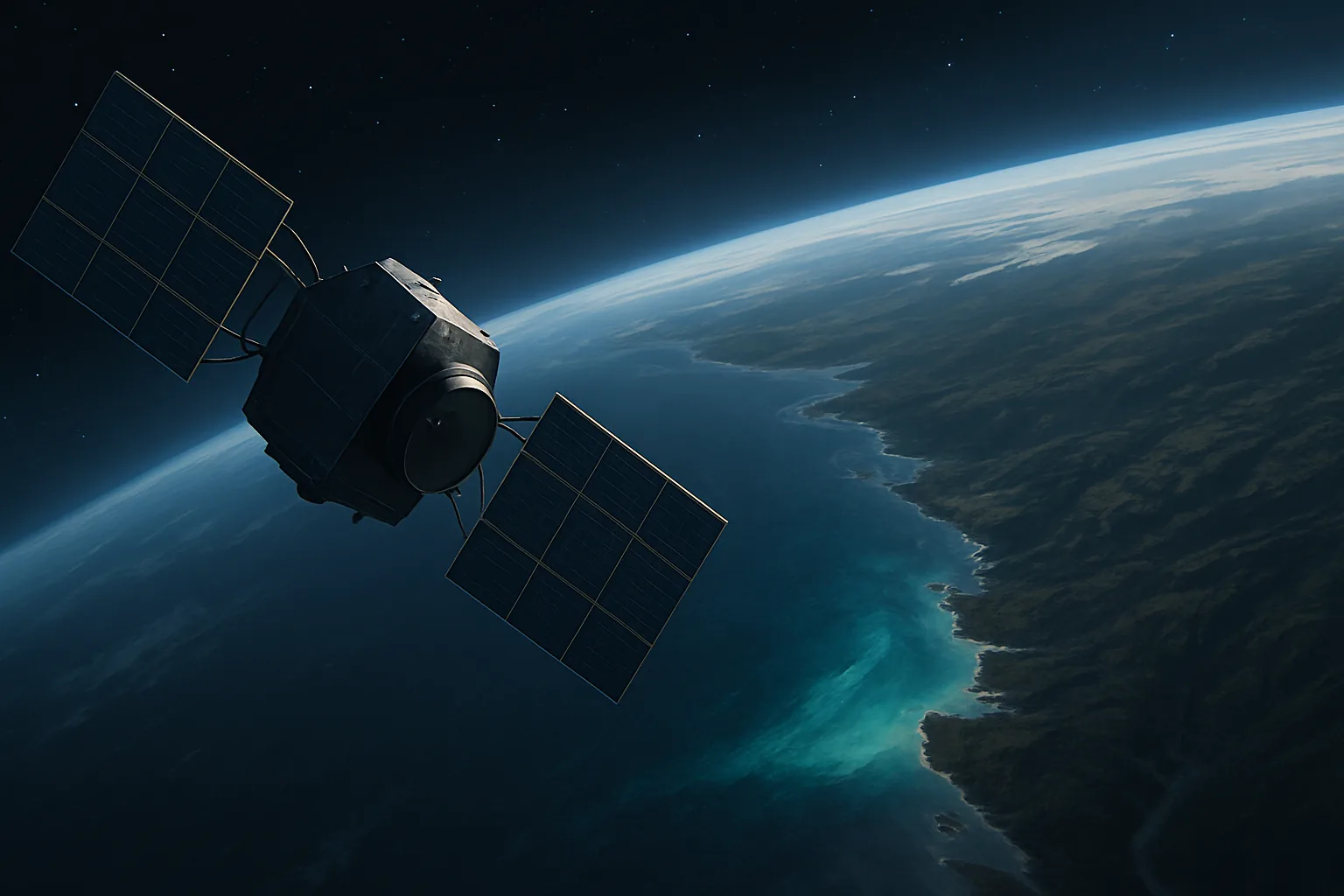
NASA’s Earth Observatory highlighted a scene that looks almost painterly from orbit: coastal waters near Vancouver Island brightened into cloudy green and turquoise tones during a Pacific herring spawn. The image is eye-catching, but the real story is not aesthetic. It is about what satellites can now track in coastal ecosystems that were once documented mostly through surveys, reports, and timing luck.
According to NASA, Landsat 9 captured the event on February 19, 2026, near Forbes Island in Barkley Sound on the southwestern side of Vancouver Island. The agency said herring activity in British Columbia can brighten nearshore waters enough to be visible from space, especially during the spawning season that typically runs from mid-February through early May.
What the satellite actually saw
The color change did not come from the fish bodies themselves. During spawning, female herring lay eggs that cling to surfaces such as kelp, seagrass, and rock. Males release milt into the water, and that fluid gives the shoreline a cloudy green or turquoise appearance. From the ground, it is a striking local event. From orbit, under the right conditions, it becomes a measurable signal.
That distinction matters because it turns a seasonal natural event into usable remote-sensing data. Satellites are not spotting individual fish. They are detecting the physical change in coastal water caused by mass spawning activity.
Why Barkley Sound matters
NASA noted that sheltered waters in Barkley Sound are regular sites for herring spawns, and that events near Forbes Island have been observed in most years since the 1970s, according to Fisheries and Oceans Canada records. That long history gives the imagery more value. It is not a random visual curiosity. It is a fresh observation layered onto a place where scientists and fisheries managers already have historical context.
A concrete example helps: if an aerial survey misses a narrow weather window or a remote shoreline report arrives late, a satellite image taken at the right time can still capture where activity concentrated and how broadly the water changed. That does not replace fieldwork, but it can improve coverage and timing.
Why this matters beyond one image
NASA points out that records of spawn activity have historically been constrained by the timing of aerial and dive surveys, the availability of reports from remote locations, and fisheries priorities. Satellite observations can help close some of those gaps by watching larger areas more consistently over time.
That is where the article becomes more than an image-of-the-day story. Pacific herring matter ecologically and economically. NASA notes they are important both to First Nations food and harvest practices and to British Columbia’s commercial fisheries. As forage fish, they also matter to salmon and other marine life. Better records of where and when herring spawn can therefore tell researchers something broader about changing marine conditions.
Researchers at the University of Victoria have already used decades of satellite observations to augment historical spawn records and refine future detection methods. That means the Vancouver Island image is part of an ongoing effort to make remote sensing more useful for coastal monitoring, not just a one-off visualization.
What to watch next
The practical question is whether satellite monitoring can become routine enough to improve management decisions, not just enrich public understanding. If repeat imagery can reliably capture changes in spawning sites, timing, and intensity, it gives fisheries scientists another way to compare current seasons with the historical record.
That could matter more as marine systems shift. Herring are sensitive to habitat conditions, and their spawning grounds help reveal what is happening in shallow coastal ecosystems. A fuller map of those events would not answer every fisheries question, but it would reduce the blind spots.
The Vancouver Island image works because it is beautiful. It matters because it is useful. NASA’s snapshot shows how an event that once depended heavily on local observation can increasingly be tracked from space, turning a brief seasonal spectacle into a more durable scientific record.