
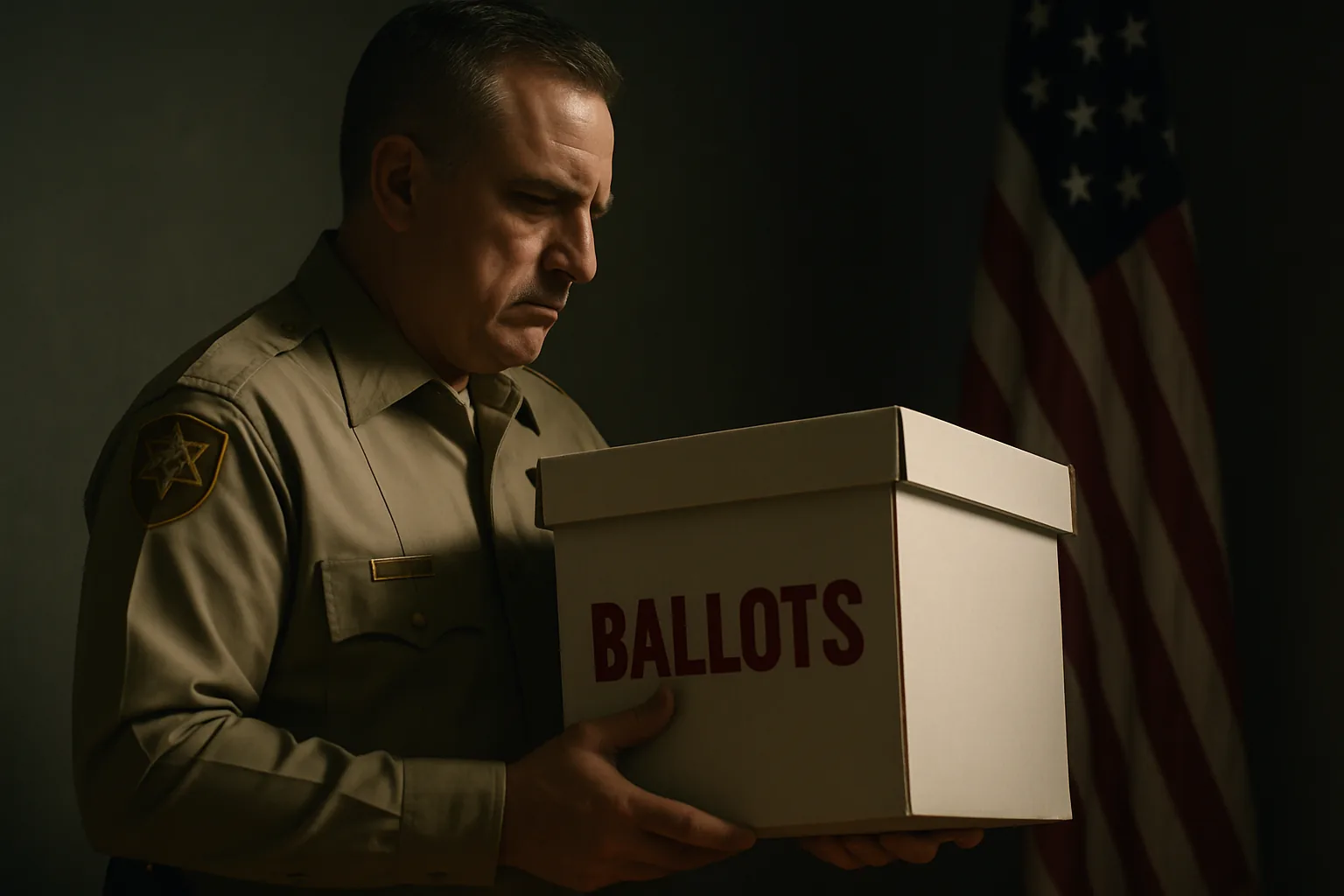
A controversy involving ballot seizure matters because election systems are built as much on public trust as on statutory procedure. People do not personally observe every safeguard, chain-of-custody step, or legal review involved in administering elections. They rely on institutions appearing competent, neutral, and bounded by clear rules. When a law-enforcement figure becomes central to a dispute over ballots, the symbolism can be deeply destabilizing even before all the legal facts are resolved.
That is why the story resonates so strongly. Elections are one of the few civic processes where perceived irregularity can do damage independent of the final numerical outcome. A dramatic scene can alter confidence faster than any formal correction can restore it.
Why law enforcement and ballot handling are a volatile mix
Law enforcement carries coercive power. Election administration is supposed to carry procedural legitimacy. When those roles appear to overlap in unusual ways, the public may read the event through the lens of intimidation, politicization, or institutional overreach. Even if a legal explanation exists, the visual and political message can be difficult to contain.
This is why ballot-seizure controversies matter. They blur the line between neutral administration and force, and that line is one democracy has to protect carefully.
A useful way to frame it is this: election trust depends partly on the absence of scenes that make ordinary administration look like a raid or a standoff.
Why the political aftermath can outlast the incident
Once an elections controversy becomes partisan fodder, it often gains a life independent of the original facts. Supporters may see necessary enforcement. Critics may see suppression or theater. That divergence can deepen existing suspicions and leave the public with less confidence in the shared legitimacy of the system.
This is one reason the story matters beyond the county or state involved. Election narratives travel fast, and dramatic incidents are quickly folded into national arguments about who can be trusted to administer democracy fairly.
Why institutional boundaries matter so much
Healthy election systems rely on role clarity. Administrators count and secure ballots. Courts resolve disputes. Law enforcement, when involved at all, should operate within narrowly defined constraints. If those boundaries become fuzzy, even temporarily, the cost can be broader uncertainty about who is actually in charge of the process.
That is why the incident matters as a governance question, not just a political scandal. Democracies depend on institutions staying within legible limits.
When those limits appear to shift in public, the sense of procedural safety can erode quickly.
What matters next
The key questions are whether the legal rationale for the action withstands scrutiny, whether election officials can restore confidence through transparent explanation, and whether the episode becomes a precedent or remains a cautionary anomaly. Those outcomes will determine the lasting institutional damage.
That is why ballot-seizure controversies matter. They expose how fragile confidence in elections can be when the process appears to collide with visible displays of state power.
In election administration, legitimacy is not only about what happens to the ballots. It is also about whether the public can still recognize the process as lawful, calm, and under control.