
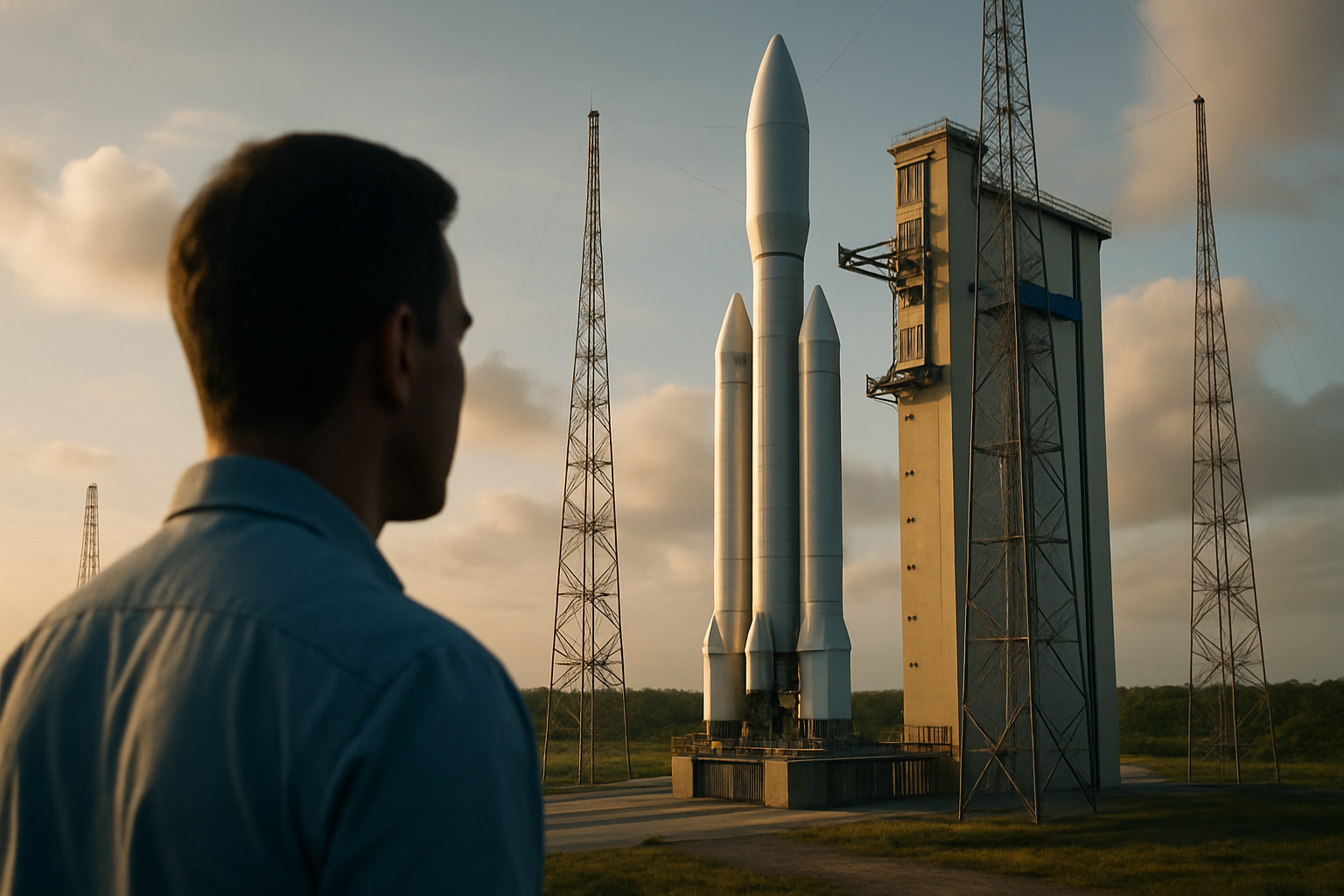
Milestones at Europe's spaceport matter because launch sites are among the clearest physical expressions of space capability. They are where policy ambitions turn into hardware operations, where commercial and scientific missions depend on reliability, and where the health of a region's space ecosystem becomes visible in schedules, infrastructure, and execution. A retrospective on the year at Europe's spaceport therefore carries more meaning than a simple recap. It offers a snapshot of whether the system behind Europe's launch ambitions is becoming stronger, steadier, and more credible over time.
That is why a look back at 2025 deserves attention. Spaceports do not generate the same headlines as individual missions, but they are essential to whether those missions can happen repeatedly and at scale.
Why spaceports are strategic assets
A spaceport is not just a launch pad. It is a complex operating environment tied to logistics, workforce capability, mission readiness, and long-term industrial planning. If launch vehicles are the visible symbols of a space program, spaceports are part of the hidden machinery that makes them possible. Their readiness influences cadence, reliability, and confidence across the broader ecosystem.
This is why the milestones matter. They reveal whether Europe's orbital ambitions are supported by practical infrastructure or merely by plans on paper.
A useful way to think about it is this: space strategy becomes real when a launch site can absorb complexity repeatedly without collapsing into improvisation.
Why yearly milestones can indicate deeper health
Individual launches matter, but a yearly pattern can tell a richer story. Upgrades, operational continuity, mission diversity, and the ability to handle setbacks all show whether a launch site is maturing. Milestones therefore serve as indicators of institutional resilience as much as project accomplishment.
This is one reason the retrospective matters. It helps observers see whether Europe's spaceport is building momentum or merely cycling through isolated achievements.
Why French Guiana still carries outsized importance
Europe's spaceport in French Guiana has long held symbolic and practical significance because it provides geographic advantages and a central site for launch operations. Its performance therefore influences how Europe is perceived as a launch actor. A successful year there strengthens the case that Europe can maintain meaningful operational continuity even amid broader industry or funding uncertainty.
That is why the story matters beyond nostalgia or institutional self-congratulation. It is part of how Europe demonstrates that its launch ambitions are backed by functioning infrastructure rather than by speeches alone.
When a spaceport works well over time, it becomes one of the strongest forms of quiet credibility a space program can possess.
What matters next
The key questions are whether the site keeps improving operational cadence, whether infrastructure investment remains aligned with launcher needs, and whether future years show stronger continuity rather than episodic success. Those signals will determine how much the milestones truly add up to.
That is why Europe's spaceport milestones matter. They provide a grounded measure of whether the continent's space strategy is being translated into durable launch capability year after year.
Space programs are remembered for their missions, but they survive because places like spaceports keep turning ambition into repeatable reality.