
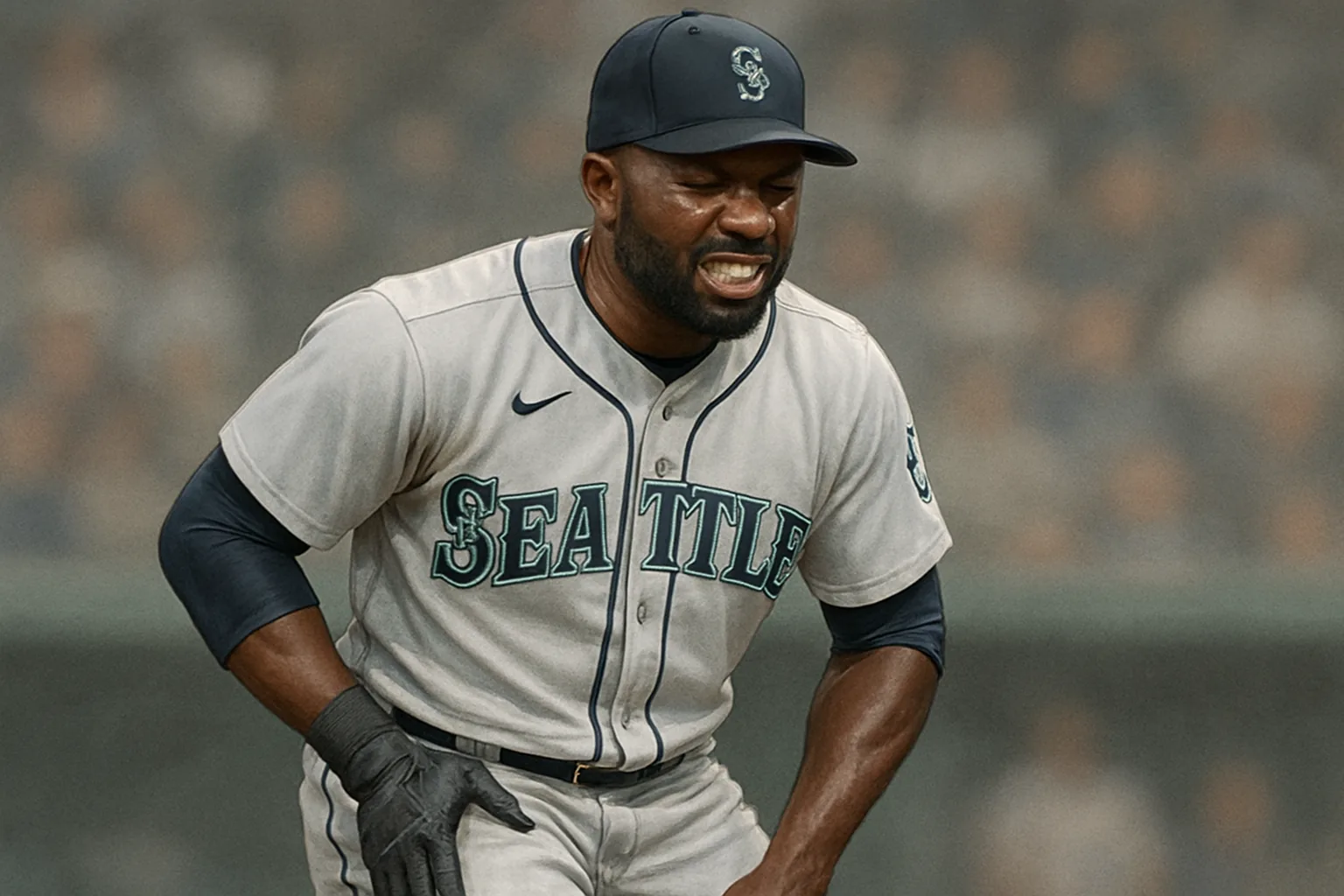
The Mariners got two important players back before their homestand opener against the Orioles, activating catcher Cal Raleigh and shortstop J.P. Crawford. They still did not get the clean reset they wanted.
Randy Arozarena was placed on the 10-day injured list after an MRI showed enough concern in his left hamstring to make Seattle back away from treating the issue as day to day. General manager Justin Hollander said the club does not expect Arozarena to miss more than the minimum, but the move still changes the shape of the roster at a difficult moment.
The timing is awkward because Seattle was already managing multiple position-player issues. Josh Naylor was dealing with right wrist soreness, Luke Raley had back tightness, and Arozarena had been working through the hamstring problem after the previous road trip. The Mariners could absorb one short bench spot for a night. They could not reasonably operate with several compromised players at once.
Why the IL move was the practical choice
The key detail is not that Arozarena’s injury suddenly became severe. Based on Hollander’s comments, the club’s medical testing had suggested he was trending in the right direction and might have been available quickly. The MRI simply introduced enough doubt to make waiting risky.
That distinction matters. Baseball teams often try to avoid a 10-day IL move when a regular might be back in a few days, especially for a hitter with Arozarena’s role. But carrying an unavailable player limits every late-game decision: pinch-hitting, defensive substitutions, pinch-running, platoon matchups, and emergency coverage. When several players are limited, the cost compounds.
For Seattle, this became less about one hamstring and more about roster function. Hollander’s line that the club could not “play three people short” captures the real issue. A contender can survive a brief absence from one everyday player. It is harder to play clean baseball when the bench is theoretical.
The returns still matter
Raleigh’s return is the largest immediate boost. He is not just another bat coming back; he is Seattle’s star catcher, which affects the lineup and the pitching staff. Crawford’s activation also restores stability at shortstop, a position where continuity matters because of defensive communication and everyday reps.
That is why the day felt split in two. The Mariners improved at two premium positions, then lost an outfield regular before the first game of the homestand. For fans, it may feel like bad injury luck interrupting good injury news. For the front office, it was a sequencing problem: get healthier in one part of the roster while staying covered in another.
A concrete roster example
Imagine Arozarena remains active but cannot run comfortably, Naylor is available only in a limited hitting role, and Raley’s back tightness prevents him from playing the outfield. In that version of the roster, the manager may technically have a full bench but only one or two players who can actually handle normal game demands.
That can affect a seventh-inning decision. A left-handed reliever enters, but the best pinch-hit option is also the emergency outfielder. If the manager uses him, one later injury could force a player into an uncomfortable defensive spot. The issue is not only who starts. It is how many real options remain after the game starts moving.
That is the practical reason Seattle selected Curtis Washington Jr. from Class A Everett. The move was not framed as a long-term promotion based on proximity to the majors. It was driven by immediate logistics: Everett was at home, and Washington could get to T-Mobile Park in time, while Triple-A Tacoma was on the road in Salt Lake City.
What Washington’s call-up says about depth
Washington’s selection is a reminder that roster depth is not always a neat ladder from Triple-A to the majors. Sometimes the best available move is the player who can physically arrive before first pitch and cover the position group that is suddenly thin.
That does not make the call-up meaningless. For Washington, going from High-A Everett to a major league clubhouse is a major jump. For Seattle, it is a short-term patch built around outfield coverage, not a signal that the club suddenly views the High-A roster as its primary reserve pool.
The Mariners’ decision also reflects how the 10-day IL can be used as a pressure valve. If Arozarena’s stay really is minimal, Seattle buys a cleaner bench for a little over a week and avoids forcing a compromised player into a setback. If the hamstring lingers, the early IL move will look even more necessary.
What to watch next
The first thing to watch is whether Arozarena resumes baseball activity without the hamstring becoming a running issue. For an outfielder, “mild” inflammation still matters because the job requires acceleration, deceleration, and aggressive turns on the bases.
The second is how Seattle manages Naylor and Raley. If both are quickly available, the roster crunch eases. If either remains limited, the Mariners may need to keep prioritizing coverage over ideal lineup construction.
The third is how Raleigh and Crawford look immediately after returning. Getting names back on the active roster is one step; getting normal production and workload is another. Seattle’s best-case version of the week is simple: Raleigh and Crawford stabilize the lineup, Arozarena misses only the minimum, and the emergency outfield shuffle never becomes more than a short inconvenience.
For now, the Mariners are better than they were, but not whole. That is the small frustration inside the transaction: the club’s roster improved on paper, while the bench math still forced a move it did not want to make.