
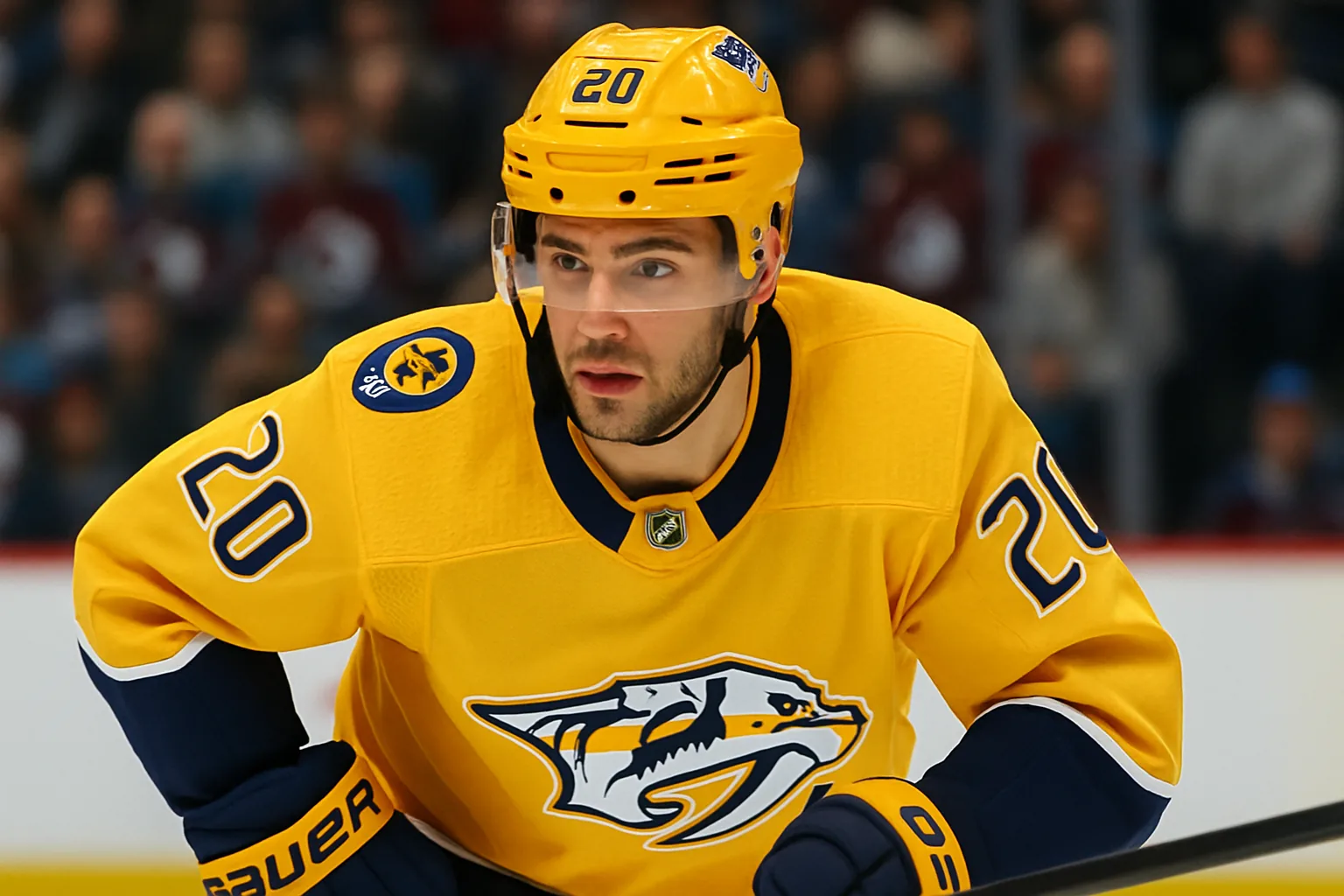
The Nashville Predators made an early statement under new hockey operations leader Chris MacFarland, acquiring forward Ross Colton and goalie prospect Isak Posch from the Colorado Avalanche for goalie Magnus Chrona, a 2026 third-round pick and a 2027 third-round pick.
The trade gives Nashville a 29-year-old forward with playoff experience and a Stanley Cup on his resume. It also gives Colorado two third-round selections and a goaltending prospect while moving out a player with one season left on his contract.
Colton had 24 points, with nine goals and 15 assists, in 73 regular-season games for Colorado this season. He added five points in 11 Stanley Cup Playoff games. Earlier in his career, he played a depth role on Tampa Bay’s 2021 championship team, recording six points in 23 playoff games during that run.
Why Nashville Wanted Colton
MacFarland described Colton as a versatile, two-way winger who can bring “sandpaper and grit” to Nashville’s middle six. That phrasing matters because it points to the role the Predators are likely buying, not just the stat line.
Colton is not being acquired as a top-line scorer. He is being acquired as the kind of forward who can play in the middle of a lineup, handle physical minutes, contribute secondary offense, and give a coaching staff more options when matchups tighten. For a Predators team trying to reshape its roster quickly, that kind of player can have practical value even without a major point total.
The timing also makes the move more interesting. MacFarland previously ran Colorado’s front office, so this is not a blind bet on a player from another conference. He is acquiring someone from a club he knows well, with a role profile he has already seen up close.
The Contract Makes This a Short, Clear Bet
Colton has one season remaining on the four-year contract he signed with Colorado on July 17, 2023, and can become an unrestricted free agent after next season. That makes this a contained move for Nashville.
The Predators are not locking themselves into a long-term commitment. They are paying draft capital and a goalie prospect to get one season of a veteran forward, with the option to decide later whether he fits well enough to extend. If Colton strengthens the middle six and fits the style Nashville wants to play, the team can revisit the relationship. If not, the contract naturally reaches a decision point.
For example, imagine Nashville using Colton on a third line that starts more shifts against strong opposing forwards than against depth units. If he can help that line stay above water, chip in around the net, and make the Predators harder to play against in a playoff-style game, his value will not be captured only by whether he reaches 40 points. The test is whether he raises the floor of the lineup when the game gets heavier.
Colorado’s Side Is About Flexibility
For the Avalanche, the deal looks like a move to convert a useful but non-core forward into future assets and roster flexibility. Colton’s production dipped to his lowest offensive total since his rookie season, and he was reportedly a healthy scratch at multiple points during the playoffs.
That does not make him a bad player. It does suggest Colorado saw a better use for the roster spot, cap space, or trade value. Getting two third-round picks plus Chrona gives the Avalanche more options, especially around the draft and offseason roster planning.
Colorado also swapped goalie prospects, sending Posch to Nashville and bringing in Chrona. Prospect-for-prospect movement can be easy to overlook, but it often reflects organizational preference: age curve, development timeline, scouting conviction, or depth needs at a specific position. The public-facing headline is Colton. The quieter part of the trade is that both teams also changed the shape of their goaltending pipeline.
What This Says About the Predators’ Offseason
Nashville’s move does not read like a full rebuild signal. It reads like a team trying to become more competitive in the middle of its lineup without waiting years for every answer to come through the draft.
That approach carries risk. Third-round picks are not premium assets, but they are still useful currency. Spending two of them on a player one year from unrestricted free agency puts pressure on the fit to be real. Nashville needs Colton to be more than a recognizable name from a winning team.
The practical implications are straightforward:
- Nashville gets immediate NHL help for its middle six rather than waiting on future picks.
- Colton gets a cleaner opportunity after a season in which his offense dropped and his playoff role was not fully secure.
- Colorado gains flexibility with two draft picks and a goalie prospect while moving on from a short-term contract.
What to Watch Next
The next question is where Colton slots in Nashville’s lineup. If he plays as a true middle-six forward with special-teams usage and consistent playoff-style assignments, the trade will be judged differently than if he becomes an expensive depth piece.
His contract status will also shape the story. A strong season could push Nashville toward an extension conversation before free agency. A quiet year would leave the Predators with a short rental and fewer draft assets.
For Colorado, the follow-up is whether the freed roster space and added picks become part of a larger offseason plan. The Avalanche did not just trade a forward; they turned one year of Colton into movable pieces. That only pays off fully if the flexibility leads somewhere useful.
On its own, this is not a blockbuster. But it is a revealing early move: Nashville is adding edge and experience under a new front-office voice, while Colorado is choosing optionality over keeping a familiar middle-six forward for one more run.