
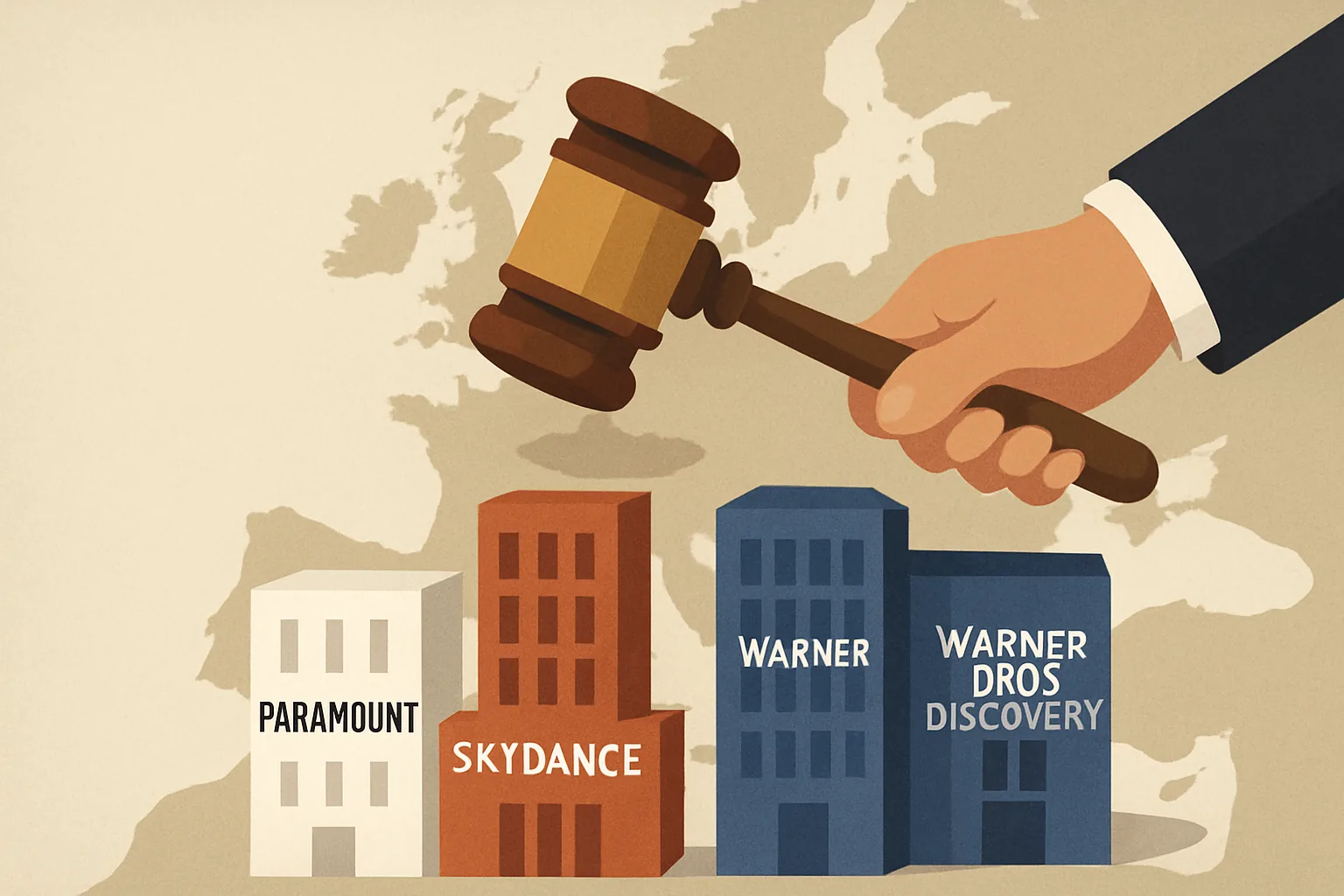
Paramount Skydance has filed for European Union antitrust approval to acquire Warner Bros. Discovery, moving the proposed media megadeal into a formal regulatory review in Brussels.
According to a European Commission filing cited by Reuters, the EU competition authority set July 7, 2026, as the deadline for its initial decision. By that date, the Commission can clear the transaction, approve it with remedies, or open a deeper investigation if it sees serious competition concerns.
The filing matters because it turns a headline-grabbing media consolidation plan into a regulatory process with defined choices and a public timetable. For Paramount Skydance and Warner Bros. Discovery, July 7 is not necessarily the end of the review. It is the first major checkpoint.
What the EU Is Reviewing
The proposed transaction, described in the source material as worth about $110 billion, would bring together two major entertainment groups with film, television, streaming, and cable-channel assets. That scale is exactly why the EU review is important.
The European Commission acts as the bloc’s competition enforcer. In a deal like this, its job is not to decide whether consolidation is good or bad in a general cultural sense. It is to assess whether the acquisition could reduce competition in specific markets, harm buyers or consumers, or give the combined company too much control over particular types of content or distribution.
The first-stage review is often called Phase 1. At this point, regulators can decide the deal is acceptable as filed. They can also require changes, such as asset sales or behavioral commitments. If the concerns are too complex to resolve quickly, the Commission can launch an in-depth probe.
Why This Deal Is Sensitive
Media mergers are rarely just balance-sheet events. They affect who owns libraries, channels, production pipelines, franchises, sports or entertainment rights, and the bargaining power behind distribution deals. Even when a transaction is framed as a way to build scale, regulators tend to ask a more practical question: where would the combined company become harder for competitors, distributors, advertisers, or consumers to work around?
The source material notes that critics, including some Hollywood figures, have warned about possible job losses in film and television. That is not the same issue as an antitrust finding, but it explains why the deal is drawing scrutiny beyond finance and regulation. A merger of this size can reshape creative operations as well as corporate ownership.
For a simple example, consider a smaller European pay-TV operator negotiating carriage for entertainment channels. If two channel portfolios that used to be negotiated separately become part of one larger company, the buyer may have fewer ways to walk away from a package without losing important programming. Regulators may look at whether that kind of combined leverage could affect market terms. That does not mean they will block the transaction, but it shows why “media scale” can become a competition question.
Remedies May Become the Practical Battleground
One detail in the source material is especially useful: Reuters previously reported that Paramount was willing to give up some smaller TV channels, including some children’s brands, to address possible regulatory concerns.
That suggests the companies may already be thinking in terms of remedies rather than a clean, unconditional approval. Remedies can be a way to preserve the basic structure of a transaction while reducing overlap in areas regulators consider sensitive.
For readers outside antitrust law, the distinction matters. A remedy is not just a symbolic concession. If regulators require divestitures, the combined company may have to sell assets it otherwise wanted to keep. If the remedy is narrower, the companies may accept it as the cost of getting a much larger deal through review.
The key question is whether any EU concerns are narrow enough to solve with asset sales or commitments during the initial review. If they are not, the process can stretch beyond July 7.
Europe Is One Part of a Larger Approval Map
The source material also says U.S. antitrust authorities appear inclined to approve the transaction, while citing a Semafor report that company representatives held a roughly two-hour meeting last month with Department of Justice officials.
That does not remove the importance of the EU process. Large cross-border media deals often require clearance in multiple jurisdictions, and each regulator can focus on different market effects. A transaction can look acceptable in one market and still raise narrower issues elsewhere.
The practical consequence is that Paramount Skydance and Warner Bros. Discovery need more than broad confidence. They need approvals that line up across the relevant jurisdictions, and they need any remedies to be compatible with the business they are trying to assemble.
What to Watch by July 7
The European Commission’s initial decision will clarify the near-term path for the deal. The most important outcomes are straightforward:
- Unconditional clearance: the EU sees no competition issue requiring changes at this stage.
- Conditional clearance: the deal can proceed only with agreed remedies, such as divestitures or other commitments.
- In-depth investigation: the Commission believes the concerns require a longer review before a final decision.
For investors and media executives, the July 7 deadline is a signal about deal risk. For employees, producers, distributors, and competitors, it is the first indication of how regulators view the combined power of two major entertainment groups.
The filing itself does not settle the future of the transaction. It does mark the moment when the deal leaves the realm of strategic ambition and enters the part of the process where regulators can demand specifics.