
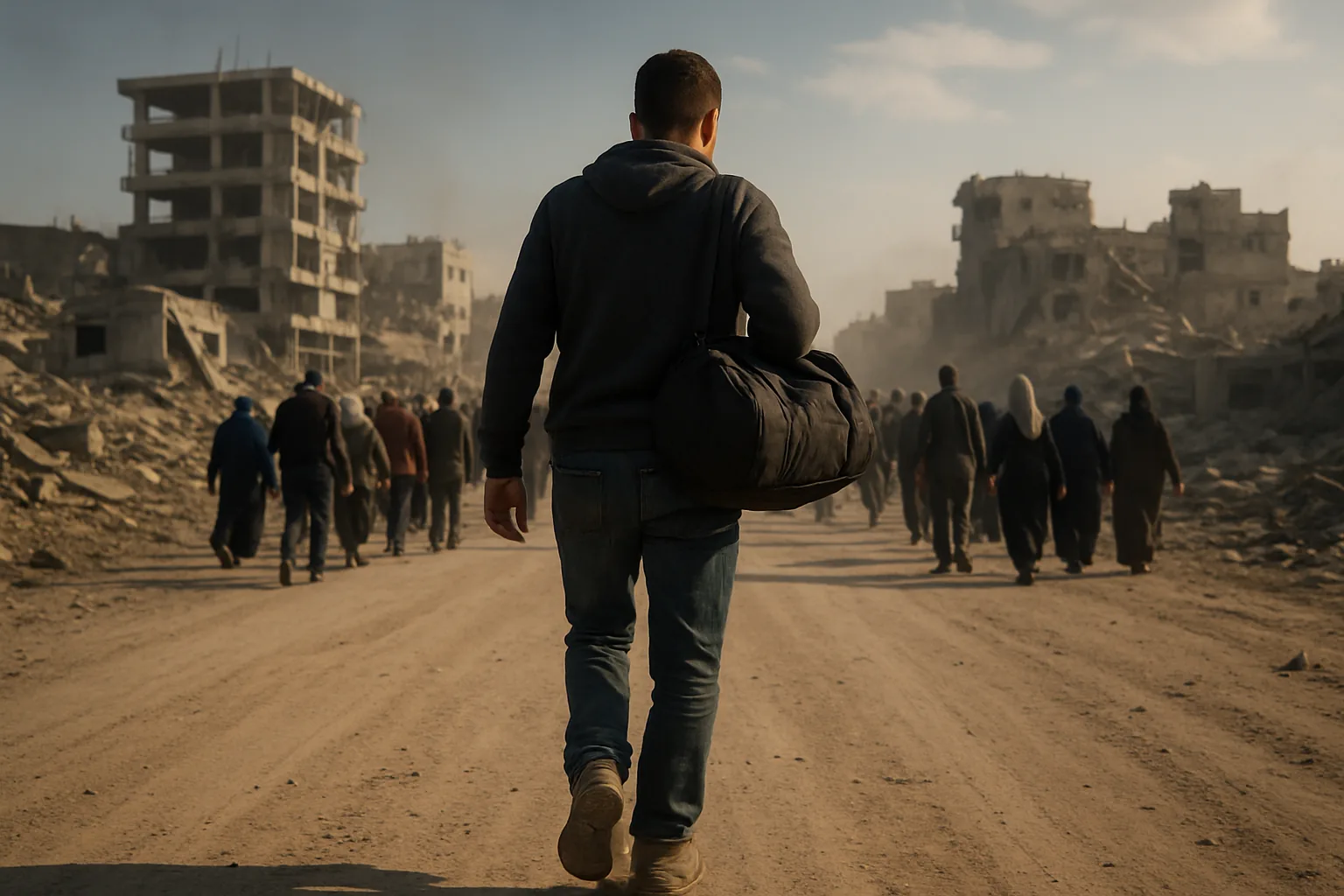
A return to northern Gaza on foot matters because displacement changes the meaning of movement itself. When civilians begin walking back after a breakthrough tied to hostage negotiations, the scene is not only a logistical development. It is a stark reminder that home retains political and emotional power even when infrastructure is shattered and security remains uncertain. People do not move like that because conditions have suddenly become normal. They move because the possibility of return, however partial, can outweigh almost every other calculation.
That is why the story matters beyond the diplomatic headline. It shows how civilians respond immediately when war leaves even a narrow opening between exclusion and return.
Why walking back is symbolically powerful
Large groups returning on foot communicate a kind of urgency that official statements rarely capture. The act itself expresses attachment, exhaustion, and the refusal to let displacement become permanent by default. It turns a policy or negotiation development into a visible human choice that is impossible to reduce to abstract conflict language.
This is why the image matters. It shows that in war, mobility is often a form of testimony about what people still believe is worth reclaiming.
A useful way to frame it is this: walking home through uncertainty is not just movement. It is an assertion that displacement has not erased belonging.
Why the humanitarian reality remains severe
Return does not mean restoration. Areas people reenter may remain unsafe, damaged, or lacking basic services. Yet the willingness to go back anyway highlights how intolerable prolonged displacement can become. Civilians often choose between forms of insecurity rather than between safety and danger in any clean sense.
This is one reason the story matters. It reveals how humanitarian analysis must account not only for physical conditions, but for the emotional and social costs of exile itself.
Why breakthroughs can have immediate social effects
Even partial political developments can produce fast changes in civilian behavior because people living under war watch for any signal that normal constraints might loosen. A hostage-related breakthrough may be negotiated in diplomatic language, but its consequences arrive in households, roads, and choices about whether to stay, flee, or return. That is where the real meaning of the development becomes visible.
That is why the story matters beyond negotiations. It demonstrates how fragile openings can reshape life instantly, even before broader stability exists.
In conflict zones, civilians are often the first to act on slivers of possibility because they have spent so long living under imposed limits.
What matters next
The key questions are whether return routes remain open, whether humanitarian support follows the movement of people, and whether the breakthrough expands into something more durable or collapses back into renewed restriction and danger. Those developments will determine whether the return becomes a turning point or only a brief moment of motion amid continuing war.
That is why the return matters. It captures the depth of civilian attachment to place and the speed with which war-torn lives reorganize around even tentative chances to reclaim it.
When people walk back through devastation, they are not only responding to politics. They are acting on the basic human refusal to let displacement define the future forever.