
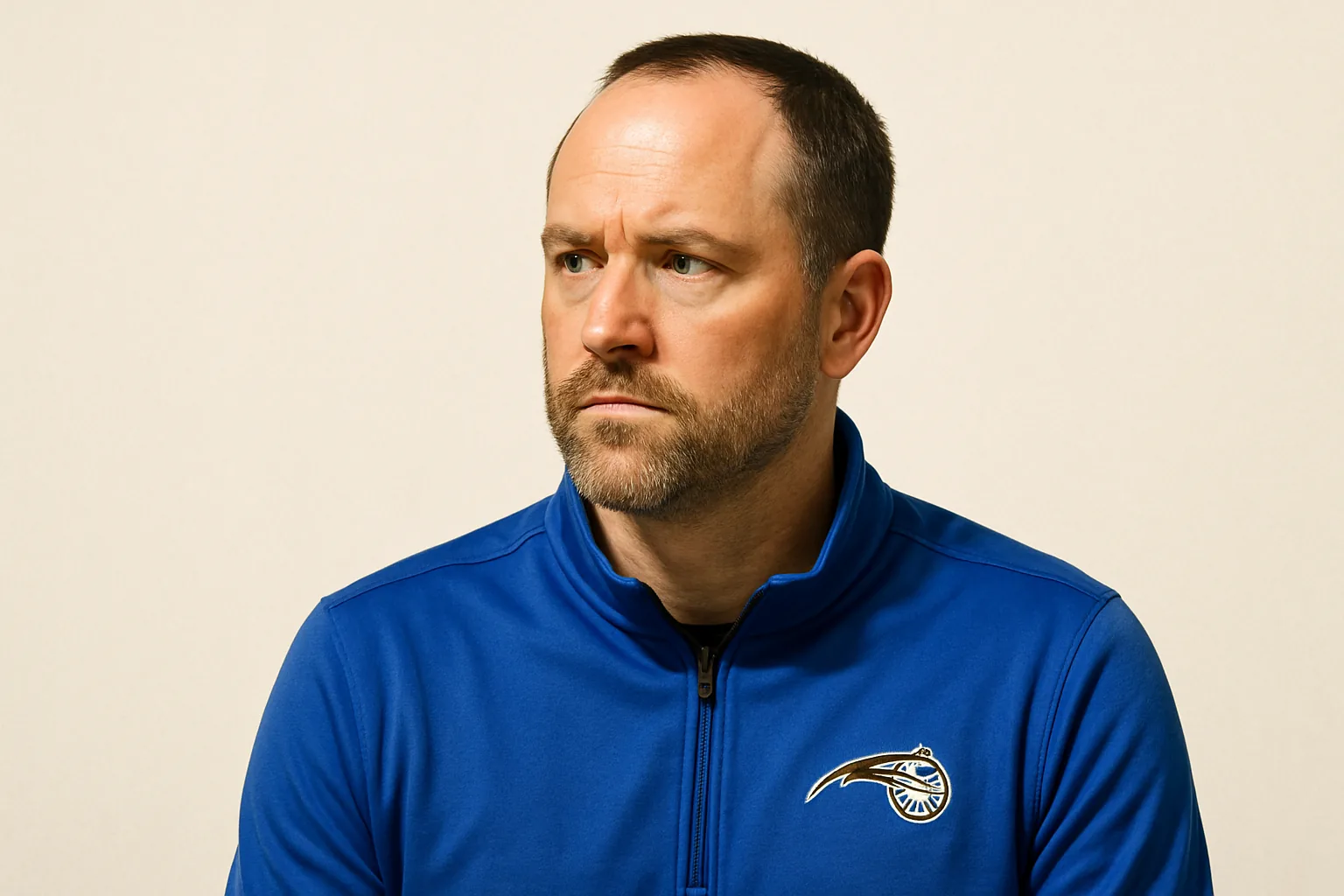
The Orlando Magic have formally named Sean Sweeney as their next head coach, choosing the San Antonio Spurs associate head coach to replace Jamahl Mosley, who was let go in May.
Sweeney will stay with San Antonio through the conclusion of the NBA Finals between the Spurs and New York Knicks. Orlando plans to introduce him after the series ends. He becomes the 16th head coach in Magic franchise history.
The hire gives Orlando a coach closely associated with defensive structure. In San Antonio, Sweeney helped shape a defense built around Victor Wembanyama, a rare big man whose size and mobility allow a team to protect the rim, change coverage, and still pressure opponents in space. Orlando does not have Wembanyama, of course. But the choice says plenty about what the Magic want from their next phase: sharper teaching, clearer accountability, and a system that can grow with a young core.
What Orlando Is Getting
Magic president of basketball operations Jeff Weltman praised Sweeney’s work ethic, intensity, attention to detail, communication, and ability to teach the game clearly. He also pointed to Sweeney’s competitiveness and accountability, while describing his approach as modern and creative.
That wording matters because assistant-coach hires are often about translation. A front office is not just hiring a playbook. It is hiring someone it believes can turn concepts into habits: where a wing’s feet should be on a closeout, how quickly a big should recognize a screen angle, when a guard should peel back instead of chasing a play that is already lost.
For a young team, those details can decide whether talent becomes a style or just a collection of promising players. Orlando’s bet is that Sweeney can bring enough structure without flattening the creativity of the roster.
Why This Hire Matters
Replacing Mosley after May’s dismissal means the Magic are not treating the next step as automatic. A young team can improve simply because its players age into bigger roles, but that is not the same as becoming dependable. Orlando’s decision suggests the organization wants a more demanding framework around development.
Sweeney’s defensive reputation is the center of the story. Modern NBA defense is no longer just about having strong individual stoppers. It is about making five players read the same possession at the same speed. The best defenses disguise coverages, protect weak spots, and avoid giving opponents the same answer on every trip.
That is where a coach’s teaching style can become as important as the scheme itself. If players understand why they are switching, showing, dropping, or helping from a specific spot, the defense can adapt. If they are only memorizing instructions, it breaks down when opponents force a second or third decision.
A Concrete Example
Consider a late-clock possession against a scoring guard who uses a high ball screen. A basic defensive plan might tell the big man to drop into the paint and the guard to fight over the screen. That can work, but only if the weak-side defender tags the roller, the nearest wing closes the passing lane, and everyone recovers without giving up an open corner three.
A more flexible version asks players to recognize the matchup and moment. Maybe the big steps higher because the guard is a pull-up threat. Maybe the defense switches because the screener is not a dangerous roller. Maybe the help comes from a different side because the shooter in the corner is too valuable to leave.
That kind of possession is where Sweeney’s reported strengths become practical rather than abstract. Attention to detail and clear teaching are not cosmetic traits. They are the difference between a defense that knows its first move and a defense that can survive the whole possession.
The San Antonio Context
Sweeney’s most visible recent work came with a Spurs defense centered around Wembanyama. That context is important, but it also requires caution. Building around a generational rim protector is different from building in Orlando. A coach cannot simply copy San Antonio’s defensive geometry and expect it to transfer.
Still, the experience is relevant because Wembanyama requires creativity. A player with unusual defensive range changes what is possible, but he also forces coaches to make choices: how much freedom to allow, how to protect teammates when he roams, and how to prevent opponents from pulling him away from the places where he is most valuable.
For Orlando, the useful part may not be the exact tactics. It may be the habit of building the system around what the roster actually does well. That is the difference between importing a coach’s old identity and letting a new one form around the players in front of him.
What Changes Next
The timing of the move creates an unusual pause. Sweeney has the job, but he will remain with the Spurs until the NBA Finals are over. Orlando’s formal introduction will wait until after Spurs-Knicks concludes, which means the first public explanation of his vision is still ahead.
That introduction should answer several practical questions:
- Defensive identity: Will Orlando lean into pressure, versatility, rim protection, or a more conservative base?
- Player development: How will Sweeney divide responsibility between teaching young players and demanding immediate execution?
- Offensive philosophy: The source material centers on defense, but Orlando will still need clarity on pace, spacing, and shot creation.
- Staff construction: His assistant hires will show whether Orlando wants continuity, a full reset, or a blend of both.
The most important question is whether Sweeney can move from specialist reputation to head-coach authority. Assistants can be highly influential without carrying the full burden of rotation choices, player relationships, late-game decisions, and organizational messaging. Orlando is hiring him because it believes his strengths scale.
For the Magic, this is not a splash hire built around celebrity. It is a technical hire, rooted in teaching and defense. That makes the next few months especially revealing. The press conference will provide the language. Training camp will show whether the habits follow.