
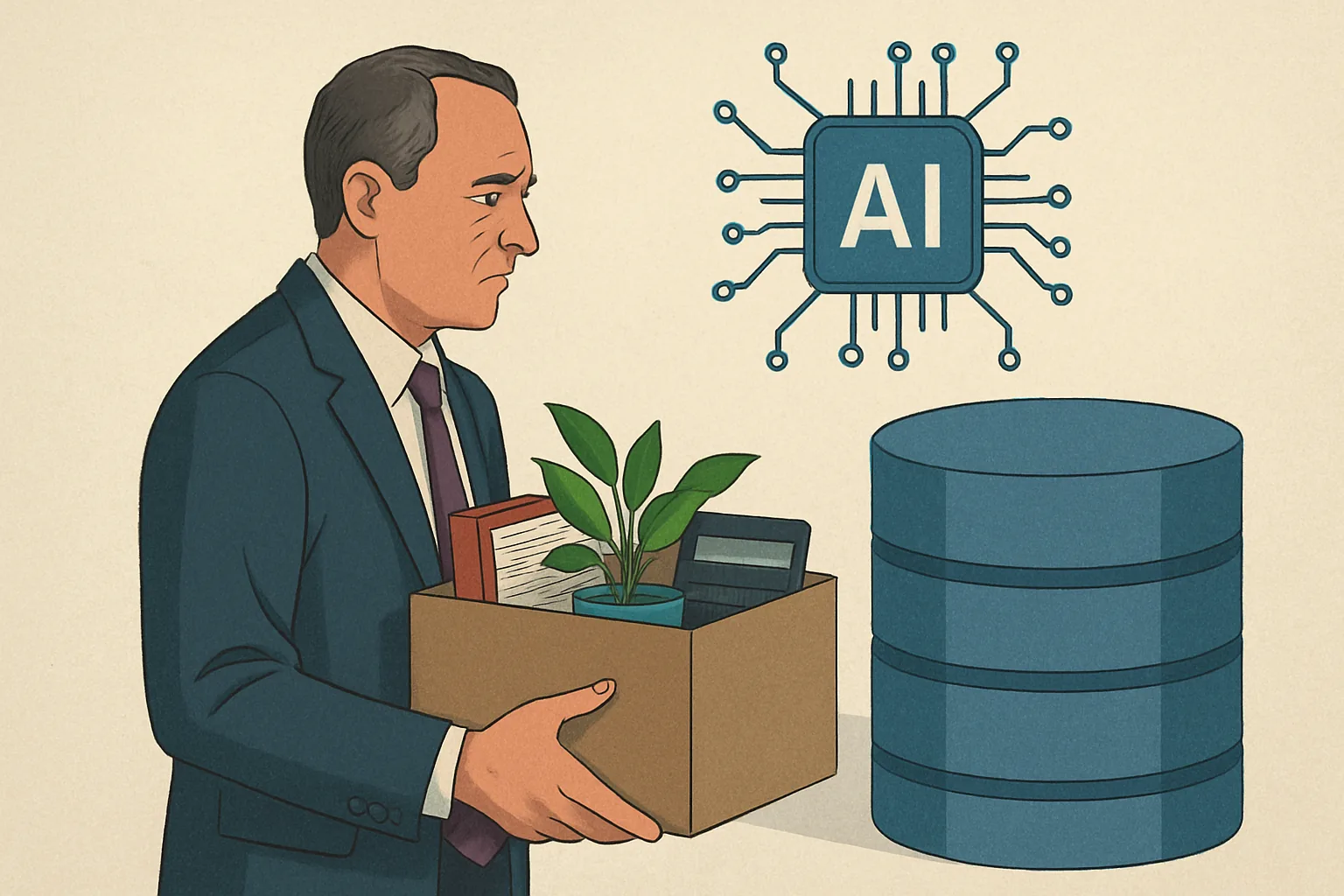
Oracle has reportedly begun laying off thousands of employees globally, with cuts surfacing between March 31 and April 1, 2026 as the company continues a costly push into AI infrastructure.
The exact number remains unconfirmed. Outside estimates cited in reports range from roughly 10,000 roles to as many as 20,000 to 30,000. What is clearer is the direction: Oracle is trying to reduce operating costs while spending heavily on AI data centers and cloud capacity.
That tradeoff matters more than the headline number. Oracle is no longer being judged only as a mature enterprise software company with stable corporate customers. Investors are also judging it as an infrastructure player in an AI market that demands enormous upfront spending, fast capacity buildouts, and a tolerance for short-term financial strain.
Why Oracle is cutting now
The immediate explanation in the reporting is cost control. A message sent to affected workers, as reported by Business Insider, said roles were being eliminated as part of a broader organizational change. At the same time, Oracle has been pouring money into AI-related data-center expansion.
A March filing adds an important piece of context. Oracle said it expects up to $2.1 billion in fiscal 2026 restructuring costs, largely tied to severance. That is not a minor clean-up exercise. It suggests the company was already preparing for a large workforce reset while trying to free up room for a different spending profile.
This is the financial shape of the AI buildout at big tech companies: less patience for headcount that does not map tightly to near-term priorities, and much more willingness to spend on compute, facilities, and the debt or capital structure needed to support them.
The market is weighing two stories at once
Oracle’s stock has fallen about 25% this year, according to the source material. That drop frames the layoffs in a less flattering way than a simple efficiency narrative. Investors appear to be weighing two conflicting views of the company.
In one view, Oracle is doing what the market wants: cutting costs, protecting margins where it can, and redirecting money toward the AI and cloud assets that may matter most over the next few years.
In the other, Oracle is being forced into an expensive race where even major contract wins do not erase the pressure created by debt-funded expansion and the sheer cost of building data-center capacity.
The company’s reported $300 billion agreement with OpenAI in September 2025 helps explain why Oracle is pushing so hard. Big AI customers need infrastructure at scale, and suppliers that cannot build fast enough risk being locked out of the most lucrative part of the market. But signing large deals and funding the capacity to deliver on them are not the same thing. The second task is where balance-sheet pressure shows up.
This is not just an Oracle story
Oracle’s layoffs also fit a wider pattern across tech. The source material points to job cuts at Amazon, Meta, and Microsoft as AI spending accelerates across the industry. That does not mean every layoff is caused directly by AI. It does mean AI has changed internal budgeting logic.
For years, large tech companies could expand headcount across many functions at once while still investing in long-range bets. The current environment looks tighter. Compute has become a board-level priority. Data centers are not optional support infrastructure anymore; they are the product, the bottleneck, and in some cases the moat.
Once that happens, labor costs come under a different kind of scrutiny. Teams that once looked sustainable in a slower-growth, software-heavy model can be judged against a far more capital-intensive operating plan.
A concrete way to read these cuts
Consider a simple example. If a company needs billions of dollars for new AI data-center capacity, every large recurring expense starts competing with that buildout. Payroll is not the only place to cut, but it is one of the fastest levers management can pull.
That does not mean one laid-off employee directly “funds” one server rack. It means leadership is trying to reshape the company so more of its cost base supports infrastructure, cloud delivery, and the contracts tied to AI demand. For employees, that makes the distinction between core and non-core work much harsher. For investors, it raises a harder question: will the savings from layoffs meaningfully offset the scale of AI capex, or are they small compared with what this race will require?
What changes next
The next phase to watch is not the layoff total by itself. It is whether Oracle can turn spending into visible operating traction.
- Capacity delivery: Oracle will need to show it can build and supply AI infrastructure quickly enough to support the commitments it is signing.
- Financial credibility: Investors will look for evidence that restructuring and cost cuts are improving the company’s flexibility, not just masking heavier capital strain.
- Business mix: The more Oracle leans into AI and cloud infrastructure, the more the market may value it differently from its older software identity.
There is also a less visible consequence. Large layoffs during an infrastructure push can change the internal character of a company. Management attention narrows. Capital allocation becomes less forgiving. Functions that are not clearly tied to revenue, delivery, or strategic platforms can find themselves exposed even if the business is still large and profitable.
That is why this development matters beyond Oracle’s workforce numbers. It captures a phase of the AI boom that gets less attention than model launches and headline partnerships: somebody has to pay for the physical layer, and companies are increasingly rearranging themselves to do it.
Oracle may yet prove that the spending is justified and that its position in AI infrastructure will strengthen. But the layoffs make one point hard to miss. In this market, AI expansion is not only creating new demand. It is also forcing old-line tech companies to decide, very bluntly, what they are willing to stop funding in order to keep up.