
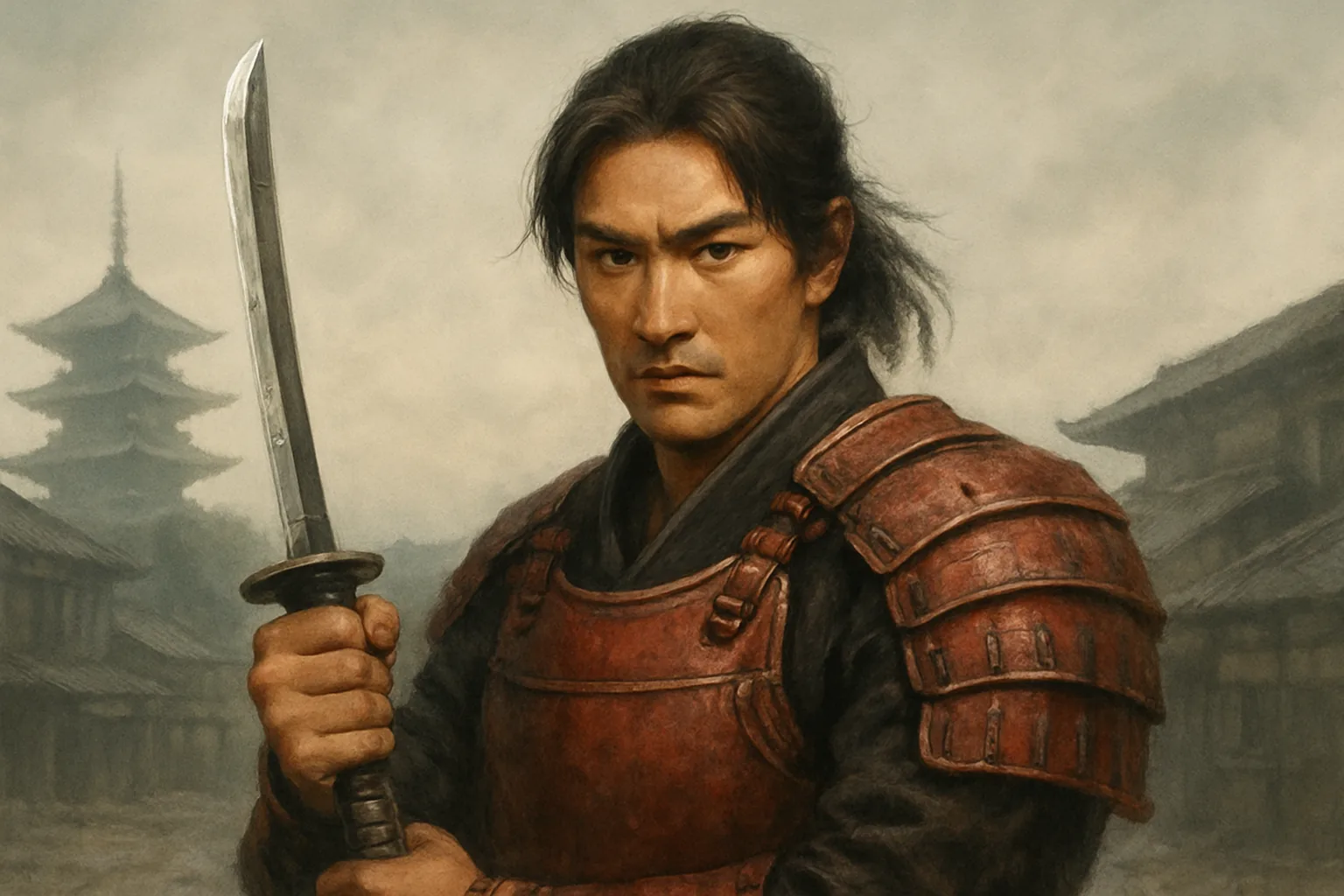
Capcom has set Onimusha: Way of the Sword for release on September 25, 2026, with a PlayStation 5 demo available now following Sony’s June 2 State of Play presentation.
The announcement gives the long-running action series its clearest shape yet. This is not just a nostalgia play built around a familiar name. Capcom is positioning the new Onimusha as a modern sword-fighting action game centered on weighty blade contact, parries, deflections, the series’ Issen critical attack, and superhuman abilities tied to the power of the Oni.
What Capcom Showed
Onimusha: Way of the Sword follows Miyamoto Musashi after he gains the power of the Oni. The game is set in Kyoto during the early Edo period, where Musashi faces the Genma, monstrous enemies that have overrun parts of the historic city.
The new trailer focuses on Mount Oe, a Kyoto location tied to history and legend. In the game, the area has become the stronghold of a colossal Genma who claims to be Shuten Doji, the legendary Oni. Capcom’s wording leaves room for doubt around that identity, which suggests the game may treat folklore as something unstable rather than simply decorative.
The PS5 demo lets players try the first few stages of Musashi’s journey. That matters because the core promise of this game is tactile: Capcom is selling the feel of sword impact, timing, and close-range decision-making. A trailer can show sparks and finishers. A demo can reveal whether the combat has the precision and pressure that kind of pitch requires.
Why The Demo Matters More Than Usual
For a character action game, especially one reviving a known series, a demo is not just a marketing extra. It is a confidence signal.
Onimusha has always lived somewhere between cinematic samurai fantasy, horror-inflected monster design, and action-game timing. In Way of the Sword, Capcom appears to be emphasizing the timing side more directly. The official description calls out sword-to-sword clashes, tactical depth, parrying, deflecting, and the return of Issen-style critical attacks.
That combination puts a lot of pressure on feel. If the parry window is too generous, combat can become mechanical. If it is too strict, the game risks feeling brittle. If enemies do not communicate their attacks clearly, the promised tactical swordplay becomes guesswork. The demo gives players an early read on whether Capcom has found the right balance.
Consider a basic encounter against a Genma swordsman. In a looser action game, the player might dodge, mash through a combo, and wait for a finisher prompt. In the version Capcom is describing, the more interesting path would be to read the enemy’s swing, meet the blade, deflect at the right moment, and convert that opening into an Issen attack or an Oni-powered follow-up. The difference is not cosmetic. It changes the player’s job from “attack often” to “control the exchange.”
A Revival With A Specific Identity
The new Onimusha arrives at a time when sword combat in games has become crowded with different expectations. Some players now associate samurai action with open-world exploration. Others expect punishing lock-on duels, combo-heavy spectacle, or cinematic stealth. Capcom’s challenge is to make Onimusha feel distinct without sanding away what made the older games recognizable.
The early details point toward a useful lane. Instead of presenting the game mainly as a vast historical adventure, Capcom is leaning into supernatural sword combat: Kyoto as a haunted battlefield, Musashi as a warrior changed by Oni power, and enemies drawn from Genma horror and Japanese legend.
That gives Way of the Sword a different texture from a grounded samurai drama. The Mount Oe material is a good example. It is not only a scenic location. It is a place where landscape, folklore, and enemy design can reinforce each other. If Capcom uses that approach throughout the game, the setting can do more than provide backdrops for combat arenas.
Platforms And Editions
Sony’s State of Play announcement and PlayStation Blog materials emphasize PlayStation 5, with pre-orders and launch editions also revealed. Trade coverage has reported that the game is planned for a simultaneous release on Xbox Series consoles and PC as well.
For players, the practical takeaway is simple: PS5 owners can try the demo now, while anyone planning to buy on another platform should watch for platform-specific store pages, demo availability, and edition details from Capcom or the relevant storefronts.
What To Watch Next
The biggest question is how deep the combat system goes beyond the trailer language. Capcom has named the ingredients: impact-heavy slashes, blade-on-blade exchanges, parries, deflections, Issen critical attacks, and Oni-powered moves. The next step is seeing how those tools interact across enemy types, boss fights, and longer stages.
Several details will matter before launch:
- Demo impressions: whether players feel the swordplay has readable timing and satisfying weight.
- Enemy variety: whether Genma encounters demand different tactics instead of repeating the same parry rhythm.
- Oni abilities: whether supernatural moves add decisions or simply function as power spikes.
- Platform information: how Capcom communicates editions, performance targets, and availability across PS5, Xbox Series, and PC.
The September 25 date gives Capcom a defined runway. The demo gives players something more useful than another trailer: a chance to test the central claim. For a revived Onimusha, that is the right thing to put in people’s hands first.