
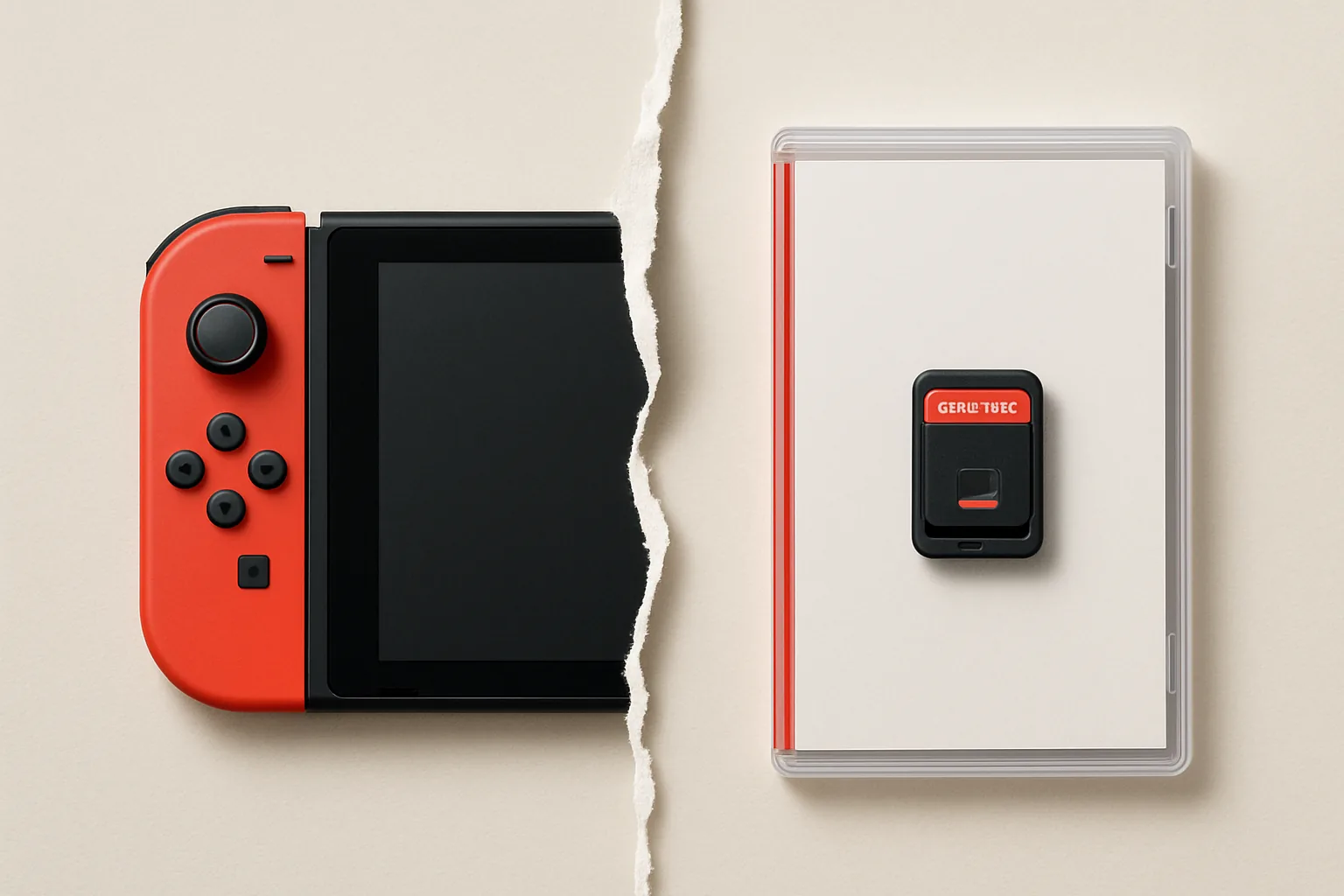
Nintendo has confirmed a clear pricing change for the U.S. market: starting in May 2026, some first-party Nintendo Switch 2 exclusives will cost less digitally than physically. The first example is Yoshi and the Mysterious Book, due May 21, 2026, at $59.99 on the eShop and $69.99 in physical form.
That is a notable break from how Nintendo has typically priced its own console games. For years, the company largely treated digital and boxed editions as equivalent purchases, even though only one of them has to be manufactured, packaged, shipped, stocked, and sold through retail. Nintendo is now drawing that distinction openly.
The company’s clarification matters almost as much as the pricing itself. After initial reporting framed the move as a higher price for physical copies, Nintendo said the “cost of physical games is not going up” and described the policy instead as a lower MSRP for digital versions of Nintendo-published Switch 2 exclusives in the U.S. Retailers, it added, still set their own prices, so the actual street price may vary.
What actually changed
The practical effect for buyers is simple enough: if you want a new eligible Switch 2 exclusive on release, buying digital could save you $10 versus buying the boxed version.
The framing is where Nintendo is being careful. A company that says “physical games now cost more” invites backlash. A company that says “digital games now have a lower MSRP” is describing the same gap from the opposite angle, but with less risk of making boxed buyers feel penalized.
Ars Technica’s report points out why this distinction is debatable. A $59.99 digital copy of the new Yoshi game is lower than the $70 or $80 Nintendo has recently charged for some Switch 2 first-party titles, including games such as Donkey Kong Bananza and Kirby Air Riders. So Nintendo can reasonably say it is lowering digital pricing for this release. But from a consumer’s perspective, the important fact is unchanged: the physical copy costs $10 more than the download.
Just as important, Nintendo did not say it was retroactively changing digital and physical pricing on previously released games. As of the reporting cited here, this is a forward-looking policy for new releases.
Why this matters
This is not just a minor retail detail. Console game pricing has long carried an odd fiction: a digital purchase and a boxed copy are treated as the same product at the same sticker price, even though their economics are different. Publishers have often preferred that arrangement because it avoids upsetting retail partners and keeps a premium anchor on digital storefronts.
Nintendo is now loosening that convention, at least for its own Switch 2 exclusives in the U.S. The move gives the company a more direct way to make digital purchasing look attractive without announcing an across-the-board cut to game prices.
That matters because digital sales are strategically cleaner for platform holders. They keep customers inside the platform’s own store, reduce physical inventory headaches, and remove some of the friction that comes with boxed distribution. Nintendo’s statement explicitly cites production and distribution cost differences, which is the straightforward business rationale here.
There is also a consumer-psychology angle. A player who hesitates at a $70 or $80 headline price may feel much better about a $59.99 digital purchase, even if the boxed version remains higher. Nintendo gets to preserve a premium physical price while creating a cheaper-looking entry point for digital buyers.
A concrete example
Consider a parent buying Yoshi and the Mysterious Book in late May 2026. If they want something giftable, tradable, or easy to wrap, the boxed copy is the obvious choice, but it comes at $69.99 before any retailer discount. If they are buying for a household that mostly plays at home and does not care about collecting cartridges, the $59.99 digital version becomes the rational default.
That sounds small, but it changes the purchase conversation. The question is no longer just which game should we buy? It becomes is owning this physically worth another $10? Nintendo is effectively putting a visible convenience-and-collectibility premium on the boxed product.
What Nintendo still has not explained
One unresolved issue in the source material is how Nintendo decides whether a first-party Switch 2 game lands at $70, $80, or now $60 digitally. Ars notes that Nintendo has not explained what separates a $70 game from an $80 game. This new pricing policy does not solve that opacity; if anything, it makes Nintendo’s pricing ladder more complicated.
That matters because price segmentation works best when customers can understand the logic. If buyers see one first-party game at $59.99 digitally, another at $69.99, and another at $79.99, they will start asking what exactly they are paying for: scope, production value, franchise status, cartridge costs, or simply whatever Nintendo thinks the market will bear.
For now, the company has offered a narrow explanation tied to physical production and distribution. That explains the gap between a box and a download. It does not explain the broader spread across the Switch 2 lineup.
What to watch next
The immediate question is whether Yoshi and the Mysterious Book is the start of a real pattern or just the first visible example. Nintendo’s wording suggests this is a policy for new first-party Switch 2 exclusives going forward, which means future releases will show whether the $10 split becomes standard.
There are a few practical implications to watch:
- Whether major retailers discount physical copies enough to erase or narrow the gap.
- Whether Nintendo applies the same structure consistently across all first-party Switch 2 exclusives.
- Whether other publishers or platform holders feel more comfortable widening physical-versus-digital price differences.
The retailer point is especially important. Nintendo can set MSRP, but store pricing can blur the policy in practice. If retailers aggressively cut boxed prices, physical copies may remain competitive. If they do not, Nintendo will have created one of the clearest financial nudges yet toward digital buying on its platform.
What makes this development worth watching is not that a cartridge now carries a visible premium. That part is easy to understand. The bigger story is that Nintendo is starting to say out loud what the games business has implied for years: digital and physical are not the same product economically, and the sticker price no longer has to pretend otherwise.