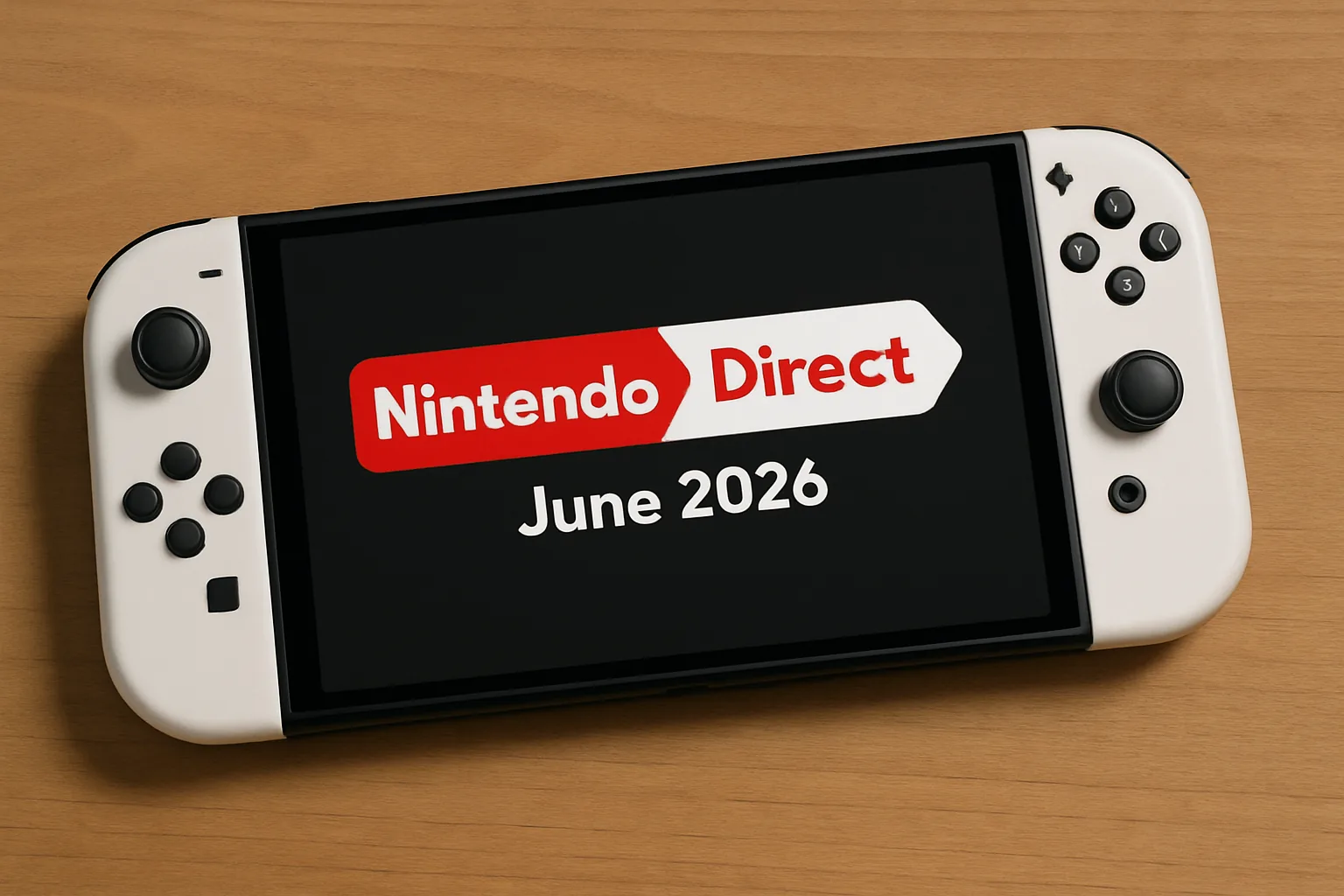
Nintendo used its June 9, 2026 Direct to do something more important than fill a release calendar: it began defining what the Switch 2 era is supposed to feel like.
The 50-minute presentation, the first full general Nintendo Direct in nine months, covered upcoming games for Nintendo Switch 2 and the original Switch through the end of 2026 and beyond. The biggest headline was a full remake of The Legend of Zelda: Ocarina of Time for Nintendo Switch 2, targeting a 2026 launch. Nintendo also showed new first-party projects and updates, including Xenoblade Genesis, alongside trailers and timing details for other Switch 2 and Switch games.
That matters because new hardware does not become compelling through specifications alone. It needs a software identity. For Switch 2, this Direct suggested Nintendo is trying to balance three jobs at once: reassure existing Switch owners, give early Switch 2 buyers prestige releases, and show third-party publishers that the platform can support larger and more mature projects.
The Headliner: Ocarina Of Time Returns As A Switch 2 Statement
A full remake of The Legend of Zelda: Ocarina of Time is not a routine catalog move. The original is one of Nintendo’s most scrutinized games, and remaking it for Switch 2 gives Nintendo a rare kind of launch-window-adjacent anchor: a game with enormous name recognition that can also demonstrate what the new console changes in practical terms.
The source material points to a 2026 launch target rather than a fixed release date, which is an important distinction. Nintendo has room to position the remake as either a holiday centerpiece or a later-year prestige release, depending on the rest of the schedule.
For players, the appeal is obvious: one of Nintendo’s defining 3D adventures rebuilt for modern hardware. For Nintendo, the strategic value is sharper. A Zelda remake can speak to several audiences at once: longtime fans, younger players who know the game mostly by reputation, and Switch 2 owners looking for a reason the new console is more than a faster Switch.
A Roadmap Built Around Variety
The Direct did not rely on one franchise. Nintendo also highlighted Xenoblade Genesis, giving its RPG audience another major first-party project to track. That matters because Switch 2 needs more than a handful of universally recognized brands; it needs depth across genres.
The presentation also brought back Rhythm Heaven with Rhythm Heaven Groove, the first new entry in the quirky rhythm series since 2015. According to the source material, it includes more than 80 all-new minigames, supports single-player play, and offers 2-4 player co-op. It launches on Nintendo Switch on July 2, 2026, and is playable on Switch 2, with preorders open.
That cross-generation detail is easy to overlook, but it says a lot about Nintendo’s transition strategy. Not every game has to be a Switch 2 exclusive to be useful to the platform. A title like Rhythm Heaven Groove can keep the huge Switch audience active while still giving Switch 2 owners fresh software early in the system’s life.
The same Direct also included third-party material, including Onimusha: Way of the Sword, described in the source excerpt as the first new Onimusha title in more than 20 years. The game is a dark fantasy action title set in an Edo-era Kyoto altered by malevolent clouds of Malice, with Miyamoto Musashi as protagonist. Its trailer emphasized swordplay, Oni Armaments, and demonic enemies.
Why This Direct Matters Beyond The Announcements
The practical question after any hardware launch is not “what was announced?” but “what can different kinds of players see themselves buying?” This Direct started answering that.
A Zelda remake gives Switch 2 a prestige single-player adventure. Xenoblade Genesis signals continued support for large-scale RPGs. Rhythm Heaven Groove covers Nintendo’s stranger, lighter, more local-multiplayer-friendly side. Onimusha adds a darker action game from outside Nintendo’s own catalog.
That mix is useful because the Switch’s success was never built on one kind of player. Families, handheld-first players, RPG fans, nostalgia buyers, indie players, and Nintendo loyalists all shared the same device. Switch 2 has to preserve that breadth while also justifying a hardware upgrade.
Consider a household that already owns a Switch. A parent may not upgrade for Rhythm Heaven Groove alone, because it runs on the original Switch. But if the same household sees a Switch 2-only Ocarina of Time remake, a new Xenoblade, and third-party action games that appear better suited to newer hardware, the purchase starts to look less like a replacement and more like access to the next version of Nintendo’s ecosystem. That is the kind of cumulative argument a Direct is designed to make.
The Cross-Gen Balancing Act
Nintendo’s challenge is delicate. Move too quickly to Switch 2 exclusives, and it risks frustrating the massive Switch install base. Move too slowly, and Switch 2 can feel optional.
The June Direct appears to split the difference. Some games continue to serve Switch owners, while the biggest attention-grabbers help establish Switch 2 as the place where Nintendo’s most ambitious projects will live. The Ocarina of Time remake is especially important here because it gives Nintendo a familiar title that can carry technical expectations without requiring players to learn an entirely new franchise pitch.
There is also a marketing advantage in using known properties during a console transition. New hardware already asks consumers to make a decision. Familiar games reduce that friction. The tradeoff is scrutiny: remakes of beloved games are judged not only on visual improvements, but on whether they preserve pacing, tone, controls, and memory. Nintendo will have to show more than a name before launch.
What To Watch Next
The Direct gave Switch 2 momentum, but several questions remain open. The most important is dating. “2026” is meaningful, but a firm release date for Ocarina of Time would clarify Nintendo’s holiday strategy and how it plans to pace first-party releases.
It will also be worth watching how many upcoming games are Switch 2 exclusives, how many are cross-generation, and how Nintendo communicates the difference. If players cannot easily understand what improves on Switch 2, cross-gen support can become a mixed signal.
For now, the June 2026 Direct did what Nintendo needed it to do. It ended the long general Direct gap with recognizable names, a few surprises, and a more coherent picture of the next year. The Switch 2 still needs release dates, deeper gameplay demonstrations, and proof that third-party support will hold. But after this presentation, Nintendo’s next console cycle has a clearer shape than it did before June 9.