
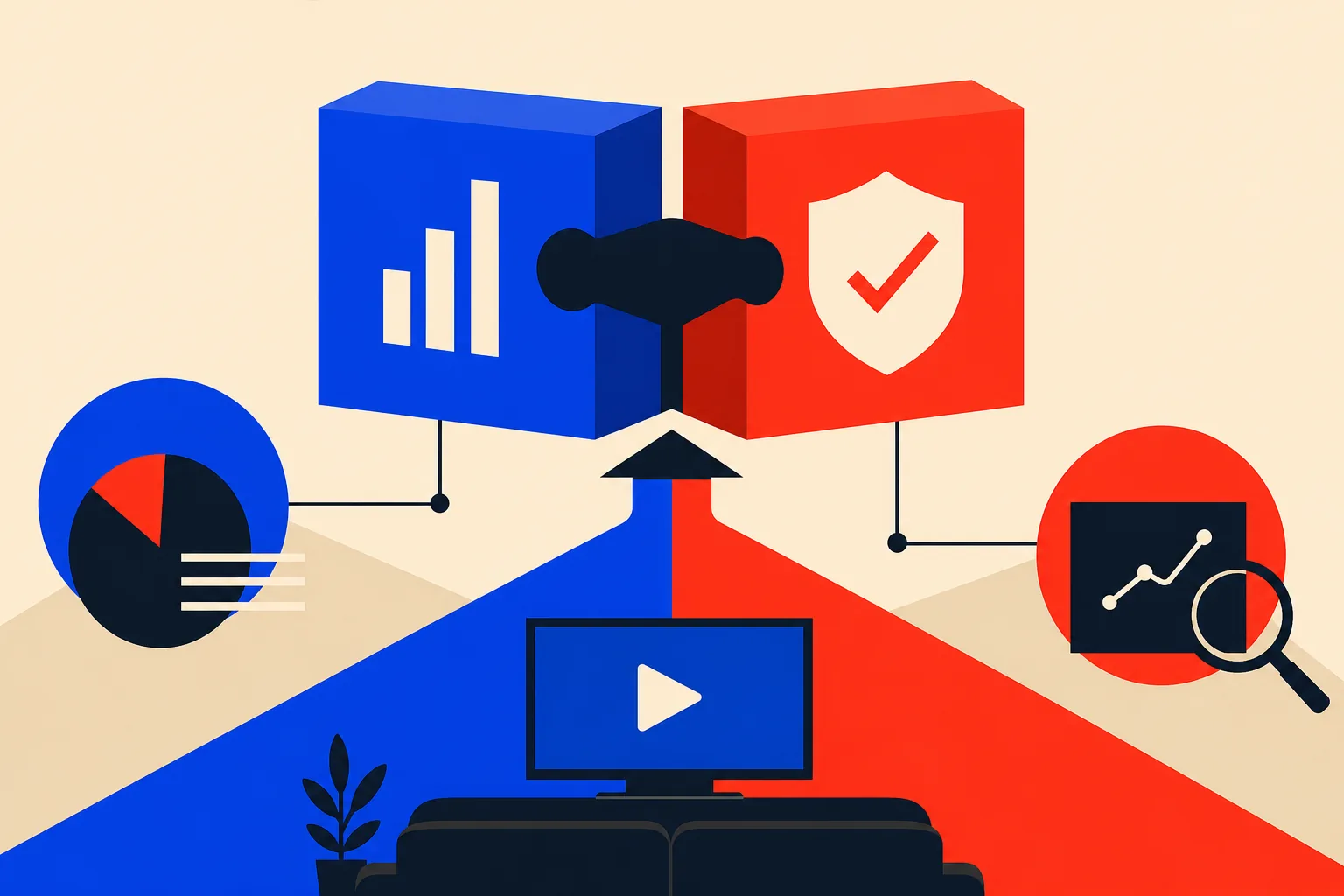
Nielsen has agreed to acquire digital media-measurement company DoubleVerify for roughly $2.15 billion, or $13.60 per share. On its face, it is another major transaction in a media sector crowded with mergers, asset sales and restructurings. Its significance is more specific: the deal could give Nielsen a broader role in how advertising is measured across digital video and connected TV.
Nielsen is closely associated with audience measurement. DoubleVerify brings ad-verification and effectiveness tools to the proposed combination. Those are adjacent jobs, but they answer different questions for advertisers, publishers and streaming platforms. One concerns who was reached; another concerns whether advertising ran as intended and what it achieved.
Putting those capabilities under one roof could make Nielsen more relevant to buyers trying to evaluate campaigns that do not sit neatly inside traditional television or a single digital platform.
Why combining these tools changes the conversation
Advertising measurement has become harder because viewing and ad delivery are spread across streaming services, connected-TV environments and other digital formats. A campaign may involve a large-screen streaming placement, digital video and other online inventory, while the advertiser still wants a coherent account of its audience and results.
The proposed deal points to a practical shift in what measurement providers are being asked to deliver. It is no longer enough to be useful at only one point in the advertising workflow. Buyers increasingly need to connect audience data with confidence in the ad delivery and evidence about effectiveness.
Nielsen’s agreement to buy DoubleVerify suggests that those functions are becoming strategically complementary. Rather than treating audience measurement and verification as separate specialist services, the combined company could offer a more connected set of tools for digital and connected-TV advertising.
That matters especially in connected TV. It sits between the familiar experience of television viewing and the more data-rich mechanics of digital advertising. For advertisers, that creates opportunity, but also a measurement challenge: they need to understand both the audience delivered and the quality and impact of the advertising.
A simple campaign example
Consider a brand running a video campaign across a streaming app on connected TVs and digital video placements elsewhere. An audience-measurement product can help the brand assess who saw the campaign. Verification and effectiveness tools can add another layer: whether the advertising was delivered appropriately and how the campaign performed.
Today, those assessments can involve separate providers and separate reporting. If Nielsen integrates DoubleVerify effectively, a buyer could potentially have a tighter link between audience reporting and the checks used to assess an ad campaign’s delivery and effectiveness. The value is not merely fewer dashboards. It is the prospect of making decisions with related evidence rather than disconnected measurements.
That is a conditional benefit, not an automatic one. The eventual usefulness of the acquisition will depend on how well the products, data and customer workflows are brought together. Announcing a deal is different from building a product experience that advertisers and publishers can actually use.
What the deal says about media consolidation
The Nielsen-DoubleVerify agreement arrived during a busy second quarter for media transactions. The period also included developments around Paramount’s proposed acquisition of Warner Bros. Discovery, Fox’s acquisition of Roku, Comcast’s plan to spin off NBCUniversal and Sky, and further consolidation in digital publishing.
Those transactions concern very different parts of the business, from studios and TV networks to streaming platforms and publishers. Nielsen’s move belongs to a different layer of the media economy: the infrastructure that helps determine how ad inventory is evaluated and sold.
That layer can be easy to overlook because it does not produce shows or own a consumer-facing streaming destination. Yet measurement influences how advertising budgets are allocated. A platform may have viewers and available ad inventory, but advertisers need credible ways to assess the audience and the value of their spend before committing more money.
For that reason, consolidation among measurement businesses has consequences beyond the companies involved. A larger provider with a wider product set may become more important to agencies, advertisers, publishers and streaming services seeking common ways to evaluate campaigns.
What to watch next
The immediate question is how Nielsen describes the role DoubleVerify will play within its broader measurement business. The deal’s strategic appeal rests on the connection between the two companies’ capabilities, particularly in digital and connected-TV advertising.
- Integration: Whether audience measurement, verification and effectiveness tools are made easier to use together.
- Connected-TV focus: How prominently the combined offering is positioned for streaming ad campaigns.
- Customer response: Whether advertisers, agencies, publishers and platforms see clearer value in a more unified measurement offering.
- Competitive effects: Whether the transaction encourages other measurement firms to expand their own capabilities or seek partners.
The deal is not a bet that streaming needs measurement; it already does. It is a bet that the next competitive advantage in advertising measurement will come from linking the questions that buyers ask throughout a campaign: who did we reach, did the advertising run as intended, and what did it accomplish?
If Nielsen can turn that proposition into an integrated product rather than a collection of adjacent services, its $2.15 billion DoubleVerify purchase could matter well beyond the transaction itself.
Join the discussion
You’ll appear as Guest. Links are removed automatically.
No comments yet. Start the conversation.