
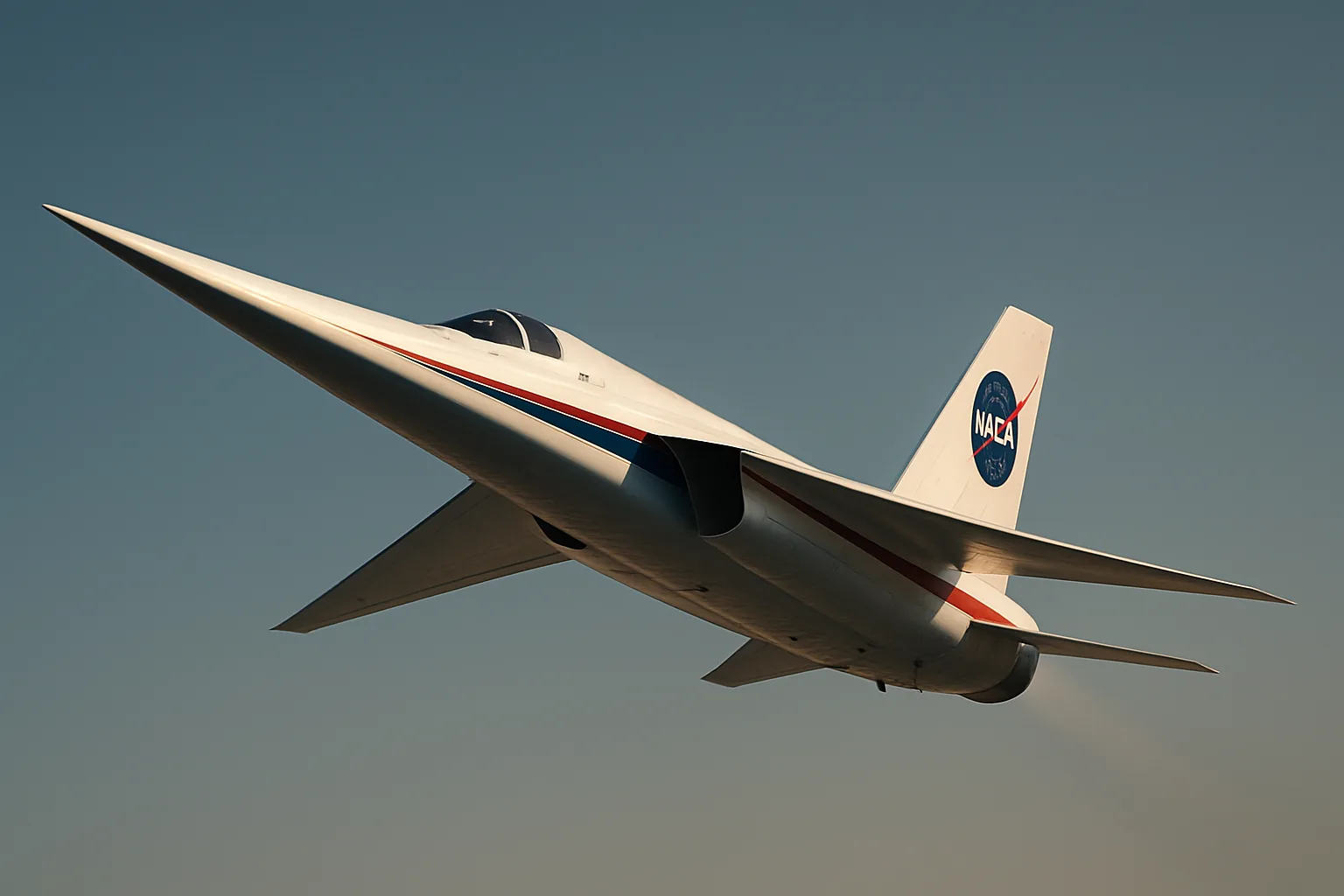
Pioneering Quiet Supersonic Flight
NASA’s X-59 QueSST (Quiet Supersonic Technology) aircraft is at the forefront of efforts to enable supersonic flight over land without the disruptive noise traditionally caused by sonic booms. This initiative aims to reshape the future of commercial aviation by allowing faster travel without the widespread noise pollution that has limited supersonic routes.
Highlights from the Second Flight
On March 20, 2026, the X-59 aircraft successfully completed its second test flight, an important step in a comprehensive testing campaign slated for this year. Although a technical glitch led to an abbreviated flight, NASA’s team gathered critical data that will inform and improve future tests. The pilot’s safe landing further underscores the program’s steady progress.
Redefining Supersonic Noise
Conventional supersonic aircraft generate loud sonic booms that restrict their operation over populated areas. The X-59’s unique design alters the shape of these shockwaves, producing a much quieter “sonic thump” that significantly reduces noise impact on the ground. This breakthrough has the potential to open new supersonic travel corridors and revolutionize air transportation.
Implications for the Aerospace Industry
With the promise of vastly reduced noise, the X-59 could pave the way for supersonic commercial flights that drastically cut travel times. This progress offers exciting opportunities for aircraft manufacturers, airline operators, and marketers to innovate product offerings, enhance customer experiences, and develop new aviation infrastructure tailored to the next generation of supersonic travel.
Next Steps and Future Impact
NASA plans dozens more flights throughout 2026 to refine the X-59’s performance and validate its noise reduction capabilities. The resulting data will be essential in shaping regulations and certification standards for quiet supersonic aircraft, bringing the industry closer to realizing the commercial potential of this technology.
Looking Forward
The X-59 project represents more than a technological feat; it signals a shift toward faster, quieter, and more efficient air travel. Industry leaders and businesses closely tracking these developments will be best positioned to leverage emerging opportunities in aviation’s evolving landscape.