
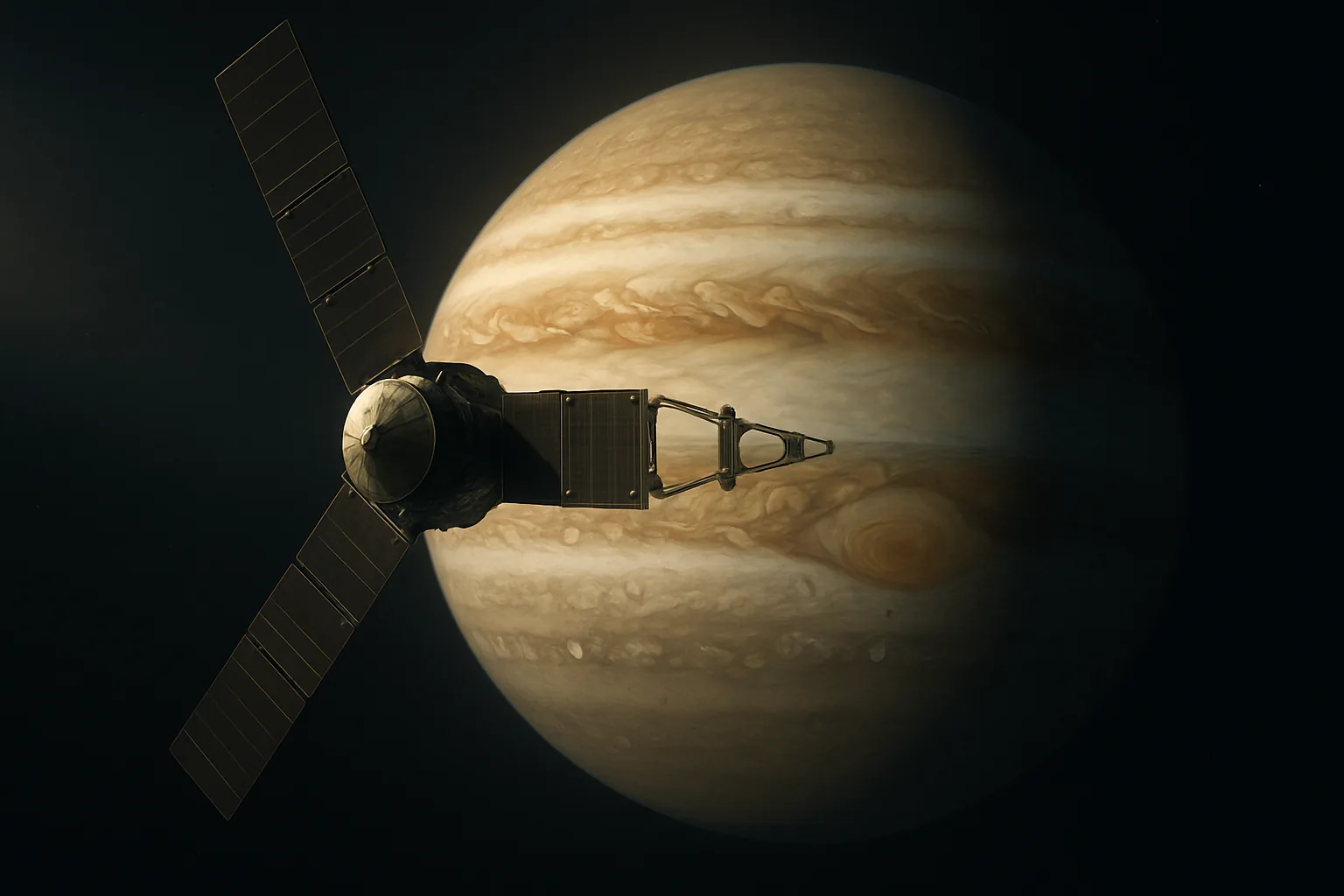
Long-running space missions matter because some of their most valuable scientific returns arrive well after the moment of public excitement that justified them politically. Juno is a clear example. It has spent years transforming understanding of Jupiter and its environment, yet like many ongoing missions it now exists in the less glamorous phase where discoveries continue while budget arguments grow louder. That is exactly when its value can be easiest to underestimate.
The tension here is familiar. Once a mission is no longer new, it can start to look administratively optional even if the science remains distinctive. But planets do not become less interesting because a mission has aged, and the cost of abandoning an active observatory with proven performance can be higher scientifically than its budget line suggests.
Why mature missions are politically vulnerable
Space programs often win funding by promising novelty, ambition, and firsts. Mature missions rarely offer that same narrative, even when they are still producing irreplaceable data. As budgets tighten, long-running projects can be cast as legacy commitments standing in the way of newer priorities. That framing is understandable from a portfolio perspective, but it can distort how much value remains in the mission itself.
This is why Juno's situation matters. It highlights the gap between political freshness and scientific usefulness.
Why Jupiter science still carries unusual weight
Jupiter is not merely another destination on a long list. It is a central laboratory for understanding giant planets, magnetic fields, atmospheric dynamics, and the broader architecture of planetary systems. Continued observations can refine questions that newer missions have not yet positioned themselves to answer. The value of such work compounds over time because long-duration measurements reveal patterns that short visits cannot.
That is what makes missions like Juno so hard to replace. Their importance lies not just in where they are, but in how long they have been able to keep looking.
A useful way to frame it is this: mature space missions often become most scientifically precious at the exact moment they become least politically exciting.
Why budget pressure creates a distorted comparison
When decision-makers weigh ongoing missions against future ones, the comparison can sound straightforward: preserve the old or fund the new. In reality, the trade-off is more complex. Ending a functioning mission may save some money, but it can also sacrifice a stream of data that took years and far greater sums to make possible in the first place. The apparent efficiency of cutting it may therefore be narrower than it looks.
This does not mean every mission should last indefinitely. It means the case for ending one should reflect scientific value, not just fatigue with its age.
What to watch next
The important questions are how NASA frames Juno's continuing return, whether the mission's data stream remains uniquely valuable relative to near-term alternatives, and whether budget cutters describe it as expendable mainly because it no longer carries launch-era political glamour. Those distinctions will shape the outcome.
That is why Juno matters now. It is a reminder that the scientific lifespan of a mission often extends beyond the lifespan of public novelty.
In space policy, one recurring mistake is to treat familiarity as if it were evidence of diminished importance.