
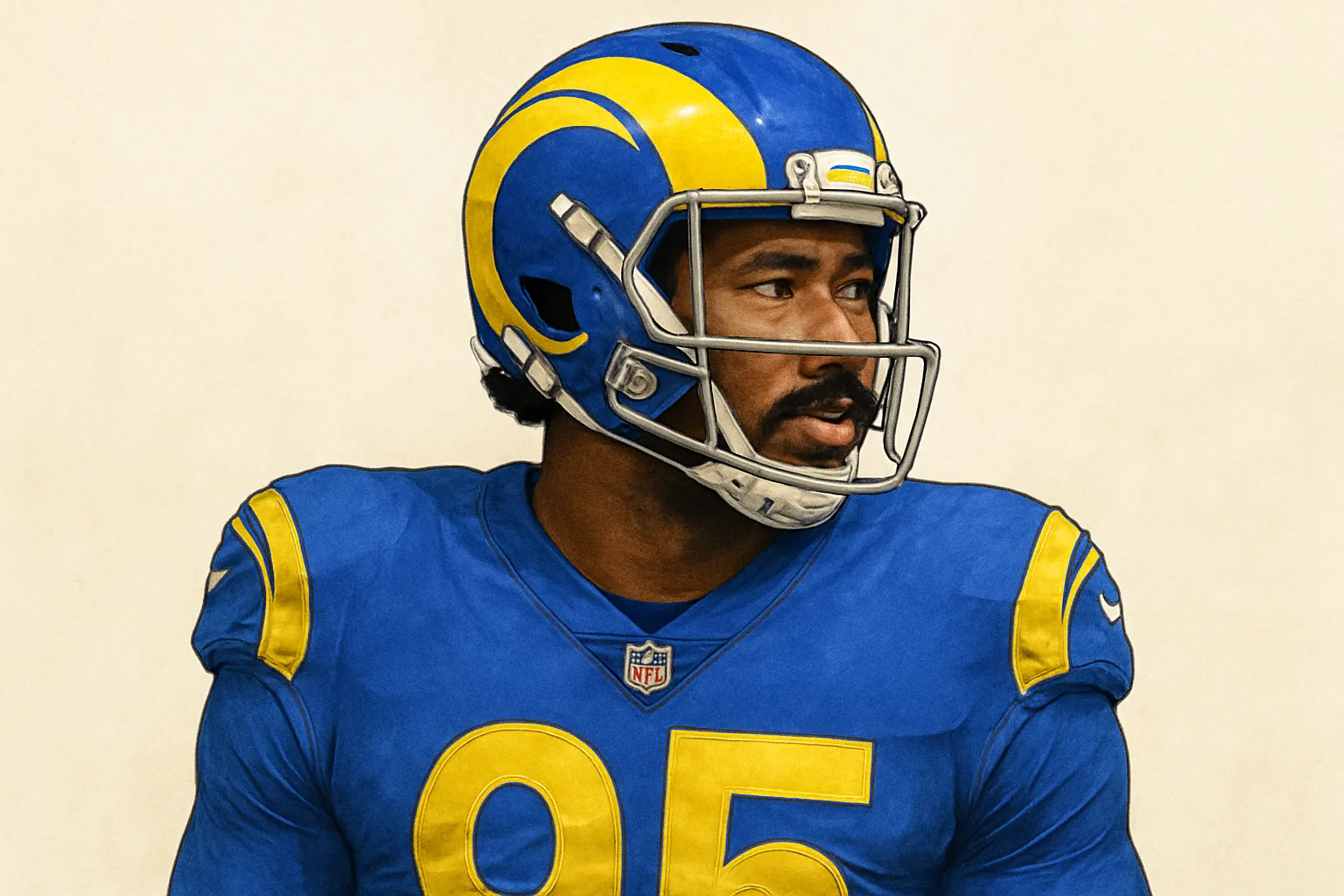
The Cleveland Browns have traded Myles Garrett to the Los Angeles Rams, sending the two-time AP NFL Defensive Player of the Year from a franchise stuck in another rebuild to one built to chase a title now.
According to the source material, the Browns received pass rusher Jared Verse and three draft picks in the deal. Reporting cited in the source description says the return includes high future picks, with some outlets identifying them as a 2027 first-round pick, a 2028 second-round pick and a 2029 third-round pick.
For Los Angeles, the move is direct and expensive: add the best defensive player in football to an already ambitious roster. For Cleveland, it is a harder admission. The Browns are moving on from the rare kind of player teams usually spend years trying to find, and accepting a younger edge rusher plus future draft capital as the price of changing direction.
What the Rams are buying
Garrett arrives after a record-setting season. The source says he was the unanimous choice for Defensive Player of the Year last season after recording 23 sacks and breaking the NFL single-season sack record.
That matters because this is not a trade for reputation alone. The Rams are acquiring a player who is still being described by the league’s highest defensive honor as the best at his job right now.
The fit is also unusually aggressive because of the quarterback on the other side of the roster. Garrett’s addition creates what the source describes as the first pairing of the reigning AP NFL MVP and reigning AP NFL Defensive Player of the Year on the same team. Matthew Stafford won his first MVP award last season, giving Los Angeles a rare top-of-the-league combination: elite quarterback play and the league’s premier pass rusher.
That is why this trade feels different from a routine contender upgrade. A team might add a cornerback to patch a coverage issue or trade for a lineman to protect a quarterback. The Rams are using a blockbuster deal to tilt the core identity of the roster. If Stafford gives them enough scoring stability, Garrett gives them a way to close games without needing perfect offense every week.
Cleveland’s side is about timing, not talent
There is no serious football argument that Garrett became expendable because of performance. The source frames the trade around something else: Garrett wanted to be part of a consistent winning team instead of one in perpetual rebuilding.
That line is the center of the deal. Cleveland did not merely lose a productive defender. It moved a franchise-level player whose timeline no longer matched the team’s direction.
The Browns’ return gives them two different forms of flexibility. Verse gives Cleveland a younger pass rusher who can play now, while the draft picks give the front office chances to reshape the roster over several years. If the reported structure of a 2027 first, 2028 second and 2029 third is accurate, this is not a one-draft reset. It stretches Cleveland’s return deep into the back half of the decade.
The contract piece also explains why the trade became possible. The source says Browns general manager Andrew Berry was able to make the deal after Cleveland and Garrett modified the contract and deferred option payments over the 2026-28 seasons in March. A first payment of about $10 million had been due on March 28, but was moved to near the start of the regular season.
That does not make the football decision easy. It does show how major NFL trades often depend on contract engineering before the headline arrives. A player of Garrett’s stature is not moved simply because two teams like the idea. Money, timing and payment structure have to be made workable first.
A concrete example of the Rams’ bet
Imagine a January game at SoFi Stadium with Los Angeles leading by four points and the opponent facing third-and-long near midfield. Without Garrett, the Rams may still have enough defensive talent to pressure the quarterback. With Garrett, the offense has to account for a pass rusher who just delivered a 23-sack season.
That changes the play call. A coordinator may keep a tight end in protection, chip with a running back or call something faster and shorter than planned. Even when Garrett does not record the sack, he can shrink the opponent’s menu.
That is the practical meaning of a trade like this. The Rams are not just buying highlight plays. They are buying leverage in the most important downs of the season.
Why Los Angeles keeps making these swings
The Rams have operated for years with a willingness to pay heavily for known stars. The source material notes that their no-fear approach to major trades has already helped produce two Super Bowl appearances and one Super Bowl title.
This deal fits that pattern, but the setting makes it sharper. The source says the Rams are looking toward Super Bowl LXI at SoFi Stadium. A home-market Super Bowl does not guarantee anything, but it raises the urgency around a roster that already sees itself as ready.
That is the key distinction between Los Angeles and Cleveland in this trade. The Rams are converting future assets into present certainty. The Browns are converting present greatness into younger talent and future optionality.
Neither side is automatically wrong. The risk is different.
- For the Rams: the trade only works if Garrett helps turn a strong roster into a championship-level one before the cost in picks becomes painful.
- For the Browns: the return has to become more than a consolation prize. Verse and the picks need to form part of a real roster reset, not just soften the loss of an elite player.
- For Garrett: the move answers his stated desire for a more consistent winner, but it also places him inside immediate championship expectations.
What to watch next
Garrett is expected to report to the Rams’ facility on Tuesday and hold a news conference to discuss the trade. That will be the first chance to hear how he frames the move after finally leaving Cleveland.
The next questions are practical. How quickly do the Rams integrate him? Do they adjust the defensive front around him, or simply let him become the focal point of the rush? And how does Cleveland position Verse: as Garrett’s direct replacement, or as one part of a broader defensive rebuild?
The final judgment will take years, because the draft picks involved extend into future seasons. Los Angeles will be judged first, though. A trade this loud is measured in playoff games before it is measured on draft charts.
The Rams have made the easier story to understand: they want to win now and just added the NFL’s most decorated current defender. Cleveland’s story is less satisfying but just as important. The Browns chose the future over another season of asking Garrett to be the face of a rebuild he no longer wanted to lead.