
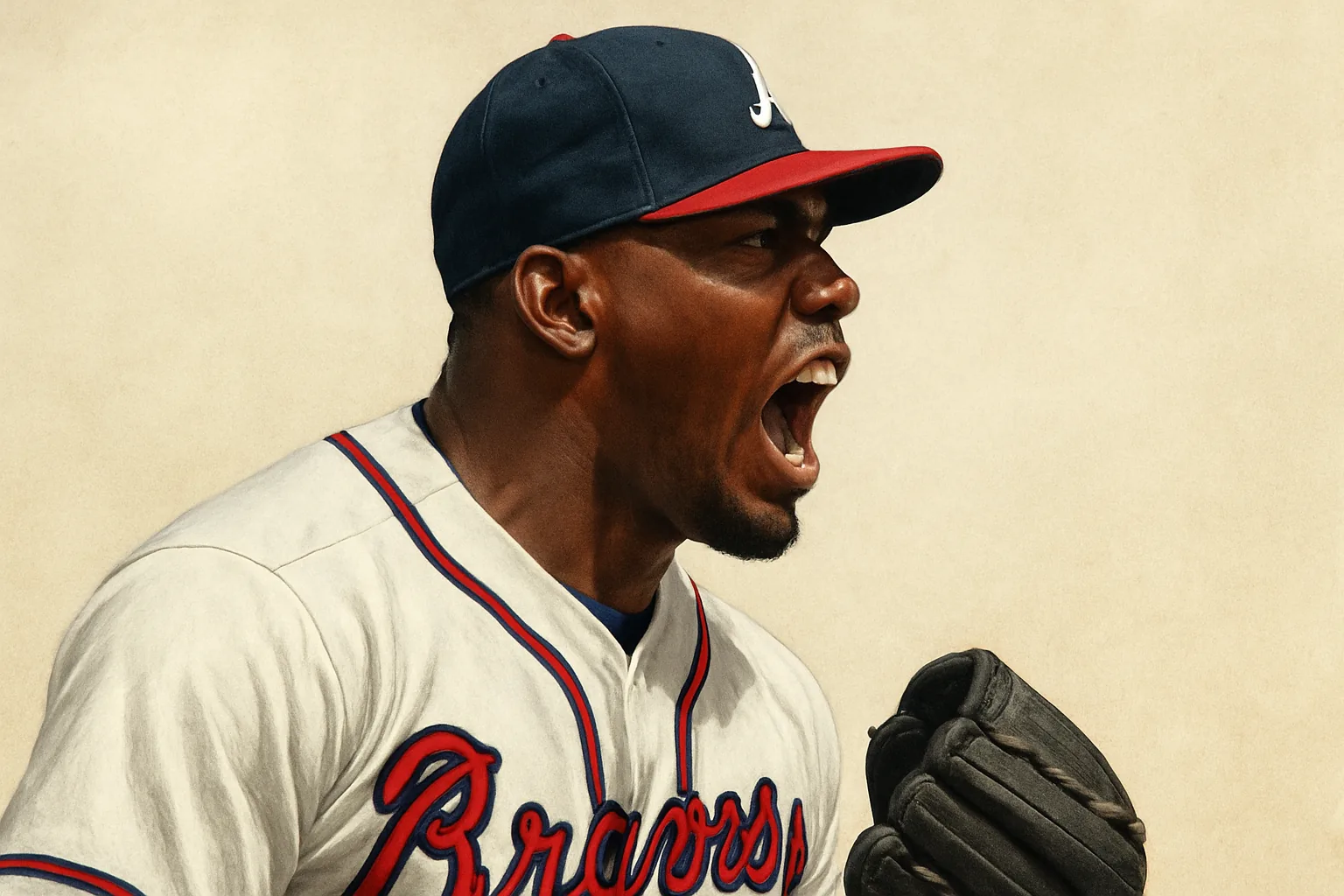
MLB gave Jorge Soler and Reynaldo López seven-game suspensions after their April 7 fight in Anaheim, but the most revealing part of the episode is not the number itself. It is how differently a suspension lands once appeals, roster timing, and player roles get involved.
On paper, the league treated the Angels designated hitter and the Braves right-hander the same. Both were suspended seven games and fined after throwing punches during a benches-clearing brawl in the fifth inning of Atlanta’s 7-2 win over Los Angeles. In practice, the consequences were already splitting almost immediately.
Soler appealed and stayed active. He was in the Angels lineup on April 8 and homered that night, less than an hour after news of the suspensions circulated. López also appealed, and multiple reports said he later reached an agreement with MLB to serve a reduced five-game suspension. ESPN’s report, citing those accounts, noted that the shorter ban would effectively push his next start back by one day rather than knock him out for a full turn in the rotation.
What actually happened
The fight had been building for a while. Soler took López deep in the first inning, then was hit by a 96 mph fastball in his next at-bat. In the fifth, López threw a high-and-inside pitch that tipped off catcher Jonah Heim’s mitt. Soler stared him down, walked toward the mound, and the two exchanged punches.
That detail matters because MLB was not reacting to a routine benches-clearing argument. This was a clear on-field fight between two players, with López still holding the baseball when he punched Soler’s helmet. Both were ejected. Benches and bullpens emptied. Braves manager Walt Weiss ended up tackling Soler during the scrum.
Soler later said, through an interpreter, that he asked López if everything was OK and did not like the response. López said there was no intent to hit Soler. Those explanations do not erase what the league saw: escalating tension, punches thrown, and a fight that moved well past the usual mound confrontation.
Why the identical punishment is not really identical
This is where the story gets more interesting than the headline.
A seven-game suspension sounds symmetrical. Baseball almost never feels symmetrical once the schedule hits it. A suspended everyday hitter can lose a full week of plate appearances. A suspended starting pitcher may miss only part of one cycle, and if a ban is reduced or timed around off days, the competitive cost can shrink fast.
That is what makes the López development important. If a seven-game ban turns into five and mostly shifts his next outing from Monday to Tuesday, the public punishment still looks serious while the baseball damage becomes much smaller. That does not mean the discipline is fake. It does mean fans should read the headline number and the roster effect as two separate things.
Soler’s side shows the other half of the equation. Because he appealed, the Angels did not immediately lose his bat. In fact, they got production right away. A suspension intended to remove a middle-of-the-order hitter from games had no immediate effect at all.
That gap between announced punishment and lived consequence is worth paying attention to. MLB can send a disciplinary message, but teams and players still have room to manage the practical fallout.
A concrete example of the difference
Consider the two cases as baseball operations problems rather than morality plays.
If Soler serves the full suspension later, the Angels lose a hitter who was already seeing the ball well against López and who was active enough to homer the day after the ruling. That affects lineup construction every day he is out.
If López serves five games and returns with only a slight adjustment to his next start, Atlanta is dealing with inconvenience more than disruption. The Braves might shuffle timing, but they are not necessarily rebuilding a week of pitching plans from scratch.
Same incident. Same original suspension length. Very different competitive math.
What MLB is trying to deter
The league still had strong reason to come down hard here. A pitcher throwing punches while holding a baseball is not a small detail. Neither is a batter leaving the box and charging the mound after a high pitch. MLB has long tolerated emotion and some amount of retaliation culture, but it does not want those moments turning into open fights that pull full dugouts and bullpens onto the field.
That is especially true in a case like this one, where there were signs of escalation across multiple plate appearances rather than one isolated misunderstanding. Soler homered. He got hit. Then came the high miss near his head area in the fifth. By the time the punches started, the sequence already looked combustible.
MLB’s seven-game number reflects that context. It tells players the league saw a fight, not just a shoving match. But the appeals process shows another truth about baseball discipline: punishment is not finished when it is announced.
What to watch next
The next question is not whether the league viewed the brawl seriously. It clearly did. The question is whether the final effect ends up feeling proportionate once the appeals process is complete.
For Soler, the issue is straightforward: when does the suspension actually begin, and how much lineup value do the Angels lose when it does? For López, the issue is whether the reported five-game resolution stands as the practical final answer and how little it changes Atlanta’s rotation.
There is also a smaller lesson here for how baseball fights are judged. Public debate usually centers on who started it. League discipline is often just as shaped by what can be proven on video, what role each player has on the roster, and how easy it is to absorb the missed games on the schedule.
That is why this story matters beyond one ugly inning in Anaheim. MLB handed out equal suspensions. Baseball, almost immediately, made them unequal.