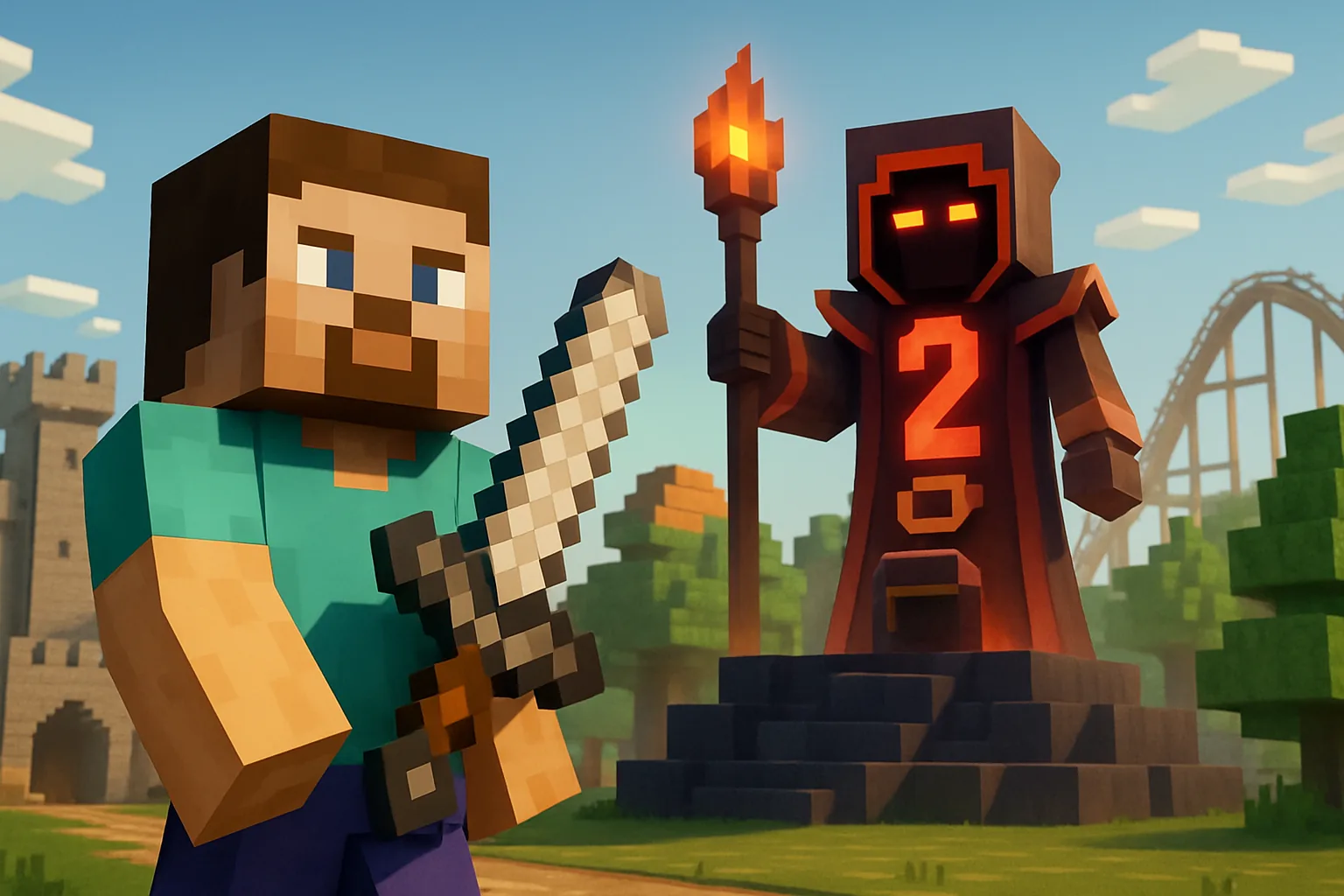
The announcement of Minecraft Dungeons 2 alongside a planned UK theme park is interesting because the two projects look unrelated on the surface but make sense together strategically. One extends the franchise through another playable product. The other extends it through physical presence and destination entertainment. Put together, they suggest Mojang and its partners are thinking about Minecraft less as a single game and more as a durable platform that can operate across formats.
That shift matters because very few game brands become strong enough to support both sequelized software and real-world attractions without one of those efforts feeling forced. Minecraft can plausibly do it because the brand is already bigger than a specific release cycle. It is a recognizable visual language, a creative identity, and a multigenerational entry point to gaming.
Why Dungeons 2 makes sense now
Minecraft Dungeons was never meant to replace the core sandbox. Its role was to prove that Minecraft's aesthetic and audience could stretch into a more directed action format without losing accessibility. A sequel implies there is still confidence in that experiment. It suggests the franchise can sustain genre variation while keeping the broader brand coherent.
That is strategically useful. A brand as large as Minecraft cannot rely forever on one style of engagement. Spin-offs help test how far the audience is willing to travel into adjacent experiences, and sequels reveal whether those experiments have become meaningful enough to support continued investment.
Why a theme park is a different but related bet
A Minecraft-themed attraction is not really about lore in the way some entertainment parks are. It is about environment, recognition, and physical participation. Minecraft's blocky visual identity makes it unusually adaptable to real-world spaces because people can recognize it instantly even when translated into architecture, rides, shops, and live experiences.
This makes the UK park plan more logical than it might sound to outsiders. The brand already carries family-friendly recognition, global scale, and a built-in association with creativity. Those are powerful traits for location-based entertainment, especially when the goal is to create a place that feels interactive rather than merely decorative.
A simple comparison helps. Some franchises become attractions because people want to visit a story. Minecraft is different. People want to visit a world-building language they already understand.
Why these two announcements belong in the same conversation
The sequel and the theme park both ask the same underlying question: how many forms can Minecraft occupy while still feeling like Minecraft? Software expansion tests mechanical flexibility. Physical expansion tests cultural durability. If both work, the franchise strengthens its claim to being an evergreen entertainment property rather than just a long-lived game.
That is increasingly important in modern games business strategy. The biggest brands are expected to move beyond the screen through merch, events, media, and destination experiences. Minecraft has the rare advantage of already feeling native to younger audiences and familiar to older ones, which makes that leap easier than it would be for a narrower franchise.
What to watch next
The key question for Dungeons 2 will be whether it meaningfully evolves the action-RPG formula rather than simply refreshing it with brand power. The key question for the theme park will be whether the experience can capture Minecraft's spirit of creativity instead of offering only surface-level resemblance.
If both projects land, they will reinforce the idea that Minecraft is not merely surviving through legacy affection. It is still expanding through new forms of engagement. That is a much stronger position for a franchise to occupy than simply remaining popular with existing players.
Seen together, these announcements are less random than they first appear. They are evidence that Minecraft is being treated as infrastructure for a wider entertainment ecosystem, with digital and physical touchpoints designed to keep the brand culturally active for years to come.