
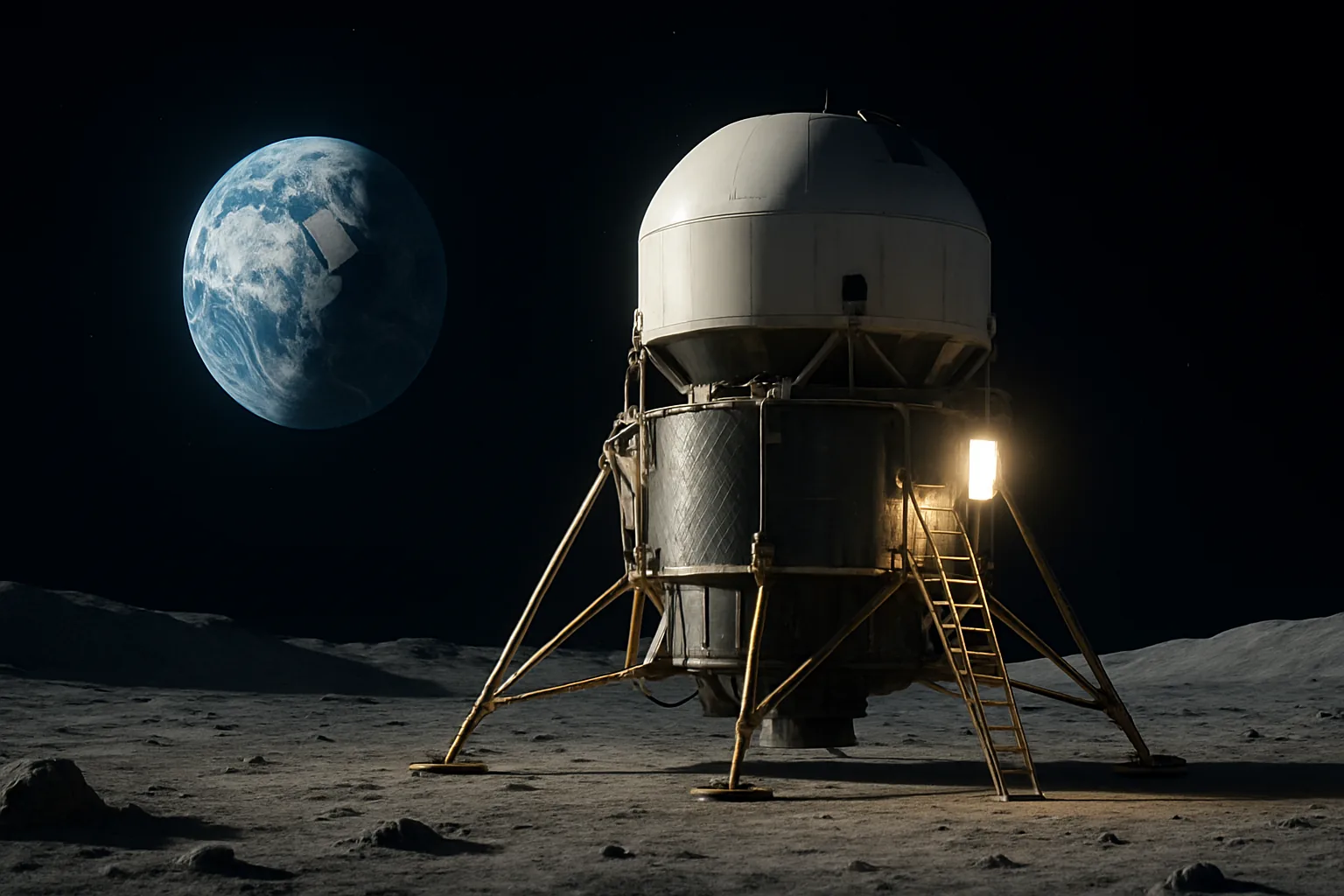
Claims that lunar-lander developers are ready for a faster NASA mission cadence matter because deep-space exploration increasingly depends on repeatability rather than isolated spectacle. It is no longer enough to prove that a single ambitious mission can be attempted. The strategic question is whether the industrial base can support a rhythm of missions with enough reliability, financing, and technical maturity to turn exploration into an enduring program rather than an occasional event.
That is why readiness language from lander companies deserves attention. It speaks not only to confidence in one vehicle, but to whether the commercial and technical ecosystem around lunar exploration is approaching something more durable. A faster cadence implies more than more launches. It implies a system that can plan, build, test, and recover at a tempo consistent with institutional ambition.
Why cadence is such an important concept
In spaceflight, cadence often signals maturity. A system that can fly once may be impressive. A system that can support repeated missions without treating each one as a near-singular event suggests deeper organizational competence. For NASA, a higher mission rhythm would also mean that lunar exploration is becoming less performative and more operational.
This is what makes the conversation significant. Cadence is the bridge between demonstration and sustained presence.
Why commercial readiness matters to NASA's strategy
NASA's current approach relies heavily on commercial partners being able to absorb technical complexity while scaling at a pace that public programs once handled more directly. That model can generate innovation and competition, but it also requires unusual trust in whether private firms can maintain quality while moving faster. When developers say they are ready, they are implicitly asking policymakers and investors to believe that this model is progressing from promise toward proof.
That belief is crucial because cadence depends on the whole ecosystem, not just the best single company in the field.
A useful way to frame it is this: lunar cadence matters because it reveals whether the Moon is becoming an operating environment or remaining mostly an aspirational destination.
Why the risk never fully disappears
Space systems are unforgiving, and acceleration can expose fragility if readiness is overstated. A faster pace is useful only if it does not outrun testing discipline, supply-chain resilience, or mission assurance. That is why declarations of preparedness should be read as both ambition and a challenge. The ecosystem now has to prove that repeatability will not come at the expense of trust.
In that sense, cadence is not merely a scheduling goal. It is a test of whether industrial confidence and technical confidence are aligned.
What to watch next
The important questions are whether lander programs hit milestones consistently, whether NASA can support a steadier flow of missions contractually and operationally, and whether setbacks are absorbed without stalling the wider lunar agenda. Those will determine whether the cadence story is real.
That is why this matters. It shows that the future of lunar exploration is increasingly about systems that can keep going, not just missions that can get off the ground once.
In modern spaceflight, readiness is measured not only by whether a mission can happen, but by whether it can happen again soon enough to build momentum.