
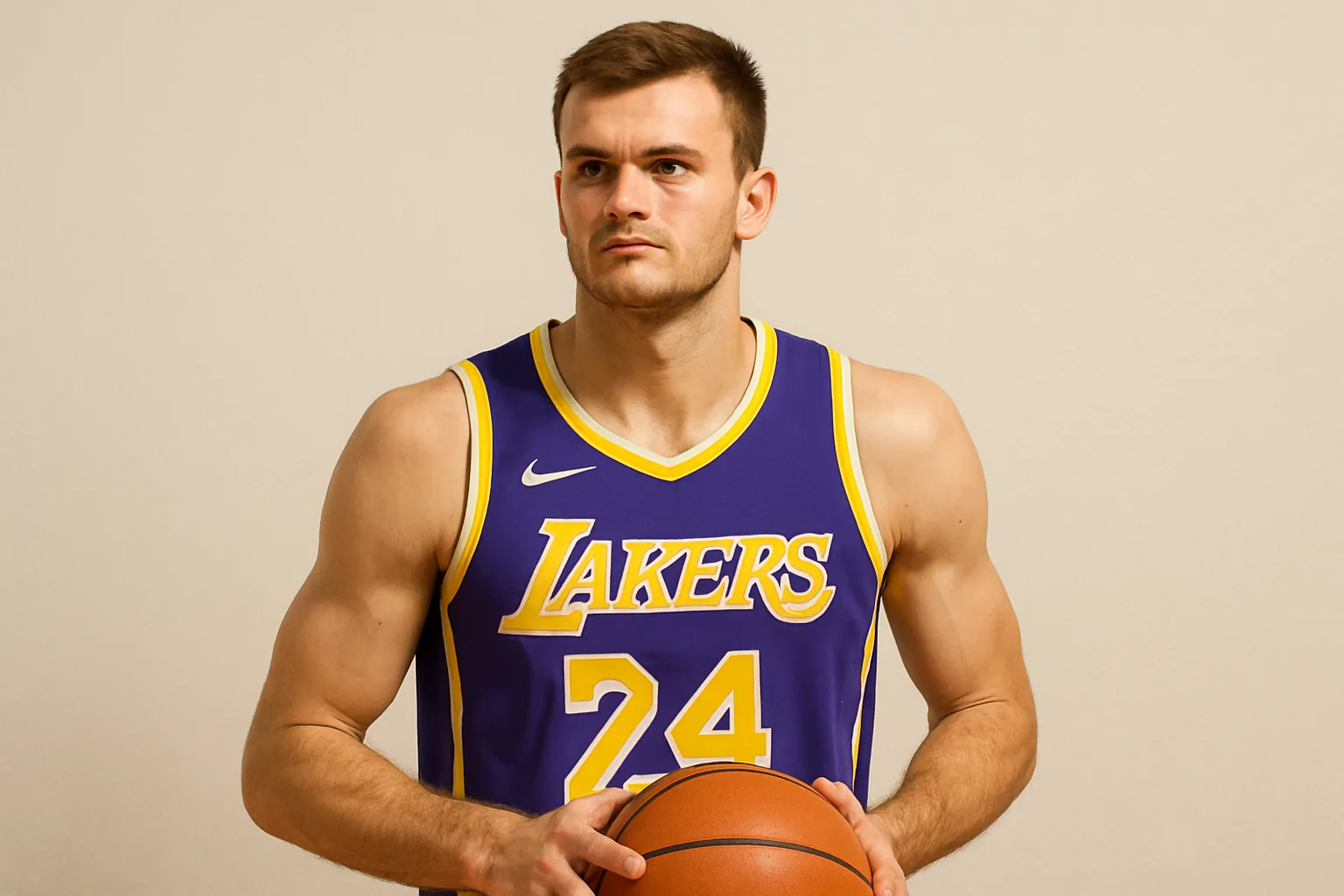
The Los Angeles Lakers have agreed to acquire restricted free-agent center Walker Kessler from the Utah Jazz, making a decisive—and expensive—answer to their search for a frontcourt anchor.
Under the reported terms, Los Angeles will send Utah unprotected first-round picks in 2031 and 2033, plus first-round swap rights in 2028 and 2030. Kessler is then expected to sign a four-year, $130 million contract with the Lakers.
For a team built around Luka Doncic and Austin Reaves, the appeal is easy to see. Kessler is 24, has already established himself as a high-level rim protector, and fits the kind of center profile the Lakers were targeting: a big man who can protect the basket, rebound, and support perimeter creators rather than require the offense to be built around him.
The Lakers paid for certainty, not just a center
Kessler was a restricted free agent, which gave the Jazz leverage. Los Angeles could have pursued him through an offer sheet, but a trade allows the Lakers to secure him directly rather than wait on Utah’s matching decision. In exchange, Utah received something especially valuable in NBA roster-building: control over picks from a period when the Lakers’ current core may look very different.
The two first-rounders are unprotected. That detail matters far more than the number of picks alone. An unprotected selection retains its value even if the team sending it has declined by the time the draft arrives. The swap rights add another layer of upside for Utah in 2028 and 2030 if the Jazz’s own picks are less favorable than Los Angeles’.
This is not the price of a short-term rental. The Lakers are committing both major draft assets and four years of salary to a player they view as part of their present and future.
Why Kessler fits the roster question
Los Angeles entered the offseason with a clear need for a top-tier big man. Kessler was among its leading targets, along with Detroit center Jalen Duren, according to the source material. The choice of Kessler points to a specific priority: defensive coverage at the rim paired with a center who can complement elite guards.
In 201 regular-season games since Utah selected him No. 22 overall in the 2022 draft, Kessler has averaged 9.5 points, 9.3 rebounds, and 2.4 blocks in 25.3 minutes per game. The scoring number is modest, but that is not the central case for the acquisition. His value begins with ending possessions through rebounds and making drives harder at the basket.
A simple late-game possession shows the appeal. If Doncic draws a second defender on a high screen, the Lakers do not need Kessler to create a difficult shot. They need a large target near the rim, someone who can finish the available play or force the defense to keep a body near the paint. On the other end, they need that same player available to deter the drive that often follows when opponents try to attack a smaller or less protected lineup.
That does not guarantee a seamless offense or solve every lineup issue. It explains why a young center with Kessler’s defensive résumé can be worth a significant package to a team whose best players are guards.
The contract raises the stakes
A reported $130 million over four years puts Kessler’s deal at roughly $32.5 million annually. The number reflects more than his past scoring production; it prices in age, defensive impact, and the difficulty of finding a credible starting center who fits beside star ball-handlers.
The Lakers are effectively making two connected bets. First, Kessler can remain one of the league’s stronger rim protectors as his role expands in Los Angeles. Second, his particular strengths will hold their value through the life of the contract alongside Doncic and Reaves.
For Utah, the calculation is different. The Jazz move a 24-year-old center while turning his restricted-free-agent leverage into a package of future draft options. The faraway timing is deliberate: draft capital in 2031 and 2033 is not tied to assumptions about the Lakers’ roster, payroll, or competitive level today.
What to watch next
The immediate question is basketball fit: how quickly Kessler becomes a dependable part of the Lakers’ preferred lineups with Doncic and Reaves. His minutes, rebounding, and rim protection will matter, but so will whether the Lakers can use his presence to make their perimeter talent more effective at both ends.
The longer-term question is asset management. The Lakers have traded picks and swaps from the late 2020s into the 2030s for a player they believe is the right answer at center. If Kessler becomes the durable defensive complement they sought, the deal will look like a targeted use of distant assets. If the roster around him changes sharply, Utah’s unprotected picks could become the enduring story of the transaction.
For now, Los Angeles has done the most important immediate part: it has added the young starting-caliber big man it prioritized, and it did so on a timeline that aligns with its star guards rather than treating center as a temporary patch.