
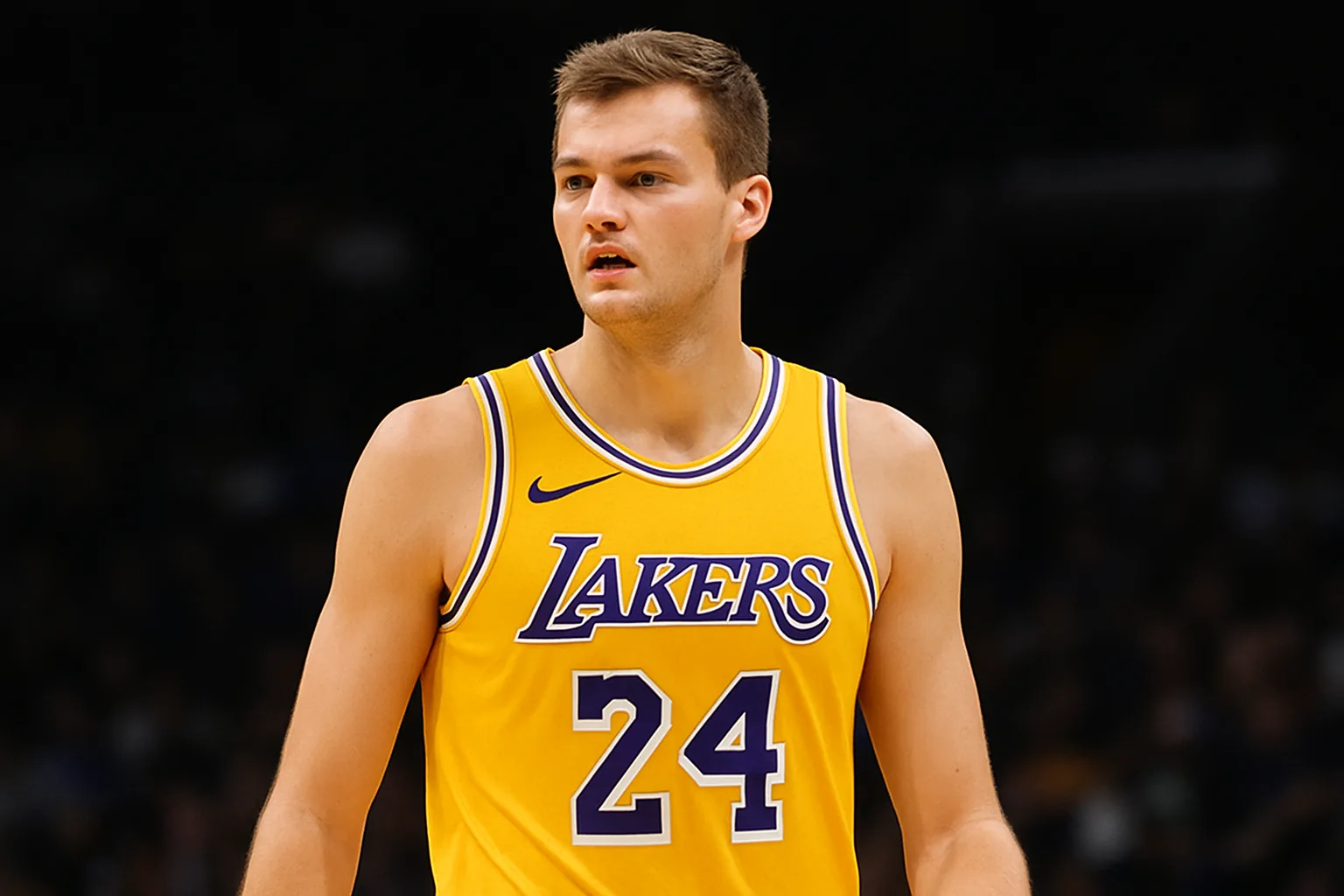
The Lakers reportedly moved quickly at the start of 2026 NBA free agency, acquiring restricted free agent center Walker Kessler from the Utah Jazz in a sign-and-trade and lining up three more deals that reshape both the frontcourt and backcourt.
According to the source report, Kessler is headed to Los Angeles on a four-year, $130 million contract. Utah is set to receive unprotected first-round picks in 2031 and 2033, plus first-round pick swaps in 2028 and 2030. The deal reportedly includes a player option in the fourth year and a full trade kicker.
That was not the Lakers’ only move. Los Angeles also reached agreements with forward/center Sandro Mamukelashvili on a four-year, $52 million contract, guard Quentin Grimes on a four-year, $60 million deal and guard Collin Sexton on a two-year, $19 million pact.
The timing matters as much as the names. With LeBron James parting company with the franchise, the Lakers suddenly had more financial flexibility and a new roster-building question: how to build around the next version of the team rather than extend the old one.
Why Kessler Is the Centerpiece
Kessler is the clearest signal of what Los Angeles wants this roster to become. He is 7-foot-2, 250 pounds and turns 25 in late July. Through his career, he has averaged 9.5 points, 9.3 rebounds, 2.4 blocks and 1.2 assists in 25.3 minutes per game while shooting 68.1% from the field.
Those numbers point to a specific kind of center, not a general-purpose star. Kessler does his damage near the rim: alley-oop finishes, high-low lobs, cuts from the dunker spot and offensive rebounds. He is not being paid to bend defenses from the perimeter. He is being paid to give the Lakers vertical spacing, rim protection and possession control.
That profile makes obvious basketball sense next to Luka Doncic and Austin Reaves. Doncic has long been most dangerous when paired with a big who can sprint into screens, dive hard to the rim and punish defenses that send extra attention to the ball. Reaves benefits from the same geometry: a real lob threat forces the weak-side defender to think twice before helping into the lane.
A simple example shows the appeal. If Doncic runs a high pick-and-roll with Kessler and the opposing center steps up to contain Doncic, Kessler has a direct path to the rim. If the defense tags Kessler from the corner, Grimes or another shooter gets a cleaner catch-and-shoot look. If the defense stays home, Doncic can play two-on-one in the middle of the floor. Kessler does not need 20 shots to change that possession; his value is in forcing the defense to choose.
The Price Says Los Angeles Is Not Waiting
The draft compensation is substantial. Unprotected first-rounders in 2031 and 2033 are not small chips, especially for a franchise entering a new phase after James. Add swaps in 2028 and 2030, and the Lakers are giving Utah access to several points on their future timeline.
That is the cost of turning flexibility into a young, starting-caliber center immediately. Restricted free agents are rarely easy to pry loose, and Kessler was described in the source material as one of the top restricted free agents and one of the best big men available overall. Los Angeles did not merely sign a center; it paid to remove uncertainty from a position that can define how a Doncic-led team plays on both ends.
For Utah, the return fits the familiar logic of a team willing to convert a valuable young player into distant, potentially high-upside draft control. The further out the picks, the harder they are to price. That uncertainty is exactly why they can become attractive to a rebuilding or retooling team.
What Sexton, Grimes and Mamukelashvili Add
The other reported agreements are not side notes. They suggest the Lakers are trying to avoid building a top-heavy roster that depends too heavily on one creator and one big.
Grimes gives Los Angeles another guard-sized wing option on a four-year deal. Sexton arrives on a shorter two-year contract, bringing backcourt scoring and pressure after Marcus Smart left for Houston and Luke Kennard headed to Phoenix. Mamukelashvili adds another frontcourt piece behind or alongside Kessler, giving the Lakers more lineup flexibility than they had if they were relying on one major big-man addition.
The practical implications are straightforward:
- More rim pressure: Kessler gives the Lakers a vertical target who can finish without needing plays called for him.
- More guard depth: Sexton and Grimes help replace outgoing backcourt minutes with different offensive profiles.
- More frontcourt options: Mamukelashvili gives Los Angeles another big body as the team moves into a new roster era.
- Less dependence on legacy structure: The Lakers are no longer making moves primarily around the LeBron-James-era template.
The Bigger Read on the Lakers’ Direction
The Lakers’ post-LeBron transition was never going to be quiet. The franchise is too visible, Doncic is too important, and the Western Conference does not give teams much time to drift. These moves point to a front office that wants to retool aggressively rather than step back and reassess for a season.
There is risk in that. Kessler’s contract is large, the pick package reaches far into the future, and the Lakers are committing real money across several players at once. If the group fits, Los Angeles may have solved multiple roster problems quickly. If it does not, the team has already spent some of its cleanest future assets.
The most important question is not whether Kessler is a good player. It is whether he is the right expensive player for this specific roster. His skill set is valuable when surrounded by enough shooting, passing and defensive coverage. The reported additions of Grimes, Sexton and Mamukelashvili suggest the Lakers understand that Kessler works best as part of a broader construction, not as a standalone headline.
What to Watch Next
The next test is balance. The Lakers have added size, finishing, guard depth and another frontcourt option, but the final shape of the rotation will determine whether this becomes a clean reset or simply a busy opening week.
Watch how Los Angeles handles spacing around Kessler and Doncic, how many minutes Sexton plays on the ball, and whether Grimes becomes a trusted closing-lineup option. Also watch the defensive matchups. Kessler can protect the rim, but the perimeter group has to prevent every possession from becoming a rescue mission at the basket.
For now, the message is clear enough: the Lakers are not treating the end of the LeBron era as a pause. They are trying to build the next team quickly, with Kessler as the interior anchor and Doncic-friendly pieces around him.