
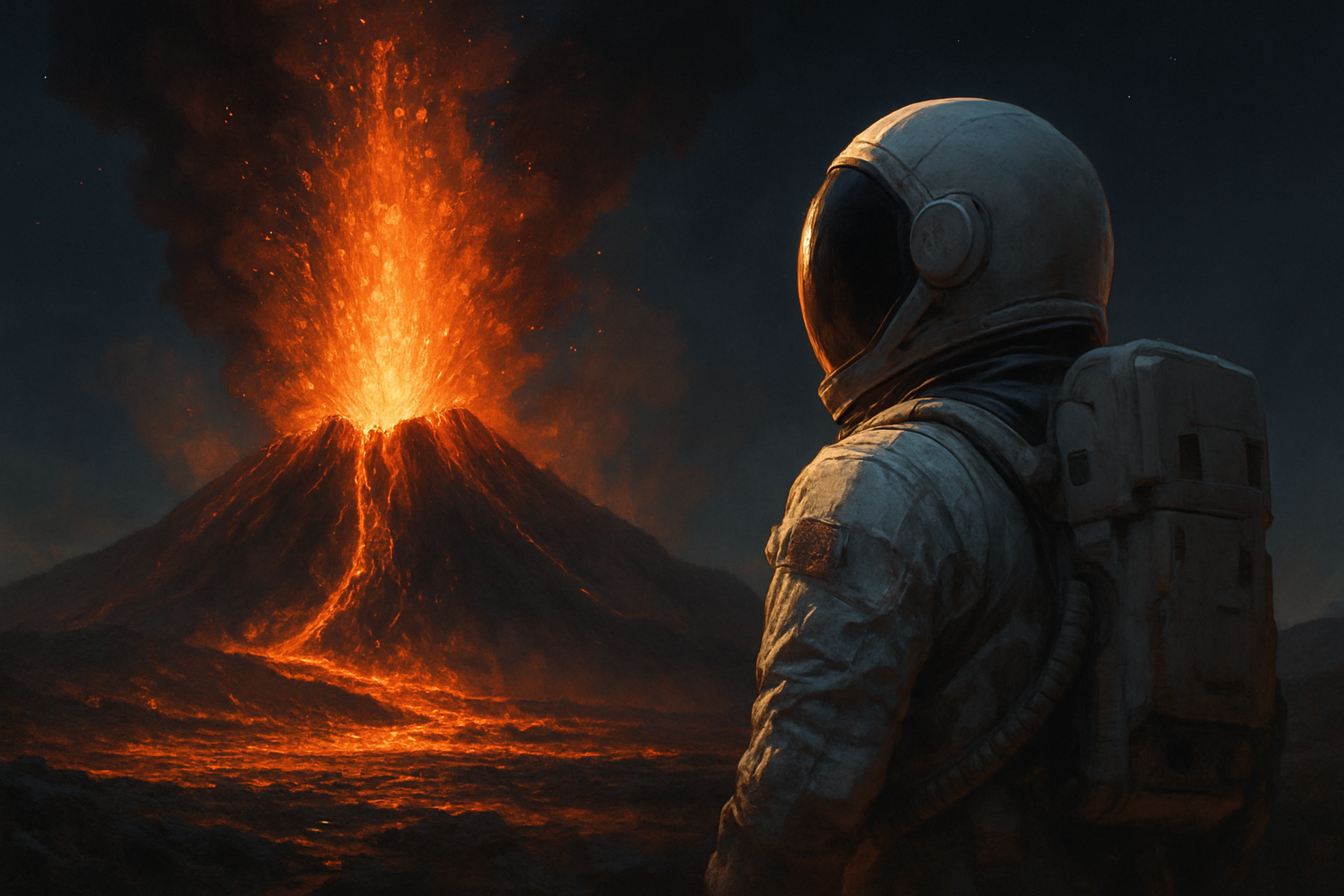
Kīlauea matters because it offers something engineers and scientists rarely get in a controlled setting: a dynamic, hazardous landscape that changes visibly and demands constant observational adjustment. Volcanic environments force teams to measure heat, gas, motion, surface transformation, and access risk in ways that closely resemble the operational mindset needed for off-world exploration. The volcano is not Mars or the Moon, but it can function as a living analogue for how people build tools to understand dangerous terrain without assuming stability.
That is why the demonstration matters beyond geology. It shows how Earth science can feed directly into the broader culture of exploration technology.
Why extreme environments are useful test grounds
Exploration systems are only as good as their ability to operate where conditions are unpredictable and direct human access is limited. Volcanic terrain creates those pressures naturally. Sensors, imaging systems, remote workflows, and interpretation methods all have to perform under uncertainty. That makes sites like Kīlauea valuable not just for studying eruptions, but for practicing how to observe and respond when the environment is actively resisting easy measurement.
This is why the site matters. It transforms a dramatic natural event into a serious proving ground for tools and habits relevant to future missions.
A useful way to frame it is this: the closer a place comes to defeating ordinary observation, the more it can teach engineers how to design for exploration.
Why Earth observation and space exploration overlap
There is a tendency to separate planetary science from Earth science, as though one looks outward and the other only inward. In practice, the disciplines reinforce each other. Imaging methods, terrain analysis, and remote interpretation techniques often mature through demanding work on Earth before they become useful elsewhere. Studying Kīlauea therefore supports a broader exploration ecosystem in which the methods of one frontier strengthen work on another.
This is one reason the story matters. It reminds people that advanced exploration capability often grows out of learning how to read our own planet more precisely.
Why public imagination also matters
Volcanoes capture attention because they dramatize planetary power in a form that feels immediate. When institutions connect that spectacle to exploration technologies, they help the public understand that space capability is not built only in clean rooms and laboratories. It is also shaped by work in harsh environments that test whether instruments and teams can adapt under pressure. That connection can make exploration feel more grounded and more technically credible.
That is why the demonstration matters beyond research. It gives audiences a visible bridge between natural extremes on Earth and the challenges of navigating unfamiliar worlds.
Sometimes the best preparation for other planets begins by taking our own planet’s instability seriously.
What matters next
The important questions are how field lessons from volcanic monitoring inform future sensor design, whether agencies continue integrating Earth analog sites into exploration planning, and how effectively those insights move from observation into deployable systems. Those choices determine whether the volcano remains only a spectacle or becomes part of a deeper technical pipeline.
That is why Kīlauea matters for exploration technologies. It shows how extreme terrestrial environments can sharpen the instruments, workflows, and judgment required for harder missions beyond Earth.
For exploration teams, the value of a place like Kīlauea lies in its refusal to be simple. That is exactly what makes it useful.