
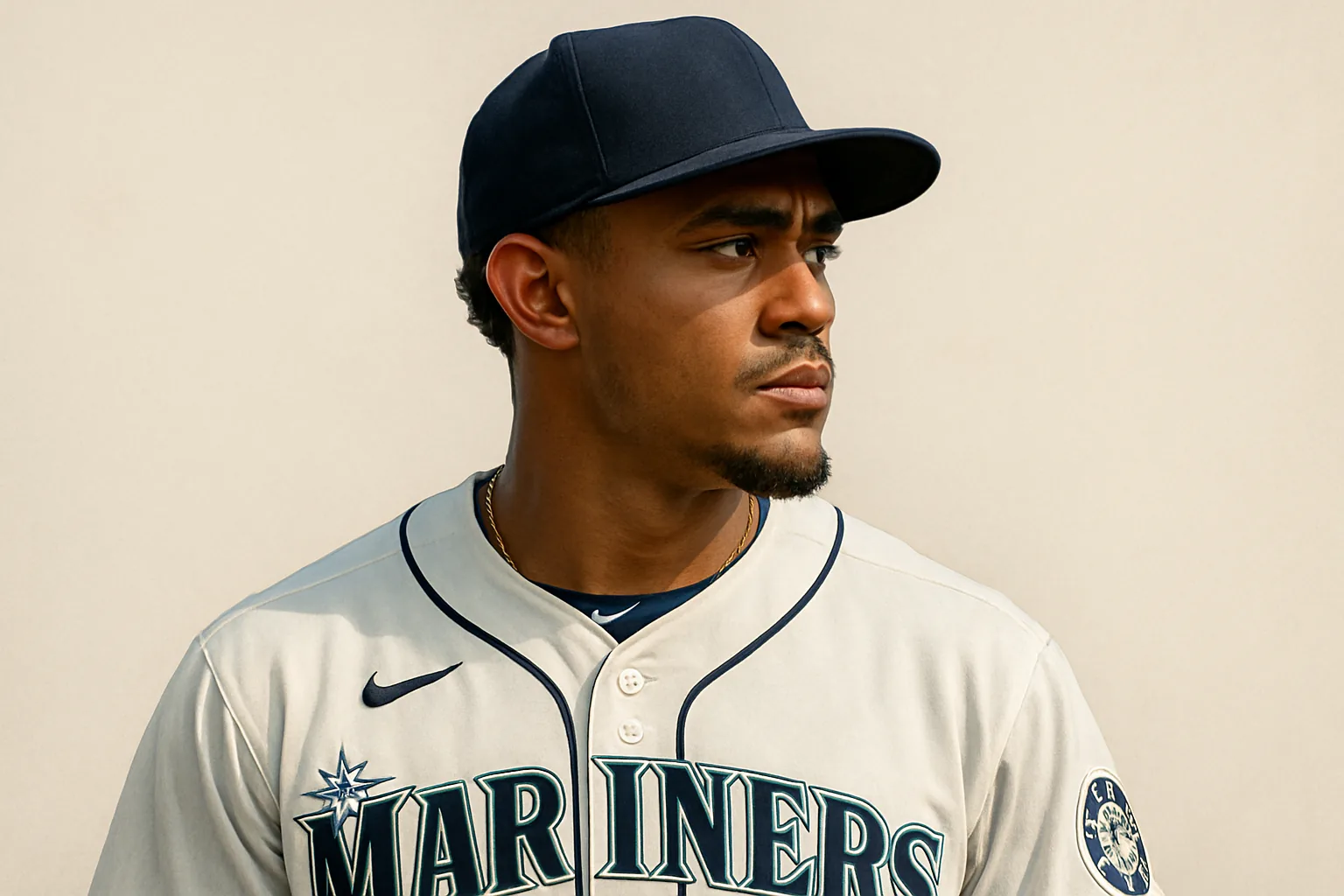
Julio Rodríguez is back in the Seattle Mariners’ lineup after spending 15 days on the seven-day concussion injured list, ending an absence that exposed just how little room Seattle has for an extended offensive slump.
The Mariners activated Rodríguez for their weekend series against the San Francisco Giants. Batting second as the designated hitter in his first game since July 2, he delivered a walk-off sacrifice fly in the 10th inning of a 4-3 victory. It was a useful contribution, but the manner of his return mattered more than the result.
Seattle had initially hoped Rodríguez would be ready when play resumed after the All-Star break. Instead, the club required another full workout before clearing him. General manager Justin Hollander said there had been no setback; the Mariners simply needed Rodríguez to complete every step of the process before facing major-league competition.
A return governed by symptoms, not the calendar
Rodríguez was injured on July 2 when a 78.2 mph throw struck the back of his helmet during a double-play attempt against the Los Angeles Angels. He initially remained on the base, but began feeling lightheaded after the adrenaline of the play subsided.
Unlike many muscle or joint injuries, a concussion does not provide a straightforward timetable based on visible healing. Rodríguez later said his symptoms included dizziness and vision problems, particularly when his heart rate increased. According to MLB’s account of his activation, those symptoms lingered for more than a week before he began to turn a corner.
That explains why the seven-day injured list became a 15-day absence. Seven days is a minimum, not a target date. The important tests involved increasing the intensity of his activity and then checking how he felt afterward.
On the Friday before his return, Rodríguez worked through pitching-machine repetitions and other game-like preparation. He followed that with throwing, running and fielding work before his activation. The Mariners determined that he did not need a minor-league rehabilitation assignment, but they still introduced him through the designated hitter spot rather than immediately asking him to resume his full workload in center field.
Why Seattle needed him back
The Mariners went 3-7 during Rodríguez’s absence. Their .613 OPS and average of 3.5 runs per game over that stretch were each fourth-lowest in Major League Baseball, according to MLB. The low point came in a 7-0 loss to San Francisco immediately after the All-Star break, when Seattle managed only two hits.
Rodríguez returned with a .259 batting average, 14 home runs and 40 RBIs. His fuller .259/.323/.424 slash line produced a .747 OPS: solid production, although not the sort of first half that makes one player an automatic cure for an inconsistent offense.
His importance is partly structural. Seattle can place a legitimate power threat near the top of the order, make opposing pitchers navigate fewer soft spots and use other hitters in roles better suited to them. Rodríguez also gives the club a route back to its preferred defensive alignment once he is ready to play center field regularly.
What that looks like in practice
Consider the decision to use Rodríguez as the No. 2 hitter and designated hitter in his first game back. Seattle regained one of its best bats without requiring him to sprint across the outfield for nine innings or make high-effort throws. The lineup improved immediately, while the physical demands remained controlled.
That arrangement also allowed the Mariners to judge the part of the recovery that cannot be measured during batting practice: how Rodríguez responded to a complete game environment, including repeated at-bats, baserunning and the natural rise in intensity during a close finish.
The corresponding roster move illustrated another consequence of his return. Seattle designated infielder/outfielder Miles Mastrobuoni for assignment, reversing part of the depth adjustment made while Rodríguez was unavailable. Activating a star does not merely add his production; it reshapes how the bench and defensive coverage are organized.
There is a credible second-half upside
Rodríguez’s career provides Seattle with a reason to expect more than his first-half numbers. Since his 2022 rookie season, he has recorded a .902 OPS after the All-Star break, ranking seventh among qualified hitters over that span. His 64 second-half home runs ranked ninth.
Those numbers do not guarantee another surge, especially after a concussion interrupted his season. They do establish that improvement would not be an unfamiliar development. Seattle does not need Rodríguez to manufacture an entirely new level of performance; it needs him healthy enough to approach a level he has repeatedly reached during the second half.
The timing makes that especially valuable. At the point of his activation, the Mariners were 48-50 but only 1½ games behind the American League West leader and one game outside the final AL wild-card position. A small standings gap can make even a modest offensive improvement consequential.
What Seattle should watch next
The first question is not whether Rodríguez immediately starts hitting home runs. It is how he feels after games and whether he can increase his workload without symptoms returning.
- Recovery between games: Seattle’s staff will continue to evaluate how Rodríguez responds after sustained, high-intensity activity.
- Defensive workload: A return to regular center-field duty would indicate that the club is comfortable moving beyond the controlled DH phase.
- Lineup effect: The Mariners need to see whether his presence improves the quality of the order as a whole, not merely his individual totals.
- Second-half form: His history after the All-Star break offers upside, but health must come before expectations based on past seasons.
The initial expectation that Rodríguez could return against San Francisco proved correct, just not as quickly as Seattle first hoped. That extra caution was appropriate. The Mariners need their center fielder for a tight playoff race, and preserving his availability for the weeks ahead matters far more than accelerating one July return.