
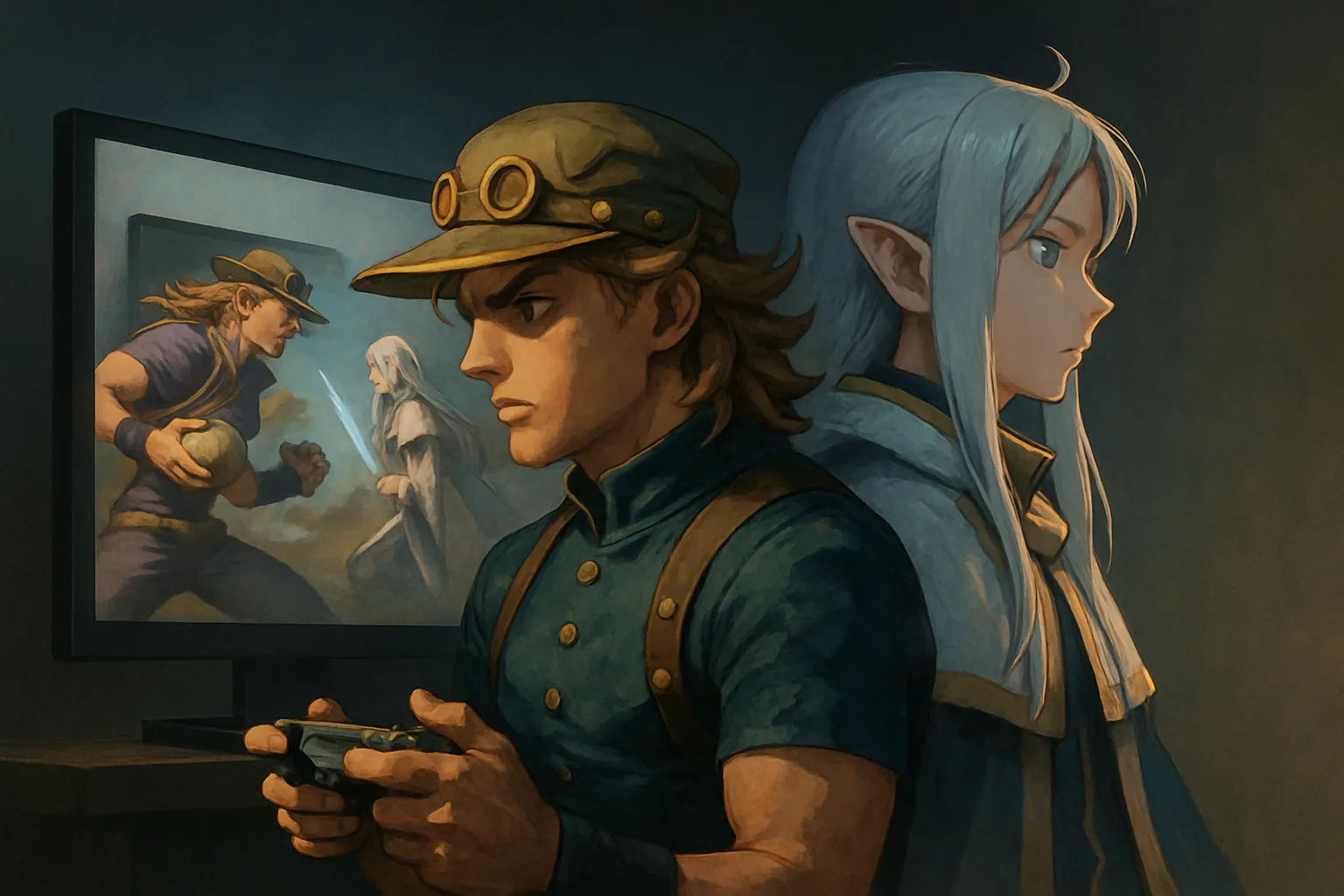
Anime ranking battles attract so much attention because they are never only about numerical scores. When fans track whether one series edges past another on a ratings list, they are really debating legitimacy, taste, and what kinds of storytelling deserve symbolic dominance at a given moment. That is why a contest involving JoJo's Bizarre Adventure: Steel Ball Run and Frieren feels bigger than a leaderboard update.
Both titles carry strong identities, but they represent different forms of prestige. One channels a long-running franchise's stylistic ambition and the power of adaptation payoff. The other reflects the modern appetite for emotionally controlled fantasy with a reflective tone. When those sensibilities collide on a public ranking, the discussion becomes a cultural argument disguised as scoreboard watching.
Why rankings get emotional so quickly
Fandom rankings escalate because people experience them as public validation. Fans do not simply want to enjoy a favorite series privately. They often want proof that the wider audience recognizes its greatness. A high ranking becomes an external badge confirming that a work matters beyond niche loyalty.
That is why small changes can trigger outsized reactions. The score itself may move by only a fraction, but the symbolic meaning attached to that movement can feel huge inside the community.
Why Steel Ball Run and Frieren make an interesting contrast
Steel Ball Run carries the weight of franchise evolution. For many JoJo fans, it represents one of the property's most ambitious narrative turns, the kind of arc whose adaptation feels like a major event. Frieren, by contrast, has become shorthand for a quieter kind of excellence, built on atmosphere, emotional restraint, and the slow unfolding of meaning over time.
That contrast makes the ranking battle particularly revealing. It is not just a clash between two popular works. It is a clash between two ways fans define quality: expressive maximalism on one side, reflective emotional precision on the other.
A useful way to frame it is this: ranking battles matter because they force fandom to reveal what it thinks prestige should look like right now.
Why public lists still have power
It is easy to dismiss fan rankings as noisy or manipulative, but they still shape visibility. Lists influence what newcomers sample, what critics revisit, and what gets framed as essential viewing. That makes the battle over top positions meaningful even if everyone understands the underlying numbers are imperfect.
In that sense, rankings are part of anime's discovery infrastructure. They tell audiences where cultural momentum appears to be concentrating, even when the interpretation is messy.
What this says about anime fandom now
The attention around these two series suggests anime fandom is increasingly comfortable rewarding very different forms of excellence at once. The conversation is not only about action, hype, or legacy anymore. It also makes room for pacing, mood, introspection, and tonal control. That broadening of taste may be one of the healthiest signals in the current anime landscape.
At the same time, the emotional intensity around rankings shows how central public recognition remains to fan culture. Viewers still want their favorite works to win, not just to be appreciated. That competitive energy can be exhausting, but it also helps explain why anime communities stay so active.
The Steel Ball Run versus Frieren ranking fight matters because it reveals more than which title currently sits on top. It reveals what kinds of stories audiences are trying to elevate, defend, and canonize in public view.