
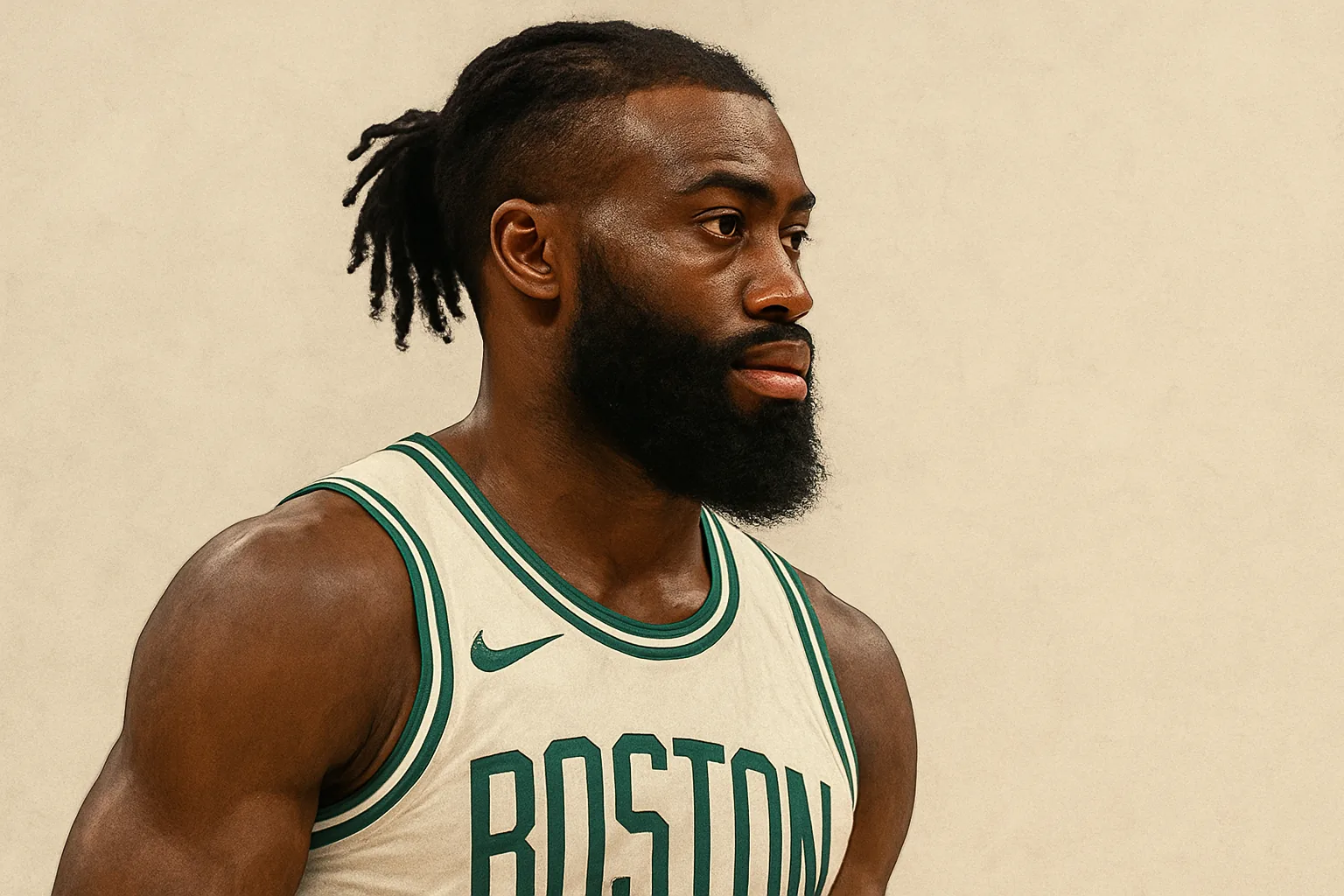
The Celtics agreed to trade Jaylen Brown to the rival 76ers for Paul George, two first-round picks, and two second-round picks, according to multiple league sources cited by The Boston Globe. For Boston, that means moving on from the 2024 NBA Finals MVP, a five-time All-Star, and one of the central figures of the franchise’s most successful recent era.
The reported return is not built around a younger replacement. George is 36, a nine-time All-Star, and has two years left on his contract, including a player option for 2027-28. The deeper value for Boston is in the draft capital: a 2028 first-round structure tied to Philadelphia and the Clippers, an unprotected 2031 first-round pick, plus high second-round picks in 2028 and 2030.
That mix explains why the deal feels less like a normal basketball trade and more like a philosophical break. Boston is still keeping Jayson Tatum as its franchise anchor, but it is no longer treating the Brown-Tatum partnership as untouchable.
Why Boston Would Make Such a Difficult Deal
The Celtics are not trading a fading role player. Brown finished sixth in MVP voting last season while Tatum missed most of the year following an Achilles injury. He helped carry Boston to 56 wins under conditions that lowered outside expectations. The source reporting also says Brown had not requested a trade.
That is why the return matters. Boston appears to be choosing optionality over certainty. George can help immediately if healthy and available, but the picks give the Celtics more ways to reshape the roster around Tatum later. The 2031 first-rounder being unprotected is especially meaningful because distant unprotected picks can become premium assets if a team’s roster ages, injuries hit, or a competitive window closes.
The 2028 first-round component is more complicated, but the practical idea is simple: Boston gains access to upside tied to Philadelphia and the Clippers. If the right conditions hit, the Celtics could benefit from a better draft position than their own record would normally produce.
For example, imagine Boston remains a strong playoff team in 2028 while either Philadelphia or the Clippers slides into a rough season. A normal Celtics first-round pick might land late in the round. A swap or transferred pick connected to a weaker team could give Boston a far better asset without Boston having to lose games itself. That is the kind of roster-building tool front offices value when they already have a superstar but need another path to acquire the next major piece.
The End of a Championship Partnership
Brown’s Boston story had an unusual arc. He was booed by some fans when the Celtics selected him third overall in 2016, then developed into a franchise pillar. He signed a five-year, $303.7 million super-max extension in 2023, was named Eastern Conference finals MVP and NBA Finals MVP in 2024, and helped Boston win its 18th championship.
That history makes the timing jarring. The Celtics had already seen key parts of the title roster depart, including Kristaps Porzingis, Jrue Holiday, Al Horford, and Luke Kornet, as the salary cap’s second apron reshaped the team. Tatum’s injury then changed the team’s immediate outlook. Brown responded with arguably the best regular season of his career, only for the Celtics to lose to Philadelphia in the playoffs after blowing a 3-1 series lead for the first time in franchise history.
Boston had also explored using Brown in a bigger swing. The Globe reported that he was the centerpiece of the Celtics’ offer for Giannis Antetokounmpo before Milwaukee sent Antetokounmpo to Miami. Once that became public, Brad Stevens avoided making an absolute commitment to Brown’s long-term place in Boston while emphasizing how much the organization valued him.
That sequence matters because it shows how quickly a franchise can move from public appreciation to private calculation. Brown may have been central to Boston’s past and productive in the present, but the Celtics evidently decided the next version of the roster needed more flexibility.
What Philadelphia Gets
For the 76ers, the deal is easier to read emotionally and competitively: they are acquiring the younger, more recent elite performer in the trade. Brown gives Philadelphia a star wing who has already been a championship closer and who just carried a heavy regular-season burden.
There is also a divisional edge to the move. Philadelphia is not adding Brown from a distant Western Conference team. It is taking him directly from Boston after eliminating the Celtics in the first round. If Brown remains at or near his recent level, the 76ers have changed the Atlantic Division’s power balance while weakening a rival’s established identity.
The cost is real. Giving up distant first-round picks, especially an unprotected 2031 pick, limits future flexibility. But Philadelphia’s side of the deal says something clear: the franchise prefers a proven prime star now over the possibility that those picks become something later.
The Risk for Both Teams
Boston’s risk is that it may have traded the best player in the deal. George’s resume is not in question, but age, availability, and contract structure make him a different kind of bet than Brown. The Globe reported that George averaged 17.3 points and 5.3 rebounds last season and served a 25-game suspension for violating the NBA’s anti-drug policy before returning for Philadelphia’s playoff upset of Boston.
The Celtics also have to manage the human cost of the move. Trading a homegrown Finals MVP who did not request out can affect how players, agents, and fans interpret the organization’s loyalty. Winning usually quiets that. Losing makes it louder.
Philadelphia’s risk is the mirror image. If Brown is the star he has recently been, the 76ers will look aggressive and decisive. If injuries, fit issues, or roster limitations keep them from breaking through, the missing future picks will become more painful with every season.
What to Watch Next
The first question is whether Boston treats George as a core piece or as a bridge. The Globe reported that the trade was not completed with an imminent secondary deal in mind, but the Celtics now have more movable assets and a clearer path to reworking the roster around Tatum.
The second question is how Brown fits in Philadelphia after arriving under such unusual circumstances. He goes from franchise pillar to rivalry acquisition, from Boston’s long-running Tatum-Brown structure to a 76ers team that has just made a major win-now choice.
For Boston, this is the end of one of the most important player eras of the last decade. For Philadelphia, it is a direct challenge to the old order in the Atlantic. The winner of the trade may not be obvious this season, because the most valuable pieces in Boston’s return may not fully reveal themselves until 2028 or 2031.