
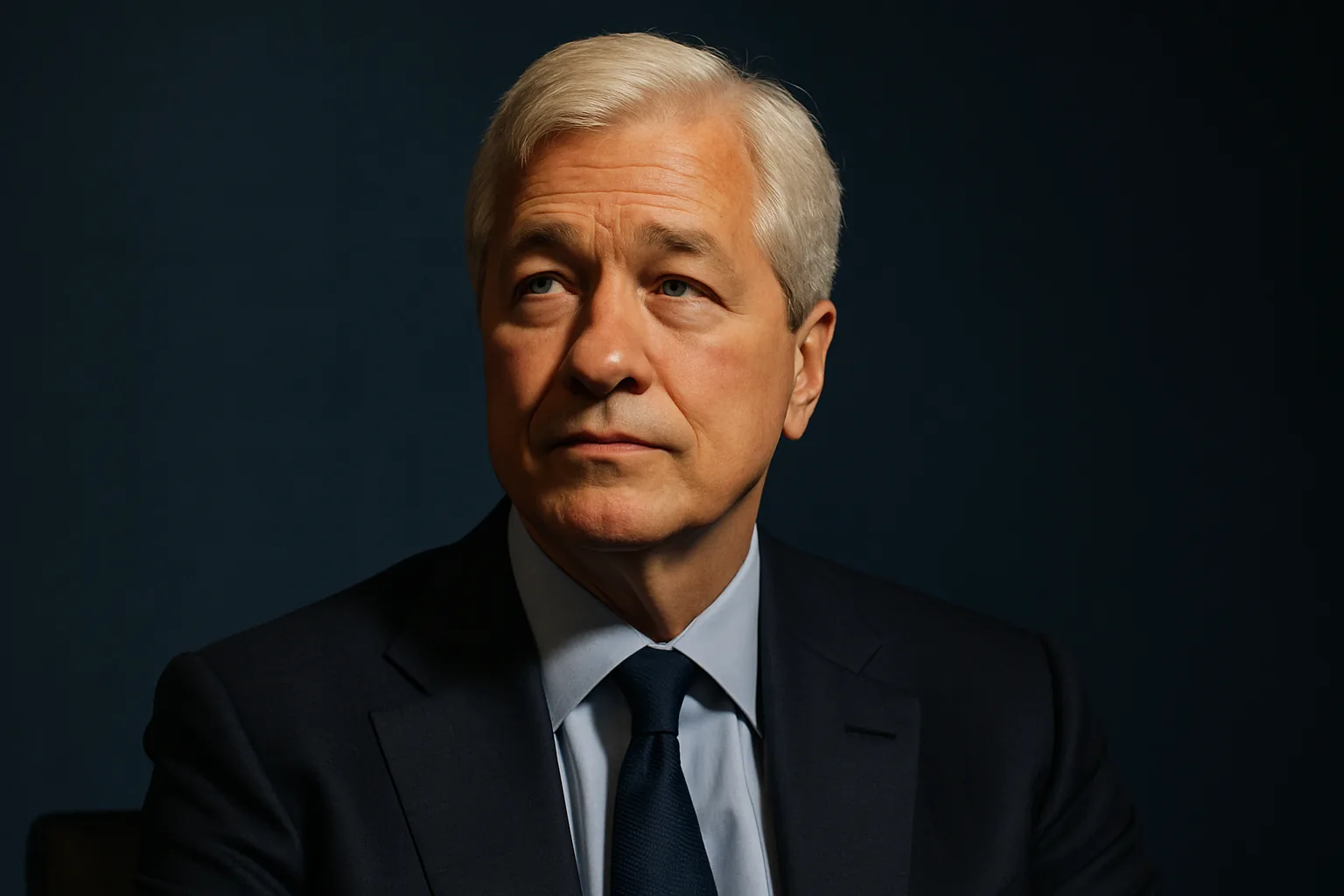
When a figure like Jamie Dimon speaks optimistically about the long-term peace potential of a region under acute conflict, the comment matters because financial leaders do not only respond to events. They help shape how those events are interpreted by investors, executives, and political elites. Their words can turn uncertainty into a story with direction, one that markets can hold even while conditions remain dangerous and unresolved.
That is what makes this kind of statement notable. It does not erase the immediate violence or instability. Instead, it offers a narrative in which present conflict might eventually produce strategic reordering. For markets, that type of framing can be surprisingly useful. It allows risk to be seen not only as destruction, but as a painful phase within a larger transition that may later look stabilizing.
Why financiers' language carries unusual influence
Business leaders at Dimon's level often function as interpreters of macro uncertainty. Their comments are heard not only as personal opinion but as clues about how powerful institutions are processing the moment. When they describe a conflict as potentially yielding long-run peace, they are giving investors a way to imagine coherence where the headlines otherwise suggest only danger and volatility.
This interpretive role matters because markets are always searching for a narrative horizon beyond the immediate shock.
Why long-term optimism can coexist with short-term danger
Geopolitical commentary from financial figures often works by separating the near-term and long-term into different emotional categories. The present may be risky, destabilizing, and painful, but the future can still be described as containing strategic upside. That distinction helps preserve confidence without denying the severity of the moment outright.
Of course, such optimism can also sound premature or self-soothing if the immediate human and political realities remain too severe to support any credible stabilizing story.
A useful way to frame it is this: peace-oriented optimism from market figures often tells us as much about the need for investable narrative as it does about the likely course of history.
Why these narratives appeal in markets
Investors prefer stories that convert open-ended crisis into a sequence with an eventual end state. Even if that end state is uncertain, the suggestion that conflict could lead to reordering, deterrence, or diplomatic reset can make risk feel more interpretable. Narrative containment is not the same as strategic accuracy, but it can still influence how capital reacts.
This is why remarks like Dimon's travel quickly. They offer a vocabulary for optimism without requiring stability to have arrived yet.
What to watch next
The important questions are whether policymakers begin speaking in similarly directional terms, whether markets start acting as if de-escalation is more than a hope, and whether the optimism survives additional shocks. If not, the comment may be remembered more as a market comfort mechanism than a strategic insight.
That is why the statement matters. It shows how elite financial voices can help convert war into a story investors think they know how to price.
In times of geopolitical stress, narrative confidence can become almost as valuable to markets as actual stability.