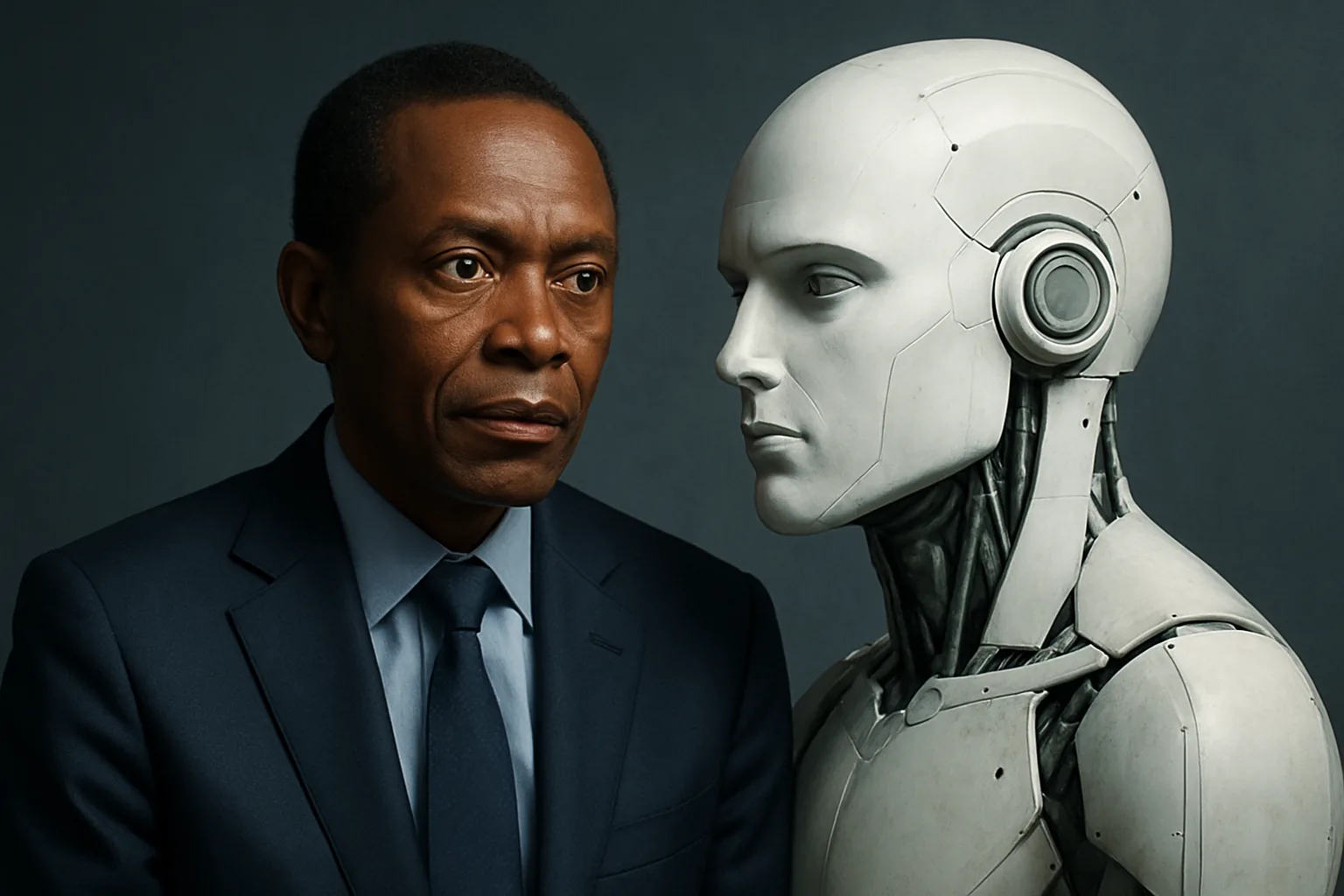
Conversations about AI and creativity matter because this is one of the places where technology becomes personal fastest. People can debate infrastructure, productivity, and business strategy at a distance, but the idea that software might influence music, writing, visual art, or performance touches something more immediate. It raises questions not only about efficiency, but about identity, authorship, and what society still wants human creativity to mean.
That is why a public discussion between James Manyika and LL COOL J carries weight beyond the format of an interview. It puts a technology-policy voice and a working artist in the same frame, which helps shift the debate away from slogans. Instead of asking whether AI is simply good or bad for creativity, the more useful question is how creative practice changes when new tools become part of the process.
Why the creativity debate is harder than the productivity debate
AI is easier to discuss in office work than in art because the metrics are clearer. In many workplaces the promise is speed, lower cost, or broader output. Creativity does not submit so neatly to those measurements. A song, a story, or an image is not only valuable because it was made quickly. It matters because it conveys judgment, emotion, surprise, and a perspective that feels alive.
This is where the debate becomes more demanding. If AI helps a creator iterate faster, that may be useful. If it starts flattening style or making art feel interchangeable, the same efficiency becomes a cultural problem rather than a technical success.
Why artists and technologists hear different risks first
Technologists often see possibility first. They notice expanded access, lower barriers, and tools that let more people experiment creatively without years of formal training. Artists often see exposure first. They notice how quickly systems can imitate style, pressure wages, and blur the difference between assistance and substitution. Both instincts are rational because they are looking at different sides of the same transition.
That difference in emphasis is exactly why cross-disciplinary conversations matter. They create room for a more serious middle position, one that accepts the usefulness of the tools without pretending the cultural costs are imaginary.
A useful way to frame it is this: AI does not erase the value of human creativity, but it does force creators to articulate that value more explicitly than before.
Why authorship is becoming the central question
As these tools improve, the core issue is no longer whether AI can generate output. It clearly can. The harder question is what kind of authorship people will recognize, reward, and trust. Audiences may accept AI-assisted creation in some contexts and reject it in others. The boundary will likely depend on transparency, intent, and whether the human role still feels interpretive rather than merely supervisory.
This is why discussions like this one matter. They are not just about software capability. They are about the cultural rules that will decide when assistance feels legitimate and when it feels hollow.
What to watch next
The most important developments will be less about spectacular demos and more about norms. How openly will creators disclose tool use? What kinds of work will audiences embrace as authentically authored? How will companies building these systems respond to concerns about consent, training data, and compensation? Those questions will shape the creative economy more than abstract claims about innovation.
The deeper significance of the Manyika and LL COOL J exchange is that it models a better way to discuss the issue. It treats AI as neither magic nor doom, but as a force that changes incentives, workflows, and expectations in creative fields.
That is why the conversation matters. The real future of AI in creativity will not be settled by hype alone. It will be shaped by the standards artists, audiences, and institutions decide are worth protecting while the tools keep improving.