
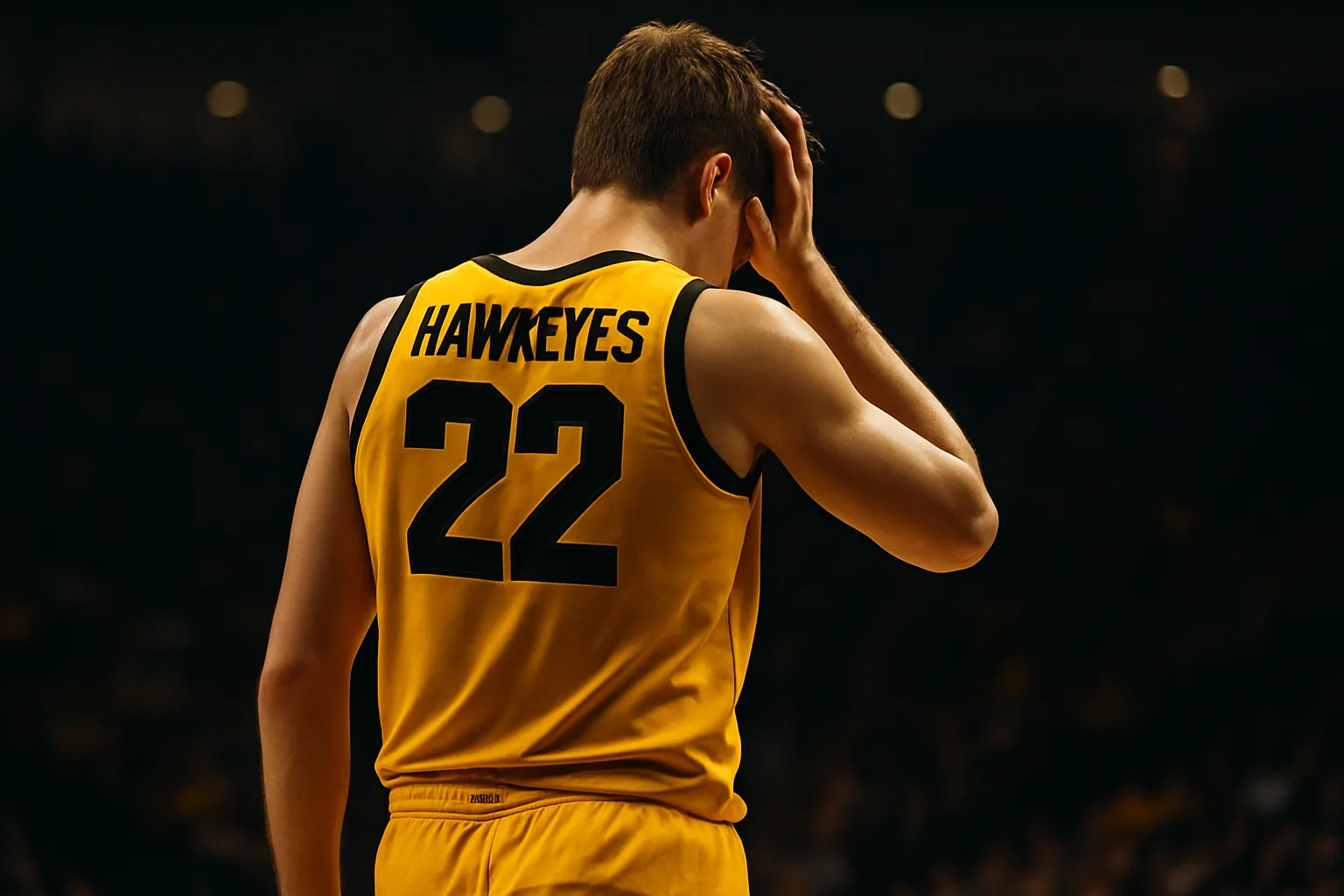
An upset of a team like Iowa feels significant because it challenges the assumption that contender status naturally travels through the tournament. A high seed can still lose for ordinary basketball reasons, but when the defeat comes in a double-overtime game against a lower-seeded opponent, the aftermath usually becomes about more than one result. It becomes a search for the hidden fragility that the bracket had not yet forced into view.
That is why “what went wrong?” questions matter after a loss like this. The answer is rarely just bad luck. A result this sharp usually reflects a combination of execution issues, pressure response, and an opponent capable of dragging the favorite into a less comfortable version of the game. Iowa's exit hurts because it suggests the team's strongest qualities were not enough to guarantee control when the emotional and tactical stress rose.
Why tournament pressure changes how weakness appears
In a long season, strong teams can survive brief lapses because there are more games to absorb them. In the tournament, the same lapses become defining events. A scoring drought, a poor late-game possession, or a failure to close out a tense stretch can instantly overwhelm months of quality work. That is what makes March so punishing. It exposes weaknesses at the moment when there is no time left to recover from them later.
For Iowa, the problem may not have been one giant flaw so much as a few pressure-sensitive issues aligning at the worst possible moment. That is often how favorites fall. Their edges remain real, but their control over the game erodes just enough for the opponent to keep believing.
Why the opponent's belief matters so much
Upsets are not only about the favorite underperforming. They are also about the underdog refusing to accept the hierarchy. Once a lower seed stays within range long enough, the game stops feeling like a formality and starts feeling like a negotiation. Every extra possession strengthens that shift. In double overtime, belief can become nearly as important as talent.
That is where an upset becomes psychologically dangerous for the favorite. The burden changes. Instead of calmly asserting superiority, the higher seed starts feeling the cost of every mistake. The lower seed, meanwhile, begins to see the game as available.
A useful way to frame it is this: the longer an upset stays alive, the more it stops being unlikely and starts becoming emotionally persuasive.
What Iowa needs to evaluate next
The right response is not broad panic. It is honest review. Did the team become too dependent on one late-game formula? Did composure slip in decisive possessions? Did tactical flexibility narrow at the point when the opponent changed the terms of the game? Those are the questions that actually matter after a loss like this.
This is also where good teams learn whether they were built only to look strong across a season or to solve high-pressure problems against resistant opponents. Tournament exits can clarify that distinction more brutally than any regular-season win ever could.
Why the loss will linger
Iowa's defeat will stick because it feels like the type of game a top team should have escaped. That is exactly what gives it emotional weight. Fans do not only mourn the elimination. They mourn the sense that the path remained open and still slipped away.
Yet that is also why the result is useful as more than heartbreak. It forces a clearer understanding of what high-level tournament basketball demands. Seeding, talent, and momentum matter. But in the most pressurized moments, adaptability and late-game control matter more.
That is what the upset ultimately revealed. Iowa was strong enough to be feared and still vulnerable enough to be caught. March punishes teams that assume one condition cancels out the other.