
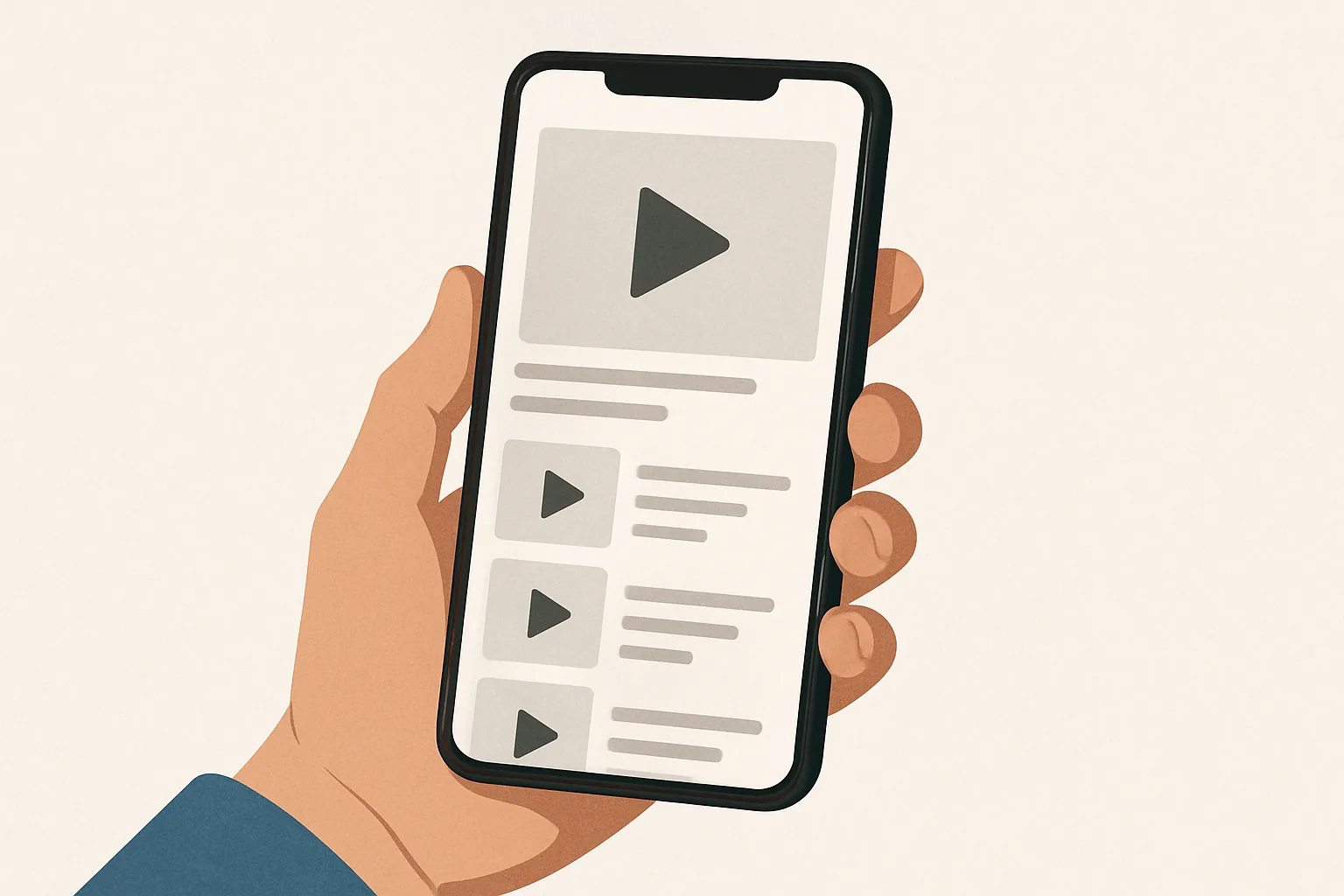
Google’s March 2026 Play system updates include a small line item with outsized implications: the Play Store is beginning to show app recommendations through short-form video content.
That change appeared in Google’s release notes for Google Play Store v50.4, dated March 2, 2026. On its own, it could look like another minor interface experiment. But the rest of March’s updates make the direction harder to miss. A week later, Play Store v50.5 added support for portrait-format videos in the “Latest official videos” section on selected app pages. Google also expanded game discovery features, including PC Games on Play, a revamped wishlist, faster Gamer Profile updates, and support for buying some games once across phone, tablet, and PC.
The pattern is straightforward: Google is making the Play Store less like a static catalog and more like a discovery surface built around motion, recommendations, and repeated engagement.
What changed in March
The headline feature is the new short-form video recommendation format in Play Store v50.4. Google’s official wording is brief, but clear: users will find app recommendations through short-form video content.
Then came the follow-on update. In v50.5 on March 9, Google said app detail pages for selected apps would support portrait-format videos in the “Latest official videos” section. That matters because portrait video is not a neutral formatting choice. It fits the grammar users already know from TikTok, YouTube Shorts, and Instagram Reels.
March’s other Play Store changes point in the same direction. Google added better discovery for mobile games on PC, improved wishlists so users can track prices, sped up Gamer Profile updates such as streaks, and widened media recommendations to include movies and TV shows with poster images. On March 16, Play Store v50.6 also introduced limited-time trials for select premium games before purchase. On March 23, v50.7 added search terms on the All Reviews page.
None of those features is identical to short-form video recommendations. Together, though, they suggest the Play Store is being tuned for browsing behavior, not just deliberate search.
Why this matters
The Play Store has always had a discovery problem hiding in plain sight. Search works well when a user already knows what they want. Store listings, ratings, and screenshots help when a user is comparing a few options. But discovery is harder when the goal is to surface an app someone was not actively looking for.
Short-form video is one answer to that problem. It lets Google compress an app pitch into a few seconds: what the product looks like, what it does, and why it might be worth a tap. For games, entertainment, shopping, social, travel, fitness, or photo apps, that is a much richer pitch than an icon and two static screenshots.
It also changes the unit of competition. In a traditional store layout, apps compete on title, rating, ranking, and visual polish. In a video-led layout, they also compete on creative performance: the first second, the clarity of the demo, the quality of the hook, and whether the clip feels native to how people already consume media on their phones.
That does not mean the Play Store is becoming TikTok. It does mean Google appears to be borrowing from the logic that made vertical video such a powerful discovery tool elsewhere: low-friction sampling, rapid judgment, and a feed that can keep suggesting the next thing.
The practical shift for developers and marketers
If this rollout expands, the implication is not just cosmetic. It affects how apps may need to present themselves inside Google’s storefront.
- Visual apps get an advantage. Products that can demonstrate value quickly on screen are better positioned than apps that require explanation before they make sense.
- Creative assets matter more. App store optimization may increasingly overlap with short-form creative strategy, not just metadata, screenshots, and keyword targeting.
- Discovery may broaden beyond search intent. A user looking for one thing can be pulled toward another if the video pitch is strong enough.
- Games look like the first obvious fit. March’s other updates, including premium game trials and cross-device game purchases, suggest Google is still investing heavily in game merchandising.
There is another consequence here. If Google pushes video recommendations harder, smaller developers may face a new production burden. A clean store listing is one thing. A steady stream of high-performing video creative is another. That would not automatically favor the best product. It could favor the teams that are better at making app marketing look like content.
That tension is worth watching because app stores have historically sold themselves as more utility-driven than social feeds. The more discovery shifts toward media formats, the more the store starts rewarding presentation as much as product substance.
What makes this more than a one-off experiment
The strongest reason to take the March update seriously is not the single v50.4 note. It is the sequencing.
Google did not just mention short-form video recommendations and stop there. It followed with portrait video support on app pages, kept improving browsing features around games and media, and continued adding tools that make the Play Store feel more like an environment to explore rather than a directory to query.
That sequencing suggests an internal product thesis: the Play Store can do more of the demand generation work itself, instead of waiting for users to arrive with a fully formed search.
For Google, that has obvious upside. Better discovery can increase session time, surface more install opportunities, and give the company more control over how apps are merchandised. For developers, it could open new routes to visibility, especially if they were previously buried in crowded categories. But it also raises the bar. App pages may no longer be enough if the storefront’s most effective placements are increasingly motion-based.
What to watch next
The immediate question is how widely Google rolls this out and where the format appears inside the Play Store. The company’s release notes describe the feature, but not its final prominence, frequency, or eligibility rules.
The next signal will be whether Google expands video-led recommendations beyond limited surfaces and selected apps. If it does, developers will need to treat Play Store creative less like static packaging and more like active acquisition media.
For users, the change could make app discovery faster and more entertaining. For the app economy, it may mark a more important shift: the Play Store is no longer just refining search and rankings. It is starting to compete on discovery design.
That is a bigger development than a release-note bullet makes it sound.