
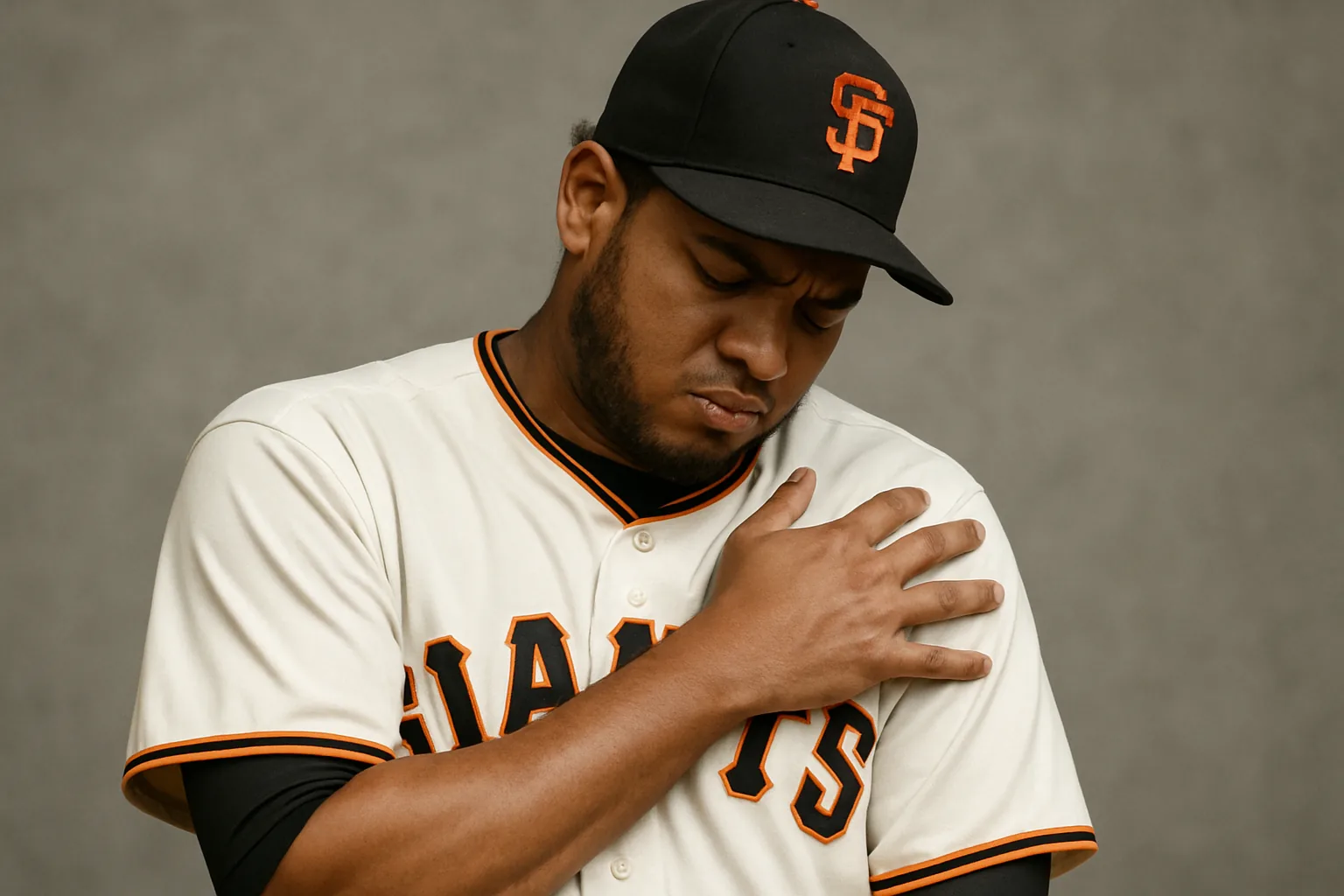
The San Francisco Giants placed right-handed reliever Joel Peguero on the 60-day injured list Monday after he aggravated a left hamstring strain, forcing a bullpen change during the club’s road series in Milwaukee.
The move does more than remove one productive arm from the relief mix. It gives 25-year-old right-hander Wilkin Ramos his first major-league opportunity after a strong start at Triple-A Sacramento, while also reshaping the Giants’ bench and catching depth.
What Changed
Peguero, 29, had a 2.38 ERA before landing on the injured list. According to local reporting, the hamstring issue was a recurrence of a strain he first dealt with during spring training and aggravated Sunday in Denver.
To cover the roster, San Francisco selected Ramos and utility player Buddy Kennedy from Triple-A Sacramento. The Giants also designated catcher Logan Porter for assignment, and they had already optioned catcher-utility player Jesus Rodriguez to Sacramento on Sunday.
Ramos arrives as the most direct baseball answer to Peguero’s absence. In 17 appearances for Sacramento, he went 3-1 with a 2.00 ERA, striking out 27 and walking seven in 27 innings. Those numbers stand out more because they came in the Pacific Coast League, a run-friendly environment where pitching lines can get noisy fast.
Why Ramos Is the Interesting Part
Injuries often create ordinary roster churn. This one gives the Giants a chance to test whether Ramos’ Triple-A performance can translate into useful major-league innings.
The challenge is not simply that big-league hitters are better. It is that a reliever promoted into an active bullpen usually has little time to ease in. Ramos may be asked to protect a narrow lead, absorb middle innings after a short start, or face a pocket of right-handed hitters before the Giants know much about how his stuff plays against major-league swings.
His strikeout-to-walk line at Sacramento is a meaningful starting point. Twenty-seven strikeouts and seven walks in 27 innings suggests he has not been surviving on luck alone. But the Giants will now learn the part Triple-A stats cannot answer: whether his command holds when hitters are less likely to chase, and whether he can get outs without perfect sequencing.
A concrete example: a reliever with Ramos’ profile might dominate in Sacramento by getting ahead early, then finishing hitters who expand the zone. In the majors, the same 1-2 count can become a longer at-bat if hitters foul off borderline pitches or refuse to offer at the slider just off the plate. That can turn a clean inning into a 24-pitch inning, which matters when a bullpen is already covering for an injured arm.
The Rodriguez Move Is About Playing Time
The Giants’ decision to send Jesus Rodriguez back to Triple-A is notable because it came after he hit a pinch-hit home run in San Francisco’s win at Colorado on Sunday. A homer can make a demotion look strange in isolation, but the club’s explanation points to role rather than punishment.
General manager Zack Minasian said Rodriguez’s playing time had become limited. At Sacramento, the Giants expect Rodriguez and Drew Cavanaugh to receive catching opportunities, with Rodriguez also seeing time in the outfield.
That matters for a highly regarded young player. A bench role in the majors can be valuable for a veteran who already has a defined skill set. For a developing catcher-utility player, irregular pinch-hit appearances and occasional defensive work may not be enough. The Giants appear to be choosing reps over proximity.
Kennedy’s promotion fits that same roster logic from the other side. As a right-handed hitter who can play multiple spots, he gives San Francisco a more flexible bench piece for the immediate big-league roster while Rodriguez gets steadier developmental work in Sacramento.
What It Means for San Francisco
Peguero’s move to the 60-day injured list removes the possibility of a quick return. For a team managing a long season, that kind of absence affects more than one inning here or there. It changes how aggressively a manager can deploy the remaining bullpen, especially during road stretches and after high-scoring games.
The practical implications are straightforward:
- Ramos gets a real audition. His Triple-A results earned the call, but his first major-league outings will determine whether he becomes more than a temporary replacement.
- The bullpen loses a productive arm for an extended period. Peguero’s 2.38 ERA gave the Giants useful relief innings before the hamstring issue resurfaced.
- Rodriguez’s development becomes the priority. San Francisco is betting that regular catching and outfield time at Triple-A is more valuable than sporadic major-league usage right now.
- Kennedy gives the bench a different shape. His defensive flexibility and right-handed bat help cover the short-term roster need created by the Rodriguez option.
None of these moves is likely to define the Giants’ season by itself. But roster edges accumulate. A bullpen promotion that works can save a front office from shopping for relief help sooner than planned. A young player getting regular reps in Triple-A can return more prepared for a meaningful role. A utility player who fits the bench can make late-game substitutions cleaner.
What to Watch Next
The first question is how quickly the Giants use Ramos and in what type of spots. A low-leverage debut would let him settle in. A close game would tell us more about how much immediate trust the staff has in him.
The second question is Rodriguez’s workload in Sacramento. If the Giants follow through with time behind the plate and in the outfield, his option becomes less about losing a roster spot and more about building a broader path back to San Francisco.
Peguero’s timeline is less flexible because the 60-day injured list sets a long minimum absence. Until he is closer to returning, the Giants’ bullpen picture will depend on whether Ramos can turn his Sacramento performance into major-league outs, and whether the rest of the relief group can absorb the innings Peguero leaves behind.