
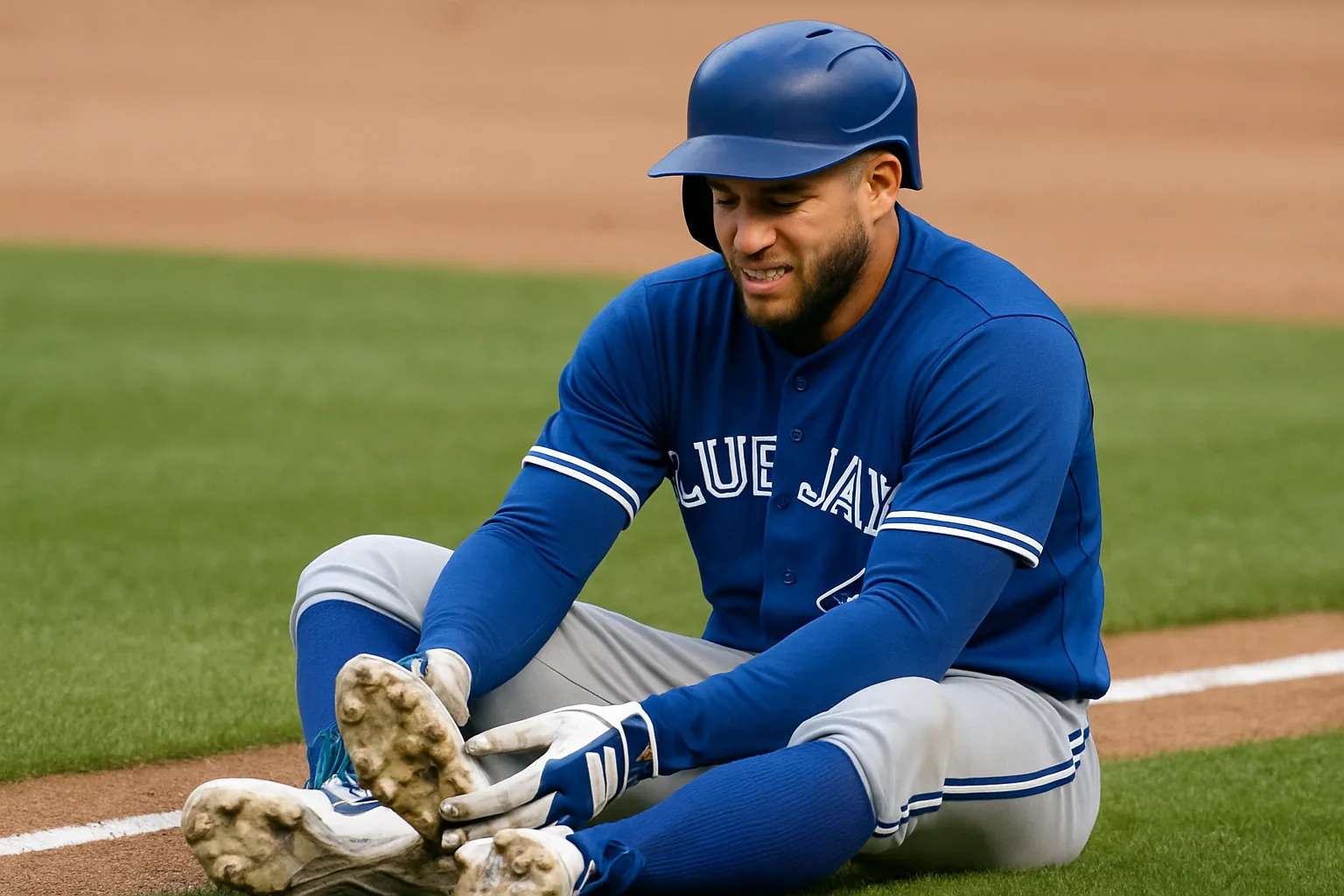
George Springer left the Blue Jays’ April 11 loss to the Twins with a fractured big toe on his left foot, giving Toronto another injury problem before the season has had much time to settle. The initial diagnosis came after Springer fouled a pitch off his foot in the third inning, went down in pain, then stayed in long enough to finish the at-bat. By the next turn through the order, Myles Straw was hitting for him.
The immediate baseball question is straightforward: how long will Springer be out, and does this become an injured list move? The team said further imaging, including a CT scan, would help determine the plan. Manager John Schneider did not offer a timetable, only the obvious truth that the next scan would clarify what the Blue Jays are dealing with.
But the larger story is not only about one hitter missing time. It is about how quickly attrition can change the shape of a roster, even one that looked reasonably well-covered on paper a few weeks ago.
Another hit to a lineup already being stretched
Springer’s injury lands in a season that, by Toronto’s own recent experience, has already become unusually heavy with medical updates. The Blue Jays opened the year with several players unavailable, including Shane Bieber, Trey Yesavage, José Berríos, Yimi Garcia and Anthony Santander. Since then, the list has grown: Cody Ponce underwent knee surgery that may have ended his 2026 season, Alejandro Kirk fractured his left thumb, and Addison Barger injured both ankles on the same play.
Those names matter because they are not all clustered in one area of the roster. Toronto has already taken damage in the rotation, the bullpen and the lineup. Springer’s fractured toe adds stress to the offense and to the team’s defensive flexibility at the same time.
That is what makes this injury more disruptive than the box score alone suggests. Springer is not just another bat to shuffle around. He is part of the bridge between the top and middle of the order, and because he can move between designated hitter and the outfield, he helps Toronto solve multiple lineup problems at once. Lose that piece, and the club has fewer clean answers.
Why a toe fracture is awkward even if the absence is short
Baseball injuries are often discussed in terms of whether a player can swing, but a fractured big toe reaches into nearly everything a position player does. Hitting is the obvious issue after Springer fouled the ball off his foot, yet the bigger limitation can be the accumulation of smaller movements: planting, pushing off, accelerating out of the box, tracking balls in the outfield, and simply tolerating repeated stress over a full game.
That matters here because Springer has long been the sort of player who tries to gut through pain. Schneider alluded to that directly when he said Springer “plays through a lot all the time.” In some situations, that toughness buys a team a few usable games. With a fracture, it can also create a difficult judgment call. A player may be willing to go before he is truly functional enough to help in all phases.
Toronto now has to separate willingness from usefulness. That is where the CT results and the club’s short-term planning become more important than any one tough-at-bat image from Saturday.
The real issue is roster pressure
The Blue Jays were supposed to be protected, at least to a degree, by depth. The source material makes that point directly: Toronto entered the season with enough options to absorb normal injuries. The problem is that the club is no longer dealing with normal injury traffic. It is dealing with concentration.
A practical example helps. If Springer misses time, Toronto does not just need someone to take his plate appearances. It also has to decide how to rebalance the designated hitter spot and the outfield mix. If Springer had been expected to spend part of the week at DH and part in the field, replacing him could require two smaller adjustments instead of one clean substitution. Myles Straw entering Saturday’s game is the immediate visible version of that problem, but the larger effect shows up over several days: more players moved off their preferred usage pattern, fewer rest options, and less room to shield other banged-up contributors.
That is how an injury wave becomes more damaging than the individual names suggest. The first few absences test talent. The next few test structure.
What Toronto has to avoid now
Schneider’s public message was predictable but necessary. He said the Blue Jays cannot start asking “Why us?” and let the season unravel emotionally around the missing players. That is standard clubhouse language, but it points to a real challenge. Early-season injuries create two kinds of risk: the talent loss everyone sees, and the temptation to start making short-term decisions that expose the roster further.
For Toronto, that could mean asking healthy players to do too much, rushing a timeline because the lineup feels thin, or treating depth as if it is limitless simply because it looked strong in March. Depth is not a permanent trait. It is a resource, and the Blue Jays are already spending it.
That does not mean the season is defined in April. It does mean the front office’s roster construction is now being tested under real strain instead of preseason theory. A team can survive scattered injuries. A team can also survive one major injury if the rest of the roster is stable. What is harder is surviving several medium-to-significant hits at once, especially when they touch everyday lineup choices and not just the far edge of the bench.
What to watch next
The next update on Springer matters for two reasons. First is the obvious one: whether the CT scan confirms a fracture severe enough to require an injured list stint, and if so, for how long. Second is what the Blue Jays’ response says about their internal confidence.
If the club can cover Springer with relatively modest adjustments, that would support the idea that Toronto’s roster still has some elasticity left. If the absence quickly forces uncomfortable role changes or exposes a lack of healthy alternatives, then this stops being an isolated injury story and starts looking like a meaningful early test of the team’s competitive ceiling.
In the short term, this is bad luck and a painful play. In the medium term, it is a reminder that roster depth only matters when it can keep the team recognizable after the hits start coming. The Blue Jays built for that challenge. Now they have to prove it.